By j
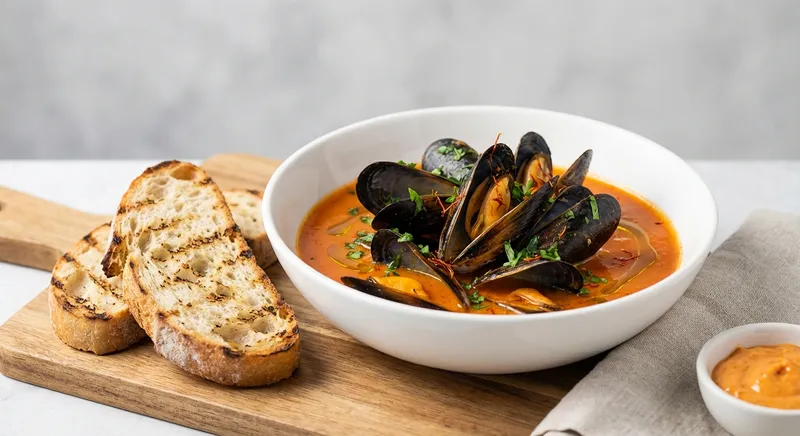
Tender, briny mussels steamed in a bright cherry tomato and white-wine broth kissed with saffron, finished with fresh parsley and served with toasted rustic ciabatta for sopping up every fragrant drop. The tomato adds sweetness and acidity, saffron lends floral depth, and a splash of wine and olive oil round the sauce into a restaurant-quality bowlful in under 20 minutes.
Inspect and finish cleaning the mussels: discard any mussels with cracked shells or that do not close when tapped (they may be dead). Rinse under cold water and pull off any loose beard fibers. Why: starting with only live, clean mussels ensures food safety and a clean, briny flavor in the finished dish.
Bloom the saffron: place the few saffron strands in a small bowl with 1 tablespoon (15 ml) of warm water and let sit for 5–8 minutes. Why: saffron releases its color and aromatic oils when hydrated; blooming intensifies its flavor and gives the broth a lovely golden hue.
Warm a wide, heavy skillet or shallow pot over medium heat and add the olive oil. Add the minced shallot and sliced garlic and sauté gently for 1–2 minutes until translucent and fragrant but not browned. Why: softening the shallot and garlic in oil mellows sharpness and creates a flavorful base for the broth; avoid browning to keep the sauce bright.
Add the halved cherry tomatoes and a pinch of salt, and cook, stirring, for 2–3 minutes until the tomatoes begin to soften and release juice. Why: lightly cooking the tomatoes builds sweetness and umami while preserving fresh acidity — you want them to break down slightly, not turn into a paste.
Pour in the white wine (or vegetable broth) and the saffron with its soaking liquid, then increase the heat to medium-high and bring to a gentle simmer. Taste and season with a little salt and pepper. Why: the wine deglazes the pan, lifts the browned bits and adds acidity that balances the mussels; simmering with saffron infuses the liquid quickly.
Add the cleaned mussels to the pan in an even layer, cover with a tight-fitting lid, and steam for 4–6 minutes. Shake the pan once or twice during cooking to redistribute heat. Why: high, even steam cooks the mussels quickly and evenly — they open when fully cooked. Avoid overcooking, which makes mussels rubbery.
Check for doneness: when most mussels have opened, remove the lid. Use tongs to transfer opened mussels to a serving bowl; discard any that remain tightly closed. Why: unopened mussels should be discarded—they were likely dead before cooking. Reserving the cooking liquid concentrates the flavors for the broth.
Bring the remaining broth in the pan to a gentle boil and reduce for 1–2 minutes if you'd like a slightly more concentrated sauce. Taste and adjust seasoning. Why: reducing intensifies flavor so the broth clings to the bread; finish tasting to balance salt and acidity.
Return the mussels to the pan to warm through for 30 seconds, sprinkle with chopped parsley, and give a quick stir to coat. Why: fresh parsley brightens and lifts the flavors; a brief final toss finishes the dish without overcooking.
Toast the ciabatta: while the mussels steam, place the slice of ciabatta under a broiler or in a hot skillet for 1–2 minutes per side until golden and crisp. Rub lightly with a cut clove of garlic (optional) and drizzle with a few drops of olive oil. Why: toasting creates a sturdy surface for dipping and adds toasty flavor that contrasts the silky broth.
Serve immediately: pile mussels in a shallow bowl, spoon the tomato–saffron broth over them, scatter remaining parsley, and place the toasted ciabatta alongside for soaking up the sauce. Why: mussels are best served hot and fresh — the warm bread and aromatic broth are what make this dish memorable.
562
Calories
44g
Protein
55g
Carbs
14g
Fat
4g
Fiber
How did this recipe turn out? Let others know!
to rate this recipe
By j
Tender, briny mussels steamed in a bright cherry tomato and white-wine broth kissed with saffron, finished with fresh parsley and served with toasted rustic ciabatta for sopping up every fragrant drop. The tomato adds sweetness and acidity, saffron lends floral depth, and a splash of wine and olive oil round the sauce into a restaurant-quality bowlful in under 20 minutes.
Inspect and finish cleaning the mussels: discard any mussels with cracked shells or that do not close when tapped (they may be dead). Rinse under cold water and pull off any loose beard fibers. Why: starting with only live, clean mussels ensures food safety and a clean, briny flavor in the finished dish.
Bloom the saffron: place the few saffron strands in a small bowl with 1 tablespoon (15 ml) of warm water and let sit for 5–8 minutes. Why: saffron releases its color and aromatic oils when hydrated; blooming intensifies its flavor and gives the broth a lovely golden hue.
Warm a wide, heavy skillet or shallow pot over medium heat and add the olive oil. Add the minced shallot and sliced garlic and sauté gently for 1–2 minutes until translucent and fragrant but not browned. Why: softening the shallot and garlic in oil mellows sharpness and creates a flavorful base for the broth; avoid browning to keep the sauce bright.
Add the halved cherry tomatoes and a pinch of salt, and cook, stirring, for 2–3 minutes until the tomatoes begin to soften and release juice. Why: lightly cooking the tomatoes builds sweetness and umami while preserving fresh acidity — you want them to break down slightly, not turn into a paste.
Pour in the white wine (or vegetable broth) and the saffron with its soaking liquid, then increase the heat to medium-high and bring to a gentle simmer. Taste and season with a little salt and pepper. Why: the wine deglazes the pan, lifts the browned bits and adds acidity that balances the mussels; simmering with saffron infuses the liquid quickly.
Add the cleaned mussels to the pan in an even layer, cover with a tight-fitting lid, and steam for 4–6 minutes. Shake the pan once or twice during cooking to redistribute heat. Why: high, even steam cooks the mussels quickly and evenly — they open when fully cooked. Avoid overcooking, which makes mussels rubbery.
Check for doneness: when most mussels have opened, remove the lid. Use tongs to transfer opened mussels to a serving bowl; discard any that remain tightly closed. Why: unopened mussels should be discarded—they were likely dead before cooking. Reserving the cooking liquid concentrates the flavors for the broth.
Bring the remaining broth in the pan to a gentle boil and reduce for 1–2 minutes if you'd like a slightly more concentrated sauce. Taste and adjust seasoning. Why: reducing intensifies flavor so the broth clings to the bread; finish tasting to balance salt and acidity.
Return the mussels to the pan to warm through for 30 seconds, sprinkle with chopped parsley, and give a quick stir to coat. Why: fresh parsley brightens and lifts the flavors; a brief final toss finishes the dish without overcooking.
Toast the ciabatta: while the mussels steam, place the slice of ciabatta under a broiler or in a hot skillet for 1–2 minutes per side until golden and crisp. Rub lightly with a cut clove of garlic (optional) and drizzle with a few drops of olive oil. Why: toasting creates a sturdy surface for dipping and adds toasty flavor that contrasts the silky broth.
Serve immediately: pile mussels in a shallow bowl, spoon the tomato–saffron broth over them, scatter remaining parsley, and place the toasted ciabatta alongside for soaking up the sauce. Why: mussels are best served hot and fresh — the warm bread and aromatic broth are what make this dish memorable.
562
Calories
44g
Protein
55g
Carbs
14g
Fat
4g
Fiber
Your Rating:
