By Chef
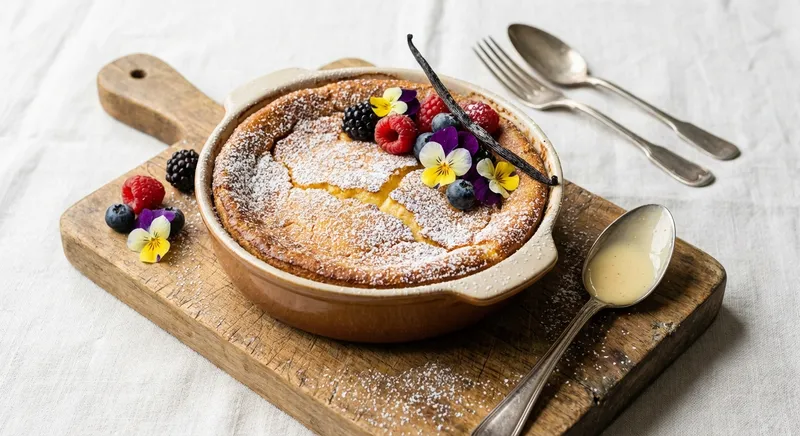
This silky, lightly sweet custard cake (inspired by the French clafoutis) delivers a golden, custardy interior with a thin caramelized top — a simple but elegant sweet that tastes like a cross between a flan and a pancake. The texture is tender and slightly eggy with a delicate vanilla aroma; finishing the top with a sprinkle of sugar and a quick broil gives a brûlée-like crispness that elevates it to restaurant quality.
Preheat the oven to 375°F (190°C). Butter a 9-inch (23 cm) round baking dish or an ovenproof skillet and dust lightly with flour, shaking out the excess. Preheating ensures the batter will begin to set immediately when it hits the hot pan, helping the edges rise slightly and creating contrast between a set edge and custardy center.
Combine dry ingredients: whisk the flour and 3/4 cup (150 g) granulated sugar with the 1/4 tsp salt in a medium bowl. Whisking first distributes the sugar and salt evenly through the flour so the batter will be homogeneous and prevents clumps, which can cause pockets of flour in the baked custard.
Whisk the wet ingredients: in a separate bowl, whisk the 3 large eggs until smooth and slightly frothy (about 30 seconds) to incorporate a little air for lift. Add the 1 1/4 cups (300 ml) whole milk, melted butter, and 1 tsp vanilla and whisk to combine. Warming the milk slightly (to lukewarm, about 90–100°F / 32–38°C) before mixing helps the melted butter stay liquid and makes the batter silkier; don't make it hot or it will start to cook the eggs.
Combine wet and dry: make a well in the flour-sugar mixture and slowly pour in the wet mixture while whisking steadily to make a smooth, lump-free batter. Whisking while combining hydrates the flour uniformly and prevents overworking the gluten—mix just until smooth to keep the cake tender.
Rest the batter for 10 minutes at room temperature. This brief rest allows the flour to hydrate fully and the bubbles from whisking to settle, producing a more even texture in the finished custard.
Pour the batter into the prepared baking dish. If you like, scatter seasonal fruit (halved cherries, berries, or thinly sliced apples) across the bottom before pouring — they’ll sink slightly and add bursts of flavor; but this cake is delightful plain as well. The batter should be pourable and rather thin; that relaxed consistency is what creates the delicate custard texture rather than a dense cake.
Bake in the preheated oven for 30–35 minutes until the center is set but still jiggles very slightly when you gently shake the dish, and the edges are puffed and lightly golden. Baking at 375°F gives a balance of gentle set and lovely color; avoid overbaking, which will dry out the custard and make it rubbery.
Remove from oven and immediately sprinkle the top with the remaining 2 tbsp (25 g) granulated sugar, spreading it evenly. Return the dish to the oven on the rack and broil on high for 1–2 minutes (watch closely) until the sugar melts and forms a thin, golden caramelized layer. Broiling briefly creates a contrasting crisp top that lifts the whole dessert—like a light brûlée—without needing specialized equipment.
Let the cake cool for 10–15 minutes before slicing. The custard will continue to set as it cools; slicing too soon can cause the pieces to fall apart. Serve warm or at room temperature. Optionally dust with a little powdered sugar or serve with a dollop of lightly whipped cream or crème fraîche for richness.
Storage: keep leftovers covered and refrigerated for up to 3 days. Reheat gently in a 300°F (150°C) oven for 6–8 minutes to refresh the texture, or serve cold as a custardy slice.
307
Calories
7g
Protein
48g
Carbs
10g
Fat
1g
Fiber
How did this recipe turn out? Let others know!
to rate this recipe
This silky, lightly sweet custard cake (inspired by the French clafoutis) delivers a golden, custardy interior with a thin caramelized top — a simple but elegant sweet that tastes like a cross between a flan and a pancake. The texture is tender and slightly eggy with a delicate vanilla aroma; finishing the top with a sprinkle of sugar and a quick broil gives a brûlée-like crispness that elevates it to restaurant quality.
Preheat the oven to 375°F (190°C). Butter a 9-inch (23 cm) round baking dish or an ovenproof skillet and dust lightly with flour, shaking out the excess. Preheating ensures the batter will begin to set immediately when it hits the hot pan, helping the edges rise slightly and creating contrast between a set edge and custardy center.
Combine dry ingredients: whisk the flour and 3/4 cup (150 g) granulated sugar with the 1/4 tsp salt in a medium bowl. Whisking first distributes the sugar and salt evenly through the flour so the batter will be homogeneous and prevents clumps, which can cause pockets of flour in the baked custard.
Whisk the wet ingredients: in a separate bowl, whisk the 3 large eggs until smooth and slightly frothy (about 30 seconds) to incorporate a little air for lift. Add the 1 1/4 cups (300 ml) whole milk, melted butter, and 1 tsp vanilla and whisk to combine. Warming the milk slightly (to lukewarm, about 90–100°F / 32–38°C) before mixing helps the melted butter stay liquid and makes the batter silkier; don't make it hot or it will start to cook the eggs.
Combine wet and dry: make a well in the flour-sugar mixture and slowly pour in the wet mixture while whisking steadily to make a smooth, lump-free batter. Whisking while combining hydrates the flour uniformly and prevents overworking the gluten—mix just until smooth to keep the cake tender.
Rest the batter for 10 minutes at room temperature. This brief rest allows the flour to hydrate fully and the bubbles from whisking to settle, producing a more even texture in the finished custard.
Pour the batter into the prepared baking dish. If you like, scatter seasonal fruit (halved cherries, berries, or thinly sliced apples) across the bottom before pouring — they’ll sink slightly and add bursts of flavor; but this cake is delightful plain as well. The batter should be pourable and rather thin; that relaxed consistency is what creates the delicate custard texture rather than a dense cake.
Bake in the preheated oven for 30–35 minutes until the center is set but still jiggles very slightly when you gently shake the dish, and the edges are puffed and lightly golden. Baking at 375°F gives a balance of gentle set and lovely color; avoid overbaking, which will dry out the custard and make it rubbery.
Remove from oven and immediately sprinkle the top with the remaining 2 tbsp (25 g) granulated sugar, spreading it evenly. Return the dish to the oven on the rack and broil on high for 1–2 minutes (watch closely) until the sugar melts and forms a thin, golden caramelized layer. Broiling briefly creates a contrasting crisp top that lifts the whole dessert—like a light brûlée—without needing specialized equipment.
Let the cake cool for 10–15 minutes before slicing. The custard will continue to set as it cools; slicing too soon can cause the pieces to fall apart. Serve warm or at room temperature. Optionally dust with a little powdered sugar or serve with a dollop of lightly whipped cream or crème fraîche for richness.
Storage: keep leftovers covered and refrigerated for up to 3 days. Reheat gently in a 300°F (150°C) oven for 6–8 minutes to refresh the texture, or serve cold as a custardy slice.
307
Calories
7g
Protein
48g
Carbs
10g
Fat
1g
Fiber
Your Rating:
