By Chef
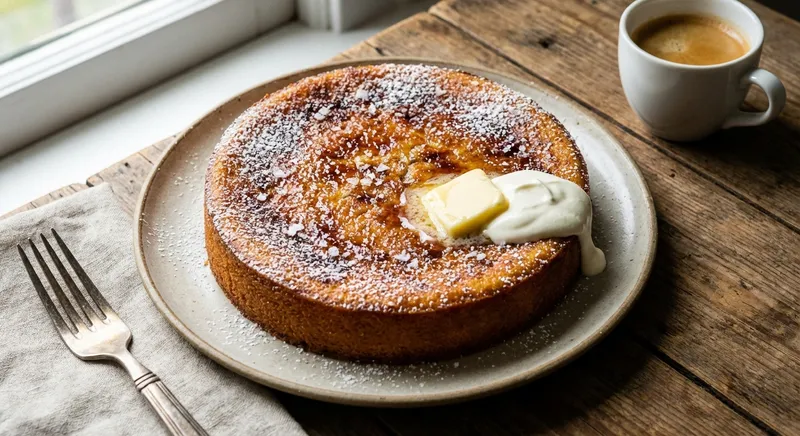
A tender, buttery sugar cake with a fine crumb and golden crust — the sort of timeless tea-cake served in French cafés. The bright vanilla and a touch of cinnamon balance rich butter and caramelized sugar, while the light, airy texture comes from creaming butter and eggs and gently folding the batter.
Preheat the oven to 175°C (350°F). Butter an 8-inch (20 cm) round or square cake pan and line the base with parchment. Preheating ensures the oven is at the correct temperature so the cake rises consistently and sets with a golden crust.
Whisk together dry ingredients: sift or whisk 200 g flour with 2 tsp baking powder, 1/2 tsp fine salt and 1/2 tsp ground cinnamon (if using). Sifting or whisking aerates the flour and evenly distributes the baking powder so the cake rises uniformly.
Cream butter and sugar: In a mixing bowl, beat 100 g softened unsalted butter with 200 g granulated sugar until pale and light, about 3–4 minutes by hand or 2–3 minutes with a stand mixer on medium speed. Creaming incorporates air into the fat which helps create a tender, light crumb — don’t skimp on this step.
Add eggs one at a time, mixing well after each addition, then stir in 1 tsp vanilla extract. Adding eggs slowly lets the mixture emulsify without splitting; if the batter looks curdled, add a tablespoon of flour and continue — the flour absorbs excess liquid and brings it back together.
Alternate adding dry ingredients and milk: With the mixer on low, add the dry ingredients in three additions, alternating with the 120 ml whole milk (dry–milk–dry–milk–dry). Start and finish with the dry ingredients and mix only until combined. This keeps the gluten development minimal so the cake stays tender.
Scrape down the bowl and give a final brief fold by hand to ensure no streaks of flour remain. Overmixing at this stage develops gluten and makes the cake dense; folding ensures an even batter without toughening.
Transfer batter to the prepared pan, smooth the top, and tap the pan once on the counter to release large air bubbles. A few large bubbles can make big holes in the crumb; tapping makes the texture even.
Bake at 175°C (350°F) for 30–35 minutes, or until the cake is golden and a skewer inserted into the center comes out with a few moist crumbs (not wet batter). The temperature and timing give a crust while allowing the interior to remain moist; a skewer test is the most reliable doneness indicator.
Cool in the pan on a rack for 10 minutes, then loosen the edges and invert onto the rack to cool completely. Cooling briefly in the pan lets the cake set; inverting and cooling fully prevents sogginess and keeps the crumb light.
Optional finishing: Dust the top with a little extra granulated sugar or a light sprinkle of powdered sugar or cinnamon. For a café-style presentation, serve with a dollop of whipped cream or a spoonful of fruit compote.
314
Calories
5g
Protein
45g
Carbs
13g
Fat
1g
Fiber
How did this recipe turn out? Let others know!
to rate this recipe
A tender, buttery sugar cake with a fine crumb and golden crust — the sort of timeless tea-cake served in French cafés. The bright vanilla and a touch of cinnamon balance rich butter and caramelized sugar, while the light, airy texture comes from creaming butter and eggs and gently folding the batter.
Preheat the oven to 175°C (350°F). Butter an 8-inch (20 cm) round or square cake pan and line the base with parchment. Preheating ensures the oven is at the correct temperature so the cake rises consistently and sets with a golden crust.
Whisk together dry ingredients: sift or whisk 200 g flour with 2 tsp baking powder, 1/2 tsp fine salt and 1/2 tsp ground cinnamon (if using). Sifting or whisking aerates the flour and evenly distributes the baking powder so the cake rises uniformly.
Cream butter and sugar: In a mixing bowl, beat 100 g softened unsalted butter with 200 g granulated sugar until pale and light, about 3–4 minutes by hand or 2–3 minutes with a stand mixer on medium speed. Creaming incorporates air into the fat which helps create a tender, light crumb — don’t skimp on this step.
Add eggs one at a time, mixing well after each addition, then stir in 1 tsp vanilla extract. Adding eggs slowly lets the mixture emulsify without splitting; if the batter looks curdled, add a tablespoon of flour and continue — the flour absorbs excess liquid and brings it back together.
Alternate adding dry ingredients and milk: With the mixer on low, add the dry ingredients in three additions, alternating with the 120 ml whole milk (dry–milk–dry–milk–dry). Start and finish with the dry ingredients and mix only until combined. This keeps the gluten development minimal so the cake stays tender.
Scrape down the bowl and give a final brief fold by hand to ensure no streaks of flour remain. Overmixing at this stage develops gluten and makes the cake dense; folding ensures an even batter without toughening.
Transfer batter to the prepared pan, smooth the top, and tap the pan once on the counter to release large air bubbles. A few large bubbles can make big holes in the crumb; tapping makes the texture even.
Bake at 175°C (350°F) for 30–35 minutes, or until the cake is golden and a skewer inserted into the center comes out with a few moist crumbs (not wet batter). The temperature and timing give a crust while allowing the interior to remain moist; a skewer test is the most reliable doneness indicator.
Cool in the pan on a rack for 10 minutes, then loosen the edges and invert onto the rack to cool completely. Cooling briefly in the pan lets the cake set; inverting and cooling fully prevents sogginess and keeps the crumb light.
Optional finishing: Dust the top with a little extra granulated sugar or a light sprinkle of powdered sugar or cinnamon. For a café-style presentation, serve with a dollop of whipped cream or a spoonful of fruit compote.
314
Calories
5g
Protein
45g
Carbs
13g
Fat
1g
Fiber
Your Rating:
