By emensah m
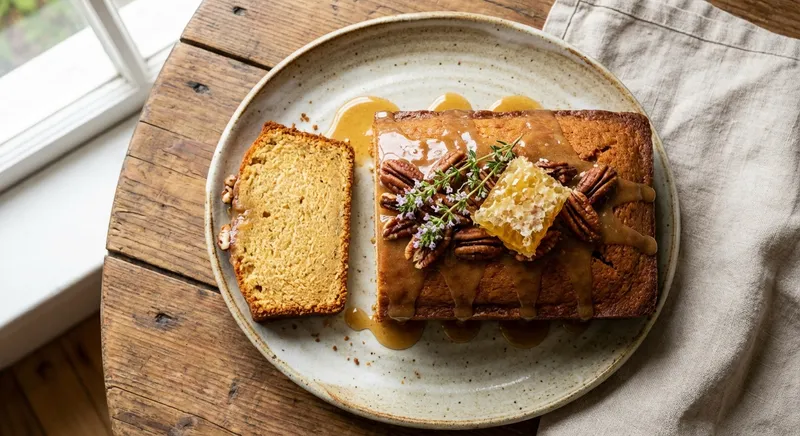
A luxuriously tender pound cake with deep, toasty brown-butter notes, warm honey sweetness and the fragrant flecks of real vanilla bean. The cake's tight yet tender crumb is aerated by whipped eggs (no chemical leaveners), and a warm honey-vanilla glaze adds glossy shine and extra moisture — elegant enough for a restaurant dessert, simple enough for a weekday coffee.
Prep the pan and ingredients. Position an oven rack in the lower third of the oven and preheat to 325°F (163°C). Butter a 9x5-inch (23x13 cm) loaf pan, line the bottom with a strip of parchment long enough to act as a sling, and butter the parchment. We prepare the pan now to ensure the batter can go straight into a properly prepared surface; the lower rack allows even baking without an overly browned top.
Brown the butter. Cut 1 cup (226 g) unsalted butter into cubes and place them in a light-colored saucepan over medium heat. Stir or swirl constantly as the butter melts, foams, then gradually clears and the milk solids begin to brown and smell nutty — about 6–8 minutes. As soon as you see golden-brown flecks, remove from heat and pour into a heatproof bowl to stop cooking. Browning the butter (beurre noisette) concentrates and caramelizes the milk solids, giving the cake a toasty, layered flavor that shops rarely achieve with straight melted butter.
Cool the butter and scrape the vanilla. Let the brown butter cool for 6–8 minutes until it’s warm but not hot (≈100–110°F / 38–43°C). Scrape the seeds from 1 vanilla bean into a small bowl and reserve the empty pod for steeping in the milk if you like extra vanilla aroma. Cooling prevents the eggs from cooking when they meet the butter, and keeps the emulsion stable.
Whisk eggs and sugars to aerate. In a large mixing bowl, combine 4 large room-temperature eggs, 1/2 cup (100 g) granulated sugar, and 1/2 cup (110 g) packed light brown sugar. Using a whisk or hand mixer, beat the eggs and sugars vigorously for 4–6 minutes until the mixture becomes thick, pale, and falls in ribbons when lifted. This step is your primary leavening: incorporating air into the eggs creates the lift and light crumb in the absence of baking powder.
Add honey and vanilla. Stir 2 tablespoons (≈42 g) of honey and the scraped vanilla seeds into the egg-sugar ribbon. The honey adds depth and helps keep the crumb moist and supple; the vanilla seeds are aromatic and give visual flecks throughout the cake.
Temper the brown butter. With the mixer running on low, slowly drizzle the warm (not hot) brown butter into the egg-sugar mixture in a thin stream. Adding butter slowly keeps the fat from breaking the emulsion you're building with the whipped eggs and sugar. Once incorporated, the mixture will be glossy and light.
Alternate flour and milk. Sift or whisk 2 cups (240 g) all-purpose flour with 1 teaspoon (6 g) salt into a bowl. Add the flour to the batter in three additions, alternating with 1/2 cup (120 ml) whole milk (begin and end with flour). Fold gently with a spatula between additions — fold just until streaks disappear. Alternating prevents overworking gluten (which would toughen the cake) and gives the batter enough liquid to have a tender crumb.
Finish and rest the batter. Once combined, scrape the batter into the prepared loaf pan and smooth the top with an offset spatula. Tap the pan lightly on the counter twice to settle the batter and remove large air pockets. Let the batter rest 5 minutes; this short rest lets any remaining air bubbles surface and reduce large tunnels during baking.
Bake low and slow. Place the loaf pan on a middle or lower oven rack and bake at 325°F (163°C) for 50–60 minutes. Rotate the pan at 30 minutes if your oven has hot spots. The lower temperature and longer bake time allow the dense batter to cook through evenly without burning the exterior; the cake is done when the top is deep golden brown, a thin knife or skewer inserted in the center comes out with a few moist crumbs (not wet batter), and the cake springs back slightly.
Prepare the warm honey-vanilla glaze. While the cake bakes, combine 1 tablespoon (≈21 g) honey, 1 tablespoon unsalted butter (for the glaze), 1 tablespoon milk, and the remaining scrape of vanilla pod (or a tiny pinch of the scraped seeds) in a small saucepan. Warm gently until the butter melts and the glaze is glossy; do not boil. Keeping the glaze warm ensures it soaks slightly into the cake when brushed on hot.
Glaze and cool. When the cake comes from the oven, immediately brush the warm glaze over the hot loaf so it absorbs into the crust and keeps the crumb moist. Let the loaf cool in the pan on a wire rack for 20 minutes. Then use the parchment sling to lift the cake out and cool completely on the rack for another 30–45 minutes before slicing. Cooling in two stages prevents condensation and sogginess while the internal crumb finishes setting.
Slice and serve. Slice the cake with a serrated knife using a gentle sawing motion to avoid compressing the crumb. Serve slices plain, with softly whipped cream, or a spoonful of Greek yogurt and fresh fruit if desired. The cake keeps well at room temperature, wrapped, for 2 days, or refrigerated for up to 5 days—bring back to room temperature before serving for best flavor.
484
Calories
7g
Protein
57g
Carbs
26g
Fat
1g
Fiber
How did this recipe turn out? Let others know!
to rate this recipe
By emensah m
A luxuriously tender pound cake with deep, toasty brown-butter notes, warm honey sweetness and the fragrant flecks of real vanilla bean. The cake's tight yet tender crumb is aerated by whipped eggs (no chemical leaveners), and a warm honey-vanilla glaze adds glossy shine and extra moisture — elegant enough for a restaurant dessert, simple enough for a weekday coffee.
Prep the pan and ingredients. Position an oven rack in the lower third of the oven and preheat to 325°F (163°C). Butter a 9x5-inch (23x13 cm) loaf pan, line the bottom with a strip of parchment long enough to act as a sling, and butter the parchment. We prepare the pan now to ensure the batter can go straight into a properly prepared surface; the lower rack allows even baking without an overly browned top.
Brown the butter. Cut 1 cup (226 g) unsalted butter into cubes and place them in a light-colored saucepan over medium heat. Stir or swirl constantly as the butter melts, foams, then gradually clears and the milk solids begin to brown and smell nutty — about 6–8 minutes. As soon as you see golden-brown flecks, remove from heat and pour into a heatproof bowl to stop cooking. Browning the butter (beurre noisette) concentrates and caramelizes the milk solids, giving the cake a toasty, layered flavor that shops rarely achieve with straight melted butter.
Cool the butter and scrape the vanilla. Let the brown butter cool for 6–8 minutes until it’s warm but not hot (≈100–110°F / 38–43°C). Scrape the seeds from 1 vanilla bean into a small bowl and reserve the empty pod for steeping in the milk if you like extra vanilla aroma. Cooling prevents the eggs from cooking when they meet the butter, and keeps the emulsion stable.
Whisk eggs and sugars to aerate. In a large mixing bowl, combine 4 large room-temperature eggs, 1/2 cup (100 g) granulated sugar, and 1/2 cup (110 g) packed light brown sugar. Using a whisk or hand mixer, beat the eggs and sugars vigorously for 4–6 minutes until the mixture becomes thick, pale, and falls in ribbons when lifted. This step is your primary leavening: incorporating air into the eggs creates the lift and light crumb in the absence of baking powder.
Add honey and vanilla. Stir 2 tablespoons (≈42 g) of honey and the scraped vanilla seeds into the egg-sugar ribbon. The honey adds depth and helps keep the crumb moist and supple; the vanilla seeds are aromatic and give visual flecks throughout the cake.
Temper the brown butter. With the mixer running on low, slowly drizzle the warm (not hot) brown butter into the egg-sugar mixture in a thin stream. Adding butter slowly keeps the fat from breaking the emulsion you're building with the whipped eggs and sugar. Once incorporated, the mixture will be glossy and light.
Alternate flour and milk. Sift or whisk 2 cups (240 g) all-purpose flour with 1 teaspoon (6 g) salt into a bowl. Add the flour to the batter in three additions, alternating with 1/2 cup (120 ml) whole milk (begin and end with flour). Fold gently with a spatula between additions — fold just until streaks disappear. Alternating prevents overworking gluten (which would toughen the cake) and gives the batter enough liquid to have a tender crumb.
Finish and rest the batter. Once combined, scrape the batter into the prepared loaf pan and smooth the top with an offset spatula. Tap the pan lightly on the counter twice to settle the batter and remove large air pockets. Let the batter rest 5 minutes; this short rest lets any remaining air bubbles surface and reduce large tunnels during baking.
Bake low and slow. Place the loaf pan on a middle or lower oven rack and bake at 325°F (163°C) for 50–60 minutes. Rotate the pan at 30 minutes if your oven has hot spots. The lower temperature and longer bake time allow the dense batter to cook through evenly without burning the exterior; the cake is done when the top is deep golden brown, a thin knife or skewer inserted in the center comes out with a few moist crumbs (not wet batter), and the cake springs back slightly.
Prepare the warm honey-vanilla glaze. While the cake bakes, combine 1 tablespoon (≈21 g) honey, 1 tablespoon unsalted butter (for the glaze), 1 tablespoon milk, and the remaining scrape of vanilla pod (or a tiny pinch of the scraped seeds) in a small saucepan. Warm gently until the butter melts and the glaze is glossy; do not boil. Keeping the glaze warm ensures it soaks slightly into the cake when brushed on hot.
Glaze and cool. When the cake comes from the oven, immediately brush the warm glaze over the hot loaf so it absorbs into the crust and keeps the crumb moist. Let the loaf cool in the pan on a wire rack for 20 minutes. Then use the parchment sling to lift the cake out and cool completely on the rack for another 30–45 minutes before slicing. Cooling in two stages prevents condensation and sogginess while the internal crumb finishes setting.
Slice and serve. Slice the cake with a serrated knife using a gentle sawing motion to avoid compressing the crumb. Serve slices plain, with softly whipped cream, or a spoonful of Greek yogurt and fresh fruit if desired. The cake keeps well at room temperature, wrapped, for 2 days, or refrigerated for up to 5 days—bring back to room temperature before serving for best flavor.
484
Calories
7g
Protein
57g
Carbs
26g
Fat
1g
Fiber
Your Rating:
