By emensah m
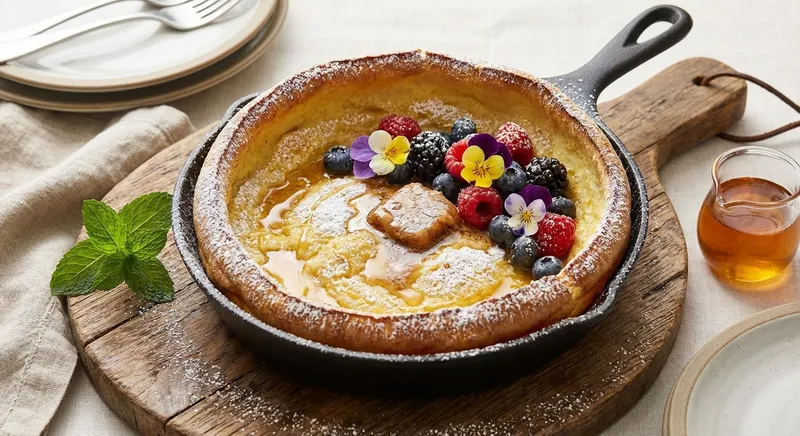
A dramatic, restaurant‑style Dutch baby pancake that puffs like a souffle and collapses into an irresistibly custardy center. Deep vanilla bean and honey flavor are amplified by nutty browned butter and a brown‑sugar butter spread — bright, buttery, and texturally stunning for brunch or dessert.
Preheat and heat the pan: Position a rack in the center of the oven and preheat to 425°F (220°C). Place a 10-inch (25 cm) cast-iron or ovenproof skillet in the oven while it preheats so it becomes smoking-hot. Why: a very hot pan and sizzling butter give the batter an immediate blast of steam and create the dramatic rise and crisp, browned edges that characterize a proper Dutch baby.
Prep the vanilla and room-temperature ingredients: Slice the vanilla bean lengthwise and scrape the seeds into a small bowl; set the pod aside for stirring into the brown-sugar butter if desired. Bring the eggs and milk to room temperature (leave out 10–15 minutes) so the batter emulsifies smoothly and the oven-sprung lift is maximized. Why: room-temperature eggs whip better and incorporate air more readily, giving a lighter, higher puff.
Make the batter: In a medium bowl whisk together the 3 large eggs, 1 tablespoon granulated sugar, the scraped vanilla seeds, 1 tablespoon honey, and the 1/4 tsp salt until frothy and slightly thickened (about 30–45 seconds). Whisking incorporates air which helps the Dutch baby puff. Gradually add the 3/4 cup (95 g) flour, whisking until just combined, then slowly stream in the 3/4 cup (180 ml) milk while whisking to form a smooth, lump-free batter. Do not overmix – overworking will develop gluten and make the finished pancake chewier instead of tender.
Rest the batter: Let the batter rest 5–10 minutes at room temperature. Why: this short rest lets the flour fully hydrate, makes the batter smoother and helps produce a more even rise and delicate interior.
Melt the skillet butter: Carefully remove the hot skillet from the oven using oven mitts (it will be very hot). Add 2 tablespoons of the butter to the skillet and swirl until fully melted and foaming. Return the skillet to the oven for 30 seconds to 1 minute to get the butter sizzling-hot. Why: adding batter to hot butter ensures immediate steaming and lift; a cold pan won’t give the same dramatic oven spring.
Bake: Give the batter a quick whisk (it may have settled) and immediately pour it into the preheated, buttered skillet. Place back in the oven and bake 18–22 minutes, until the Dutch baby is deeply golden at the edges and puffed high in the center. Do not open the oven door during baking — sudden temperature change will cause it to deflate prematurely. Why: steady heat creates steam and sets the egg structure; the high initial oven temperature is essential for the puff.
Make the brown‑sugar butter while it bakes: In a small saucepan over medium heat, brown 1 tablespoon of the reserved butter (from the measured 6 tbsp) until it smells nutty and the solids turn golden, about 2–3 minutes — swirl constantly so it doesn’t burn. Remove from heat and let cool a few seconds. In a bowl, beat together the remaining softened 2 tablespoons butter and the 3 tablespoons packed brown sugar until creamy; fold in the browned butter and up to 1 teaspoon of honey if you like it glossier. Why: the browned butter adds a toasty complexity and the brown sugar adds caramel notes that pair beautifully with vanilla and honey.
Finish and serve immediately: When the Dutch baby is puffed and golden, remove it from the oven. It will begin to deflate as it cools — that’s normal and part of its charm. Dollop or spread the brown‑sugar butter across the warm surface so it melts into the crevices, then drizzle the remaining 2 tablespoons honey over the top and, if you like, a light sprinkle of the remaining 1 tablespoon granulated sugar for an added crunch. Slice into 4 wedges and serve right away. Why: serving immediately ensures you enjoy the contrast between the crisp, browned edges and the custardy center; the warm butter and honey melt into the interior for maximum flavor.
Optional plating note: For a restaurant look, lift the Dutch baby onto a cutting board, spread the brown‑sugar butter into the center, drizzle honey in a slow spiral, then slice; garnish with any quick additions (fresh fruit, a dusting of powdered sugar, or a spoonful of thick yogurt) if available. Why: the contrast of textures and temperature makes the dish visually and sensorially appealing.
434
Calories
9g
Protein
51g
Carbs
22g
Fat
1g
Fiber
How did this recipe turn out? Let others know!
to rate this recipe
By emensah m
A dramatic, restaurant‑style Dutch baby pancake that puffs like a souffle and collapses into an irresistibly custardy center. Deep vanilla bean and honey flavor are amplified by nutty browned butter and a brown‑sugar butter spread — bright, buttery, and texturally stunning for brunch or dessert.
Preheat and heat the pan: Position a rack in the center of the oven and preheat to 425°F (220°C). Place a 10-inch (25 cm) cast-iron or ovenproof skillet in the oven while it preheats so it becomes smoking-hot. Why: a very hot pan and sizzling butter give the batter an immediate blast of steam and create the dramatic rise and crisp, browned edges that characterize a proper Dutch baby.
Prep the vanilla and room-temperature ingredients: Slice the vanilla bean lengthwise and scrape the seeds into a small bowl; set the pod aside for stirring into the brown-sugar butter if desired. Bring the eggs and milk to room temperature (leave out 10–15 minutes) so the batter emulsifies smoothly and the oven-sprung lift is maximized. Why: room-temperature eggs whip better and incorporate air more readily, giving a lighter, higher puff.
Make the batter: In a medium bowl whisk together the 3 large eggs, 1 tablespoon granulated sugar, the scraped vanilla seeds, 1 tablespoon honey, and the 1/4 tsp salt until frothy and slightly thickened (about 30–45 seconds). Whisking incorporates air which helps the Dutch baby puff. Gradually add the 3/4 cup (95 g) flour, whisking until just combined, then slowly stream in the 3/4 cup (180 ml) milk while whisking to form a smooth, lump-free batter. Do not overmix – overworking will develop gluten and make the finished pancake chewier instead of tender.
Rest the batter: Let the batter rest 5–10 minutes at room temperature. Why: this short rest lets the flour fully hydrate, makes the batter smoother and helps produce a more even rise and delicate interior.
Melt the skillet butter: Carefully remove the hot skillet from the oven using oven mitts (it will be very hot). Add 2 tablespoons of the butter to the skillet and swirl until fully melted and foaming. Return the skillet to the oven for 30 seconds to 1 minute to get the butter sizzling-hot. Why: adding batter to hot butter ensures immediate steaming and lift; a cold pan won’t give the same dramatic oven spring.
Bake: Give the batter a quick whisk (it may have settled) and immediately pour it into the preheated, buttered skillet. Place back in the oven and bake 18–22 minutes, until the Dutch baby is deeply golden at the edges and puffed high in the center. Do not open the oven door during baking — sudden temperature change will cause it to deflate prematurely. Why: steady heat creates steam and sets the egg structure; the high initial oven temperature is essential for the puff.
Make the brown‑sugar butter while it bakes: In a small saucepan over medium heat, brown 1 tablespoon of the reserved butter (from the measured 6 tbsp) until it smells nutty and the solids turn golden, about 2–3 minutes — swirl constantly so it doesn’t burn. Remove from heat and let cool a few seconds. In a bowl, beat together the remaining softened 2 tablespoons butter and the 3 tablespoons packed brown sugar until creamy; fold in the browned butter and up to 1 teaspoon of honey if you like it glossier. Why: the browned butter adds a toasty complexity and the brown sugar adds caramel notes that pair beautifully with vanilla and honey.
Finish and serve immediately: When the Dutch baby is puffed and golden, remove it from the oven. It will begin to deflate as it cools — that’s normal and part of its charm. Dollop or spread the brown‑sugar butter across the warm surface so it melts into the crevices, then drizzle the remaining 2 tablespoons honey over the top and, if you like, a light sprinkle of the remaining 1 tablespoon granulated sugar for an added crunch. Slice into 4 wedges and serve right away. Why: serving immediately ensures you enjoy the contrast between the crisp, browned edges and the custardy center; the warm butter and honey melt into the interior for maximum flavor.
Optional plating note: For a restaurant look, lift the Dutch baby onto a cutting board, spread the brown‑sugar butter into the center, drizzle honey in a slow spiral, then slice; garnish with any quick additions (fresh fruit, a dusting of powdered sugar, or a spoonful of thick yogurt) if available. Why: the contrast of textures and temperature makes the dish visually and sensorially appealing.
434
Calories
9g
Protein
51g
Carbs
22g
Fat
1g
Fiber
Your Rating:
