By mandi Childers
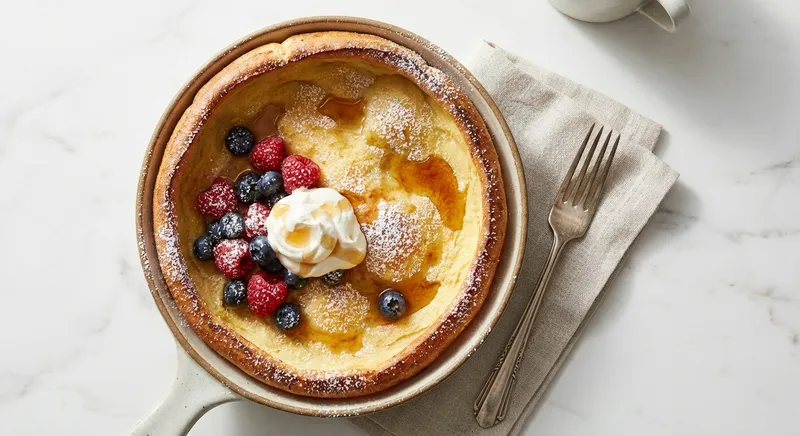
A dramatic, restaurant-style oven pancake that puffs impossibly tall at the edges and collapses into a gorgeously custardy center — made from simple pantry staples: milk, eggs, sugar and flour. Bright vanilla and brown butter notes give it a rich, bakery-quality flavor while the hot skillet technique creates an airy, lacy rim that’s both crisp and tender.
Preheat the oven to 425°F (220°C). Place a 10- to 12-inch ovenproof skillet (cast iron is ideal) in the oven while it heats. Heating the skillet first ensures the butter sizzles immediately on contact and helps the batter set quickly at the edges to form the dramatic puff.
Warm the milk slightly: microwave or heat on the stovetop until just warm to the touch (about 95–100°F / 35–38°C). Warm milk blends more easily with eggs and helps create a smooth, lump-free batter; it also helps the oven rise happen faster since the batter starts closer to oven temperature.
In a blender or mixing bowl, combine the eggs, warm milk, granulated sugar, vanilla and salt. Blend or whisk until the mixture is homogenous and slightly frothy (about 20–30 seconds in a blender). Aerating the batter gives lift and helps produce a delicate interior.
Sift the flour over the wet ingredients and blend or whisk until completely smooth. Sifting keeps the flour light and helps prevent lumps; overworking will develop gluten which can make the pancake tough, so mix just until incorporated.
Let the batter rest for 5 minutes while the oven reaches temperature and the skillet finishes preheating. Resting lets any tiny flour pockets hydrate and the bubbles settle for a more even rise.
Carefully remove the hot skillet from the oven (use oven mitts). Add the butter and swirl until it melts and just begins to brown slightly — watch closely; browned butter adds a toasty, nutty complexity that makes the pancake feel luxurious. Immediately pour the batter into the sizzling butter and return to the oven.
Bake at 425°F (220°C) for 16–20 minutes, until the edges are deeply puffed, golden and lacy and the center is set but still custardy. Do not open the oven door during baking — the sudden drop in temperature causes the puff to collapse prematurely. The color on the edges is flavor: let it get golden for best taste and texture contrast.
Remove from the oven and immediately transfer to a serving board or plates. The Dutch baby will deflate a bit as it cools — this is expected and creates a perfect bowl for any topping. Dust with confectioners' sugar if using, or serve with lemon wedges, jam, or a drizzle of honey.
Slice and serve warm. The ideal eating window is within 10–15 minutes of leaving the oven when the edges are still crisp and the center is tender. Leftovers can be reheated briefly under a broiler or in a hot skillet for a few seconds to re-crisp the edges.
268
Calories
9g
Protein
27g
Carbs
14g
Fat
1g
Fiber
How did this recipe turn out? Let others know!
to rate this recipe
A dramatic, restaurant-style oven pancake that puffs impossibly tall at the edges and collapses into a gorgeously custardy center — made from simple pantry staples: milk, eggs, sugar and flour. Bright vanilla and brown butter notes give it a rich, bakery-quality flavor while the hot skillet technique creates an airy, lacy rim that’s both crisp and tender.
Preheat the oven to 425°F (220°C). Place a 10- to 12-inch ovenproof skillet (cast iron is ideal) in the oven while it heats. Heating the skillet first ensures the butter sizzles immediately on contact and helps the batter set quickly at the edges to form the dramatic puff.
Warm the milk slightly: microwave or heat on the stovetop until just warm to the touch (about 95–100°F / 35–38°C). Warm milk blends more easily with eggs and helps create a smooth, lump-free batter; it also helps the oven rise happen faster since the batter starts closer to oven temperature.
In a blender or mixing bowl, combine the eggs, warm milk, granulated sugar, vanilla and salt. Blend or whisk until the mixture is homogenous and slightly frothy (about 20–30 seconds in a blender). Aerating the batter gives lift and helps produce a delicate interior.
Sift the flour over the wet ingredients and blend or whisk until completely smooth. Sifting keeps the flour light and helps prevent lumps; overworking will develop gluten which can make the pancake tough, so mix just until incorporated.
Let the batter rest for 5 minutes while the oven reaches temperature and the skillet finishes preheating. Resting lets any tiny flour pockets hydrate and the bubbles settle for a more even rise.
Carefully remove the hot skillet from the oven (use oven mitts). Add the butter and swirl until it melts and just begins to brown slightly — watch closely; browned butter adds a toasty, nutty complexity that makes the pancake feel luxurious. Immediately pour the batter into the sizzling butter and return to the oven.
Bake at 425°F (220°C) for 16–20 minutes, until the edges are deeply puffed, golden and lacy and the center is set but still custardy. Do not open the oven door during baking — the sudden drop in temperature causes the puff to collapse prematurely. The color on the edges is flavor: let it get golden for best taste and texture contrast.
Remove from the oven and immediately transfer to a serving board or plates. The Dutch baby will deflate a bit as it cools — this is expected and creates a perfect bowl for any topping. Dust with confectioners' sugar if using, or serve with lemon wedges, jam, or a drizzle of honey.
Slice and serve warm. The ideal eating window is within 10–15 minutes of leaving the oven when the edges are still crisp and the center is tender. Leftovers can be reheated briefly under a broiler or in a hot skillet for a few seconds to re-crisp the edges.
268
Calories
9g
Protein
27g
Carbs
14g
Fat
1g
Fiber
Your Rating:
