By Chas Wall
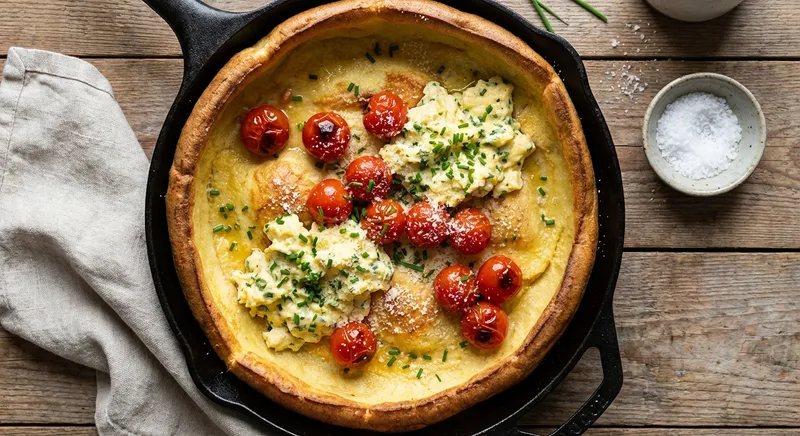
A dramatic, oven-puffed Dutch baby pancake with roasted, caramelized tomatoes and lusciously soft scrambled eggs. The Dutch baby provides a light, golden cradle of airy batter and nutty browned butter while the roasted tomatoes add concentrated sweetness and acidity — finished with herb-kissed, custard-like scrambled eggs for a restaurant-quality brunch.
Preheat and prepare: Position a rack in the center of the oven and preheat to 425°F (220°C). Place a 10-12 inch (25–30 cm) oven-safe skillet (preferably cast iron) in the oven to heat as the oven preheats. Preheating the skillet ensures the butter sizzles immediately when added and that the batter receives a sudden burst of heat and steam — the key to a tall, lacy rise.
Roast the tomatoes: While the oven heats, halve (or thickly slice) the tomatoes, finely chop the onion, and mince the garlic. Toss tomatoes, onion, garlic, olive oil, 1/2 tsp kosher salt, 1/4 tsp black pepper and 1/2 tsp sugar on a rimmed baking sheet or ovenproof dish. Spread into a single layer. The sugar helps caramelize the tomato surface, concentrating sweetness and balancing acidity; the oil encourages even roasting. Roast for 12–15 minutes until edges caramelize and juices concentrate. Remove from oven and keep warm.
Make the Dutch baby batter: In a blender (or large bowl whisk), combine 1 cup (120 g) all-purpose flour, 4 of the large eggs, 1 cup (240 ml) whole milk, 1/2 tsp kosher salt and 1/4 tsp black pepper. Blend or whisk until completely smooth (about 30–45 seconds). A blender is convenient because it fully hydrates the flour and eliminates lumps quickly — a smooth batter promotes an even rise and tender interior. Let batter rest 10–15 minutes at room temperature so the flour hydrates and any trapped air evens out.
Add butter to the hot skillet: Carefully remove the preheated skillet from the oven (use oven mitts). Add 2 tablespoons (28 g) unsalted butter and swirl until melted and foamy but not burnt — the butter should smell nutty and browned at the edges. Pour the rested batter into the hot butter and immediately return the skillet to the oven. The sizzling butter creates steam and a hot surface that helps the edges puff and crisp quickly.
Bake the Dutch baby: Bake for 15–18 minutes without opening the oven door, until the pancake is tall, deeply golden around the edges and set in the center. Opening the oven lets steam escape and will make it collapse; the high initial heat creates the lift and the oven’s enclosed steam helps maintain it while baking.
Prepare the creamy herb scrambled eggs: While the Dutch baby bakes, whisk the remaining 4 eggs with a pinch of salt (about 1/4 tsp), a tablespoon of milk (from the cup reserved—if you prefer, use a splash of cream), and a pinch of pepper until blended. Melt the remaining 2 tablespoons (28 g) butter in a non-stick skillet over low heat. Pour in the eggs and stir gently and constantly with a spatula, scraping the bottom as small curds form. Cook low and slow: this produces large, tender curds and a custardy texture — the contrast to the crisp Dutch baby is what makes the dish feel luxurious. Remove from heat when the eggs are still slightly underdone; they will finish cooking from residual heat.
Finish and assemble: When the Dutch baby is done, remove it from the oven (it will deflate slightly as it cools — that's normal). Cut into four quarters. Spoon a generous portion of the roasted tomatoes into the center of each slice, top with the creamy scrambled eggs, and sprinkle with chopped chives. Season to taste with extra salt and pepper. Serve immediately so the Dutch baby is still warm and contrasting textures are at their best.
Serving suggestion and timing: Serve each portion immediately as the Dutch baby is crispiest right out of the oven and the eggs are at their creamiest. If you need to hold, keep the baked Dutch baby in a warm (150–170°F/65–75°C) oven for a few minutes, but know that the dramatic puff will flatten as it cools.
447
Calories
19g
Protein
32g
Carbs
27g
Fat
2g
Fiber
How did this recipe turn out? Let others know!
to rate this recipe
By Chas Wall
A dramatic, oven-puffed Dutch baby pancake with roasted, caramelized tomatoes and lusciously soft scrambled eggs. The Dutch baby provides a light, golden cradle of airy batter and nutty browned butter while the roasted tomatoes add concentrated sweetness and acidity — finished with herb-kissed, custard-like scrambled eggs for a restaurant-quality brunch.
Preheat and prepare: Position a rack in the center of the oven and preheat to 425°F (220°C). Place a 10-12 inch (25–30 cm) oven-safe skillet (preferably cast iron) in the oven to heat as the oven preheats. Preheating the skillet ensures the butter sizzles immediately when added and that the batter receives a sudden burst of heat and steam — the key to a tall, lacy rise.
Roast the tomatoes: While the oven heats, halve (or thickly slice) the tomatoes, finely chop the onion, and mince the garlic. Toss tomatoes, onion, garlic, olive oil, 1/2 tsp kosher salt, 1/4 tsp black pepper and 1/2 tsp sugar on a rimmed baking sheet or ovenproof dish. Spread into a single layer. The sugar helps caramelize the tomato surface, concentrating sweetness and balancing acidity; the oil encourages even roasting. Roast for 12–15 minutes until edges caramelize and juices concentrate. Remove from oven and keep warm.
Make the Dutch baby batter: In a blender (or large bowl whisk), combine 1 cup (120 g) all-purpose flour, 4 of the large eggs, 1 cup (240 ml) whole milk, 1/2 tsp kosher salt and 1/4 tsp black pepper. Blend or whisk until completely smooth (about 30–45 seconds). A blender is convenient because it fully hydrates the flour and eliminates lumps quickly — a smooth batter promotes an even rise and tender interior. Let batter rest 10–15 minutes at room temperature so the flour hydrates and any trapped air evens out.
Add butter to the hot skillet: Carefully remove the preheated skillet from the oven (use oven mitts). Add 2 tablespoons (28 g) unsalted butter and swirl until melted and foamy but not burnt — the butter should smell nutty and browned at the edges. Pour the rested batter into the hot butter and immediately return the skillet to the oven. The sizzling butter creates steam and a hot surface that helps the edges puff and crisp quickly.
Bake the Dutch baby: Bake for 15–18 minutes without opening the oven door, until the pancake is tall, deeply golden around the edges and set in the center. Opening the oven lets steam escape and will make it collapse; the high initial heat creates the lift and the oven’s enclosed steam helps maintain it while baking.
Prepare the creamy herb scrambled eggs: While the Dutch baby bakes, whisk the remaining 4 eggs with a pinch of salt (about 1/4 tsp), a tablespoon of milk (from the cup reserved—if you prefer, use a splash of cream), and a pinch of pepper until blended. Melt the remaining 2 tablespoons (28 g) butter in a non-stick skillet over low heat. Pour in the eggs and stir gently and constantly with a spatula, scraping the bottom as small curds form. Cook low and slow: this produces large, tender curds and a custardy texture — the contrast to the crisp Dutch baby is what makes the dish feel luxurious. Remove from heat when the eggs are still slightly underdone; they will finish cooking from residual heat.
Finish and assemble: When the Dutch baby is done, remove it from the oven (it will deflate slightly as it cools — that's normal). Cut into four quarters. Spoon a generous portion of the roasted tomatoes into the center of each slice, top with the creamy scrambled eggs, and sprinkle with chopped chives. Season to taste with extra salt and pepper. Serve immediately so the Dutch baby is still warm and contrasting textures are at their best.
Serving suggestion and timing: Serve each portion immediately as the Dutch baby is crispiest right out of the oven and the eggs are at their creamiest. If you need to hold, keep the baked Dutch baby in a warm (150–170°F/65–75°C) oven for a few minutes, but know that the dramatic puff will flatten as it cools.
447
Calories
19g
Protein
32g
Carbs
27g
Fat
2g
Fiber
Your Rating:
