By Aceyem Dickerson
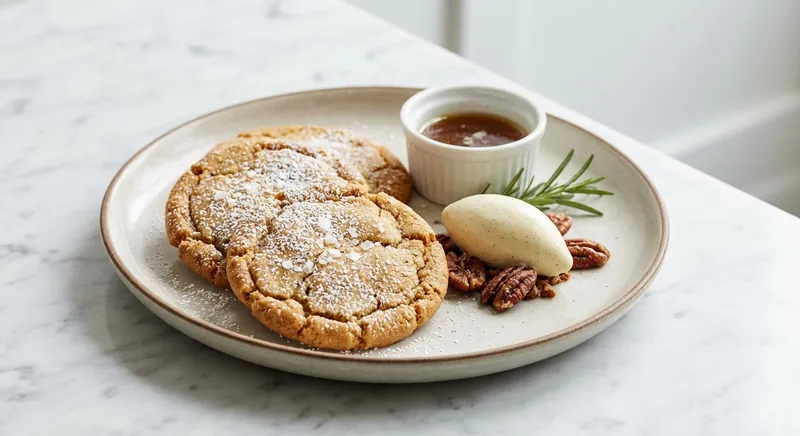
These brown-butter sugar cookies are simple ingredients elevated: nutty, caramelized brown butter, a tender, crisp-edge crumb, and a whisper of vanilla make each cookie taste like a small buttery shortbread with a caramel finish. They’re elegant enough for a café plate yet easy to pull off at home—silky inside, lightly crisp at the edges, and perfect plain or dressed up with an add-in.
Prepare and weigh ingredients. Weighing flour and butter gives consistent results—spoon flour into a cup or, better still, use a kitchen scale (300 g flour, 225 g butter, 200 g sugar). Preheat the oven to 350°F (175°C) and line two baking sheets with parchment or silicone mats. Moving quickly from mise en place to baking keeps the butter temperature ideal.
Brown the butter: place the 225 g butter in a light-colored, medium saucepan over medium heat. Melt and stir gently until the butter foams, then the milk solids sink and brown and the pan smells nutty—about 6–8 minutes. Remove from heat immediately and scrape into a heatproof bowl to stop the cooking. Browning develops deeper caramel and nutty flavors that make the cookies taste complex and bakery-level.
Cool the browned butter: let the butter cool until it’s warm but not hot (about 8–12 minutes). It should still be pourable but not scalding. If it’s too hot when mixed with eggs, it will scramble them; too cool and it won’t incorporate smoothly with sugar. Stir occasionally to help it cool evenly.
Combine wet ingredients: in a large bowl, whisk the eggs (2) with vanilla (1 tsp) and the warm (not hot) browned butter. Whisking dissolves some sugar later and helps produce a tender crumb. If you want a finer crumb and lighter texture, briefly whisk sugar into the wet ingredients in the next step; for a more pronounced sugar crunch, wait until after the flour is added.
Add sugar: stir in the 200 g granulated sugar into the butter-egg mix until mostly dissolved. The warm butter helps dissolve some sugar crystals, which feeds a tender interior while still allowing some sugar to remain for a delicate crunch at the edges.
Sift dry ingredients: whisk together 300 g flour, 1/2 tsp baking powder, and 1/2 tsp sea salt in a bowl to distribute leavening and salt evenly. Sifting aerates the flour slightly, making for a lighter cookie texture and preventing lumps.
Fold dry into wet: add the flour mixture to the butter-sugar-egg bowl in two additions, folding gently with a spatula until just combined. Overmixing develops gluten and will make the cookies tough; stop when you can’t see streaks of flour. The dough will be soft and slightly sticky.
Chill the dough briefly: cover the bowl and chill in the fridge for 20–30 minutes if the dough feels very soft. Cooling firms the butter, which prevents excessive spreading in the oven and concentrates the flavors. If you’re short on time, chill the scooped dough on the tray for 10–12 minutes instead.
Portion the cookies: using a 1.5-tablespoon cookie scoop (or a heaped tablespoon), portion dough into 24 even balls. Roll each gently between your palms to smooth; this creates consistent cookies that bake evenly. Place balls 2 inches (5 cm) apart on the prepared sheets to allow spreading.
Optional finish: for a bakery-style sparkle, sprinkle the tops with coarse sugar just before baking. The coarse sugar caramelizes slightly and gives a pretty, crunchy top.
Bake: slide a sheet into the preheated 350°F (175°C) oven and bake 12–14 minutes until edges are golden and centers still look set but not wet. Baking at this temperature develops a crisp edge while leaving the center tender—the small time window produces the ideal contrast.
Cool properly: remove from the oven and let cookies cool on the tray for 5 minutes (this allows carryover cooking), then transfer to a rack to cool completely. If you remove them immediately they can break; if you leave them too long they may become overly crisp on the bottom.
Storage and serving: store cooled cookies in an airtight container at room temperature up to 4 days, or freeze up to 1 month. To regain a just-baked texture, warm in a 300°F (150°C) oven for 3–4 minutes before serving.
151
Calories
2g
Protein
18g
Carbs
8g
Fat
0g
Fiber
How did this recipe turn out? Let others know!
to rate this recipe
By Aceyem Dickerson
These brown-butter sugar cookies are simple ingredients elevated: nutty, caramelized brown butter, a tender, crisp-edge crumb, and a whisper of vanilla make each cookie taste like a small buttery shortbread with a caramel finish. They’re elegant enough for a café plate yet easy to pull off at home—silky inside, lightly crisp at the edges, and perfect plain or dressed up with an add-in.
Prepare and weigh ingredients. Weighing flour and butter gives consistent results—spoon flour into a cup or, better still, use a kitchen scale (300 g flour, 225 g butter, 200 g sugar). Preheat the oven to 350°F (175°C) and line two baking sheets with parchment or silicone mats. Moving quickly from mise en place to baking keeps the butter temperature ideal.
Brown the butter: place the 225 g butter in a light-colored, medium saucepan over medium heat. Melt and stir gently until the butter foams, then the milk solids sink and brown and the pan smells nutty—about 6–8 minutes. Remove from heat immediately and scrape into a heatproof bowl to stop the cooking. Browning develops deeper caramel and nutty flavors that make the cookies taste complex and bakery-level.
Cool the browned butter: let the butter cool until it’s warm but not hot (about 8–12 minutes). It should still be pourable but not scalding. If it’s too hot when mixed with eggs, it will scramble them; too cool and it won’t incorporate smoothly with sugar. Stir occasionally to help it cool evenly.
Combine wet ingredients: in a large bowl, whisk the eggs (2) with vanilla (1 tsp) and the warm (not hot) browned butter. Whisking dissolves some sugar later and helps produce a tender crumb. If you want a finer crumb and lighter texture, briefly whisk sugar into the wet ingredients in the next step; for a more pronounced sugar crunch, wait until after the flour is added.
Add sugar: stir in the 200 g granulated sugar into the butter-egg mix until mostly dissolved. The warm butter helps dissolve some sugar crystals, which feeds a tender interior while still allowing some sugar to remain for a delicate crunch at the edges.
Sift dry ingredients: whisk together 300 g flour, 1/2 tsp baking powder, and 1/2 tsp sea salt in a bowl to distribute leavening and salt evenly. Sifting aerates the flour slightly, making for a lighter cookie texture and preventing lumps.
Fold dry into wet: add the flour mixture to the butter-sugar-egg bowl in two additions, folding gently with a spatula until just combined. Overmixing develops gluten and will make the cookies tough; stop when you can’t see streaks of flour. The dough will be soft and slightly sticky.
Chill the dough briefly: cover the bowl and chill in the fridge for 20–30 minutes if the dough feels very soft. Cooling firms the butter, which prevents excessive spreading in the oven and concentrates the flavors. If you’re short on time, chill the scooped dough on the tray for 10–12 minutes instead.
Portion the cookies: using a 1.5-tablespoon cookie scoop (or a heaped tablespoon), portion dough into 24 even balls. Roll each gently between your palms to smooth; this creates consistent cookies that bake evenly. Place balls 2 inches (5 cm) apart on the prepared sheets to allow spreading.
Optional finish: for a bakery-style sparkle, sprinkle the tops with coarse sugar just before baking. The coarse sugar caramelizes slightly and gives a pretty, crunchy top.
Bake: slide a sheet into the preheated 350°F (175°C) oven and bake 12–14 minutes until edges are golden and centers still look set but not wet. Baking at this temperature develops a crisp edge while leaving the center tender—the small time window produces the ideal contrast.
Cool properly: remove from the oven and let cookies cool on the tray for 5 minutes (this allows carryover cooking), then transfer to a rack to cool completely. If you remove them immediately they can break; if you leave them too long they may become overly crisp on the bottom.
Storage and serving: store cooled cookies in an airtight container at room temperature up to 4 days, or freeze up to 1 month. To regain a just-baked texture, warm in a 300°F (150°C) oven for 3–4 minutes before serving.
151
Calories
2g
Protein
18g
Carbs
8g
Fat
0g
Fiber
Your Rating:
