By Jodi Chila
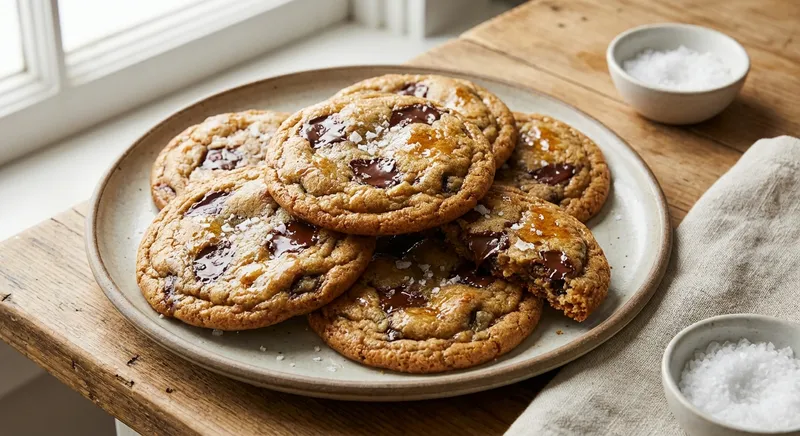
These cookies combine the best of rich butter flavor with a spoonful of neutral oil for an irresistibly tender, chewy center and crisp, golden edges. Brown sugar lends caramel notes while a splash of milk keeps the dough soft and gives a slightly custardy crumb — studded with semi-sweet chocolate chips for pockets of molten chocolate in every bite.
Prep: Position oven rack in the center and preheat the oven to 175°C (350°F). Line two baking sheets with parchment paper or a reusable silicone mat. Pre-measuring ingredients saves time and keeps the process smooth.
Cream the butter and sugars: In a large mixing bowl, place the room-temperature unsalted butter (113 g), granulated sugar (100 g), and packed light brown sugar (110 g). Using a stand mixer with the paddle attachment or a handheld mixer set to medium speed, beat for 2–3 minutes until the mixture is pale and slightly fluffy. Why: Creaming incorporates air into the butter-sugar matrix, creating lift and a light texture; the brown sugar's molasses helps the cookie stay moist and chewier.
Add oil, egg, milk, and vanilla: Reduce the mixer speed to low. Pour in the neutral oil (28 g), the large egg, whole milk (60 ml), and vanilla (1 tsp). Mix until just combined. Why: The oil adds tenderizing fat that yields a softer crumb than butter alone; milk contributes moisture and a faint dairy richness. Mixing gently avoids over-incorporating air which can make cookies cakey.
Combine dry ingredients: In a separate bowl whisk together the all-purpose flour (300 g), baking soda (1 tsp) and fine sea salt (1/2 tsp). Whisking distributes the raising agent and salt evenly, ensuring uniform rise and seasoning throughout every cookie.
Fold dry into wet: Add the dry ingredients to the wet mixture in two additions, folding with a rubber spatula or mixing on very low speed until no dry streaks remain. Do not overmix. Why: Overmixing develops gluten and will make cookies tough — stop as soon as the dough comes together for a tender result.
Add chocolate chips: Fold in the semisweet chocolate chips (170 g) by hand so they’re distributed without overworking the dough. Why: Hand-folding prevents chip pulverization and helps you control distribution so each cookie gets good pockets of chocolate.
Chill (optional but recommended): Cover the bowl with plastic wrap and chill the dough for 30–60 minutes in the refrigerator. Why: Chilling firms the fat and allows the flour to hydrate; this slows spread during baking and concentrates flavor, yielding cookies with a thicker, chewier center and crisp edges.
Portion the cookies: Use a 1.5 tablespoon cookie scoop (or scale portions to roughly 28–30 g each) to portion dough onto the prepared baking sheets, spacing them about 2 inches apart. Slightly press additional chips on top of each mound for an attractive finish. Why: Uniform portions bake evenly; pressing chips onto the top gives a professional bakery appearance.
Bake: Bake one tray at a time on the center rack for 10–12 minutes, until the edges are golden and centers still look slightly underbaked. Rotate the tray halfway through if your oven runs hot. Why: Removing the cookies when centers still look a touch soft ensures they finish with a tender, chewy interior as they finish on the hot sheet outside the oven.
Finish and cool: Let the cookies cool on the baking sheet for 5 minutes (this allows residual heat to finish the bake and sets structure), then transfer to a wire rack to cool completely. If using, sprinkle a small pinch of flaky salt on warm cookies for a balanced sweet-salty contrast.
Storage: Once fully cooled, store cookies in an airtight container at room temperature for up to 5 days; place a slice of bread in the container to maintain softness (the bread rehydrates the cookies slightly). For longer storage freeze the baked cookies, well-wrapped, up to 3 months.
486
Calories
6g
Protein
68g
Carbs
21g
Fat
2g
Fiber
How did this recipe turn out? Let others know!
to rate this recipe
By Jodi Chila
These cookies combine the best of rich butter flavor with a spoonful of neutral oil for an irresistibly tender, chewy center and crisp, golden edges. Brown sugar lends caramel notes while a splash of milk keeps the dough soft and gives a slightly custardy crumb — studded with semi-sweet chocolate chips for pockets of molten chocolate in every bite.
Prep: Position oven rack in the center and preheat the oven to 175°C (350°F). Line two baking sheets with parchment paper or a reusable silicone mat. Pre-measuring ingredients saves time and keeps the process smooth.
Cream the butter and sugars: In a large mixing bowl, place the room-temperature unsalted butter (113 g), granulated sugar (100 g), and packed light brown sugar (110 g). Using a stand mixer with the paddle attachment or a handheld mixer set to medium speed, beat for 2–3 minutes until the mixture is pale and slightly fluffy. Why: Creaming incorporates air into the butter-sugar matrix, creating lift and a light texture; the brown sugar's molasses helps the cookie stay moist and chewier.
Add oil, egg, milk, and vanilla: Reduce the mixer speed to low. Pour in the neutral oil (28 g), the large egg, whole milk (60 ml), and vanilla (1 tsp). Mix until just combined. Why: The oil adds tenderizing fat that yields a softer crumb than butter alone; milk contributes moisture and a faint dairy richness. Mixing gently avoids over-incorporating air which can make cookies cakey.
Combine dry ingredients: In a separate bowl whisk together the all-purpose flour (300 g), baking soda (1 tsp) and fine sea salt (1/2 tsp). Whisking distributes the raising agent and salt evenly, ensuring uniform rise and seasoning throughout every cookie.
Fold dry into wet: Add the dry ingredients to the wet mixture in two additions, folding with a rubber spatula or mixing on very low speed until no dry streaks remain. Do not overmix. Why: Overmixing develops gluten and will make cookies tough — stop as soon as the dough comes together for a tender result.
Add chocolate chips: Fold in the semisweet chocolate chips (170 g) by hand so they’re distributed without overworking the dough. Why: Hand-folding prevents chip pulverization and helps you control distribution so each cookie gets good pockets of chocolate.
Chill (optional but recommended): Cover the bowl with plastic wrap and chill the dough for 30–60 minutes in the refrigerator. Why: Chilling firms the fat and allows the flour to hydrate; this slows spread during baking and concentrates flavor, yielding cookies with a thicker, chewier center and crisp edges.
Portion the cookies: Use a 1.5 tablespoon cookie scoop (or scale portions to roughly 28–30 g each) to portion dough onto the prepared baking sheets, spacing them about 2 inches apart. Slightly press additional chips on top of each mound for an attractive finish. Why: Uniform portions bake evenly; pressing chips onto the top gives a professional bakery appearance.
Bake: Bake one tray at a time on the center rack for 10–12 minutes, until the edges are golden and centers still look slightly underbaked. Rotate the tray halfway through if your oven runs hot. Why: Removing the cookies when centers still look a touch soft ensures they finish with a tender, chewy interior as they finish on the hot sheet outside the oven.
Finish and cool: Let the cookies cool on the baking sheet for 5 minutes (this allows residual heat to finish the bake and sets structure), then transfer to a wire rack to cool completely. If using, sprinkle a small pinch of flaky salt on warm cookies for a balanced sweet-salty contrast.
Storage: Once fully cooled, store cookies in an airtight container at room temperature for up to 5 days; place a slice of bread in the container to maintain softness (the bread rehydrates the cookies slightly). For longer storage freeze the baked cookies, well-wrapped, up to 3 months.
486
Calories
6g
Protein
68g
Carbs
21g
Fat
2g
Fiber
Your Rating:
