By Jodi Chila
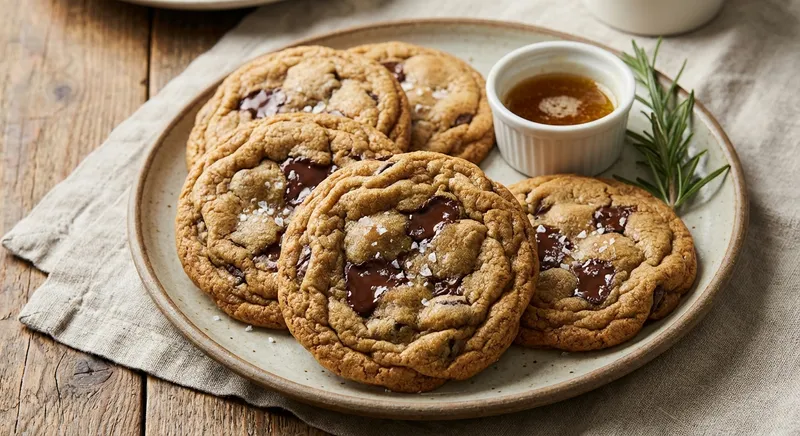
Buttery, caramel-scented cookies with a truly chewy center and crisped edges — achieved by browning butter for nutty complexity and adding a touch of neutral oil for extra chew. Studded with semi-sweet chocolate, these cookies balance deep toffee notes, warm vanilla, and a soft, slightly underbaked interior that melts on the tongue — a small upgrade that makes a familiar cookie feel restaurant-quality.
Brown the butter: Place the 170 g unsalted butter in a medium light-colored saucepan over medium heat. Melt, then continue to cook, stirring frequently, until it foams and then begins to turn golden-brown with nutty aroma (3–6 minutes). Remove from heat and immediately transfer to a heatproof bowl to stop cooking. Why: Browning develops Maillard and caramelized milk solids that add deep toffee and nutty notes — a simple flavor upgrade that reads as 'chef-made.' Stopping the cooking prevents burning.
Cool slightly and add oil: Let the browned butter cool 3–5 minutes so it's warm but not hot, then whisk in 30 g neutral oil. Why: The oil keeps the cookies extra chewy by inhibiting full butter recrystallization and helps the dough spread slightly for thin, crisper edges while preserving a soft center.
Combine sugars and wet ingredients: In a large mixing bowl, whisk together 100 g granulated sugar and 150 g packed brown sugar. Add the warm browned-butter/oil mixture and whisk until smooth and slightly glossy. Why: Mixing sugar with warm fat helps dissolve some sugar crystals and meld flavors — contributing to a silkier dough and more even browning.
Add eggs and milk: Add 2 large eggs (room temperature) one at a time, whisking just until incorporated, then stir in 60 g whole milk and 10 g vanilla extract. Why: Eggs provide structure and moisture; adding them one at a time ensures even emulsification. A small splash of milk increases tenderness and keeps the dough pliable, which helps achieve a fudgy crumb.
Dry ingredients: In a separate bowl, whisk together 300 g all-purpose flour, 5 g baking soda, and 5 g fine sea salt. Why: Whisking the dry ingredients evenly distributes leavening and salt so the cookies rise uniformly and flavor is balanced throughout.
Combine wet and dry: Using a sturdy spatula, fold the dry mix into the wet in two additions. Fold just until you no longer see streaks of flour — do not overmix. Why: Overmixing develops gluten and makes cookies tough; gentle folding yields a tender but structured crumb.
Fold in chocolate: Gently fold in 170 g semisweet chocolate chips until evenly distributed. Why: Fold at the end to avoid breaking chips and to maintain dough texture.
Chill the dough (optional but recommended): Cover the bowl and refrigerate for 30–60 minutes. Why: Chilling firms the fat so the cookies spread less in the oven, concentrates flavors, and improves texture — 30 minutes is enough for better results; longer (up to 24 hours) deepens flavor.
Preheat and portion: Preheat oven to 180°C/350°F. Line two baking sheets with parchment paper or a silicone mat. Using a 60–65 g ice cream scoop or two spoons, portion dough into 18 equal balls about 2 tbsp each and place them 2–3 inches apart on the sheet. Why: Uniform portions ensure even baking and consistent chew between cookies.
Top and flatten slightly: If desired, press a few extra chocolate chips and a light sprinkle of flaky sea salt onto each ball, then gently press each ball to slightly flatten (about 1/2" thick). Why: Adding chips on top makes the cookie photogenic and the salt brightens and balances the sweetness.
Bake: Bake in the preheated oven 10–12 minutes, rotating the pan halfway through. Pull them when edges are golden-brown and centers still look slightly underbaked and glossy. Why: Pulling slightly early ensures a chewy, fudgy center — cookies continue cooking on the sheet from residual heat.
Cool: Let cookies rest on the baking sheet 5 minutes, then transfer to a wire rack to cool completely. Why: The brief rest allows structure to set so they don't break when moved; cooling on a rack prevents sogginess from trapped steam.
254
Calories
3g
Protein
32g
Carbs
13g
Fat
1g
Fiber
How did this recipe turn out? Let others know!
to rate this recipe
By Jodi Chila
Buttery, caramel-scented cookies with a truly chewy center and crisped edges — achieved by browning butter for nutty complexity and adding a touch of neutral oil for extra chew. Studded with semi-sweet chocolate, these cookies balance deep toffee notes, warm vanilla, and a soft, slightly underbaked interior that melts on the tongue — a small upgrade that makes a familiar cookie feel restaurant-quality.
Brown the butter: Place the 170 g unsalted butter in a medium light-colored saucepan over medium heat. Melt, then continue to cook, stirring frequently, until it foams and then begins to turn golden-brown with nutty aroma (3–6 minutes). Remove from heat and immediately transfer to a heatproof bowl to stop cooking. Why: Browning develops Maillard and caramelized milk solids that add deep toffee and nutty notes — a simple flavor upgrade that reads as 'chef-made.' Stopping the cooking prevents burning.
Cool slightly and add oil: Let the browned butter cool 3–5 minutes so it's warm but not hot, then whisk in 30 g neutral oil. Why: The oil keeps the cookies extra chewy by inhibiting full butter recrystallization and helps the dough spread slightly for thin, crisper edges while preserving a soft center.
Combine sugars and wet ingredients: In a large mixing bowl, whisk together 100 g granulated sugar and 150 g packed brown sugar. Add the warm browned-butter/oil mixture and whisk until smooth and slightly glossy. Why: Mixing sugar with warm fat helps dissolve some sugar crystals and meld flavors — contributing to a silkier dough and more even browning.
Add eggs and milk: Add 2 large eggs (room temperature) one at a time, whisking just until incorporated, then stir in 60 g whole milk and 10 g vanilla extract. Why: Eggs provide structure and moisture; adding them one at a time ensures even emulsification. A small splash of milk increases tenderness and keeps the dough pliable, which helps achieve a fudgy crumb.
Dry ingredients: In a separate bowl, whisk together 300 g all-purpose flour, 5 g baking soda, and 5 g fine sea salt. Why: Whisking the dry ingredients evenly distributes leavening and salt so the cookies rise uniformly and flavor is balanced throughout.
Combine wet and dry: Using a sturdy spatula, fold the dry mix into the wet in two additions. Fold just until you no longer see streaks of flour — do not overmix. Why: Overmixing develops gluten and makes cookies tough; gentle folding yields a tender but structured crumb.
Fold in chocolate: Gently fold in 170 g semisweet chocolate chips until evenly distributed. Why: Fold at the end to avoid breaking chips and to maintain dough texture.
Chill the dough (optional but recommended): Cover the bowl and refrigerate for 30–60 minutes. Why: Chilling firms the fat so the cookies spread less in the oven, concentrates flavors, and improves texture — 30 minutes is enough for better results; longer (up to 24 hours) deepens flavor.
Preheat and portion: Preheat oven to 180°C/350°F. Line two baking sheets with parchment paper or a silicone mat. Using a 60–65 g ice cream scoop or two spoons, portion dough into 18 equal balls about 2 tbsp each and place them 2–3 inches apart on the sheet. Why: Uniform portions ensure even baking and consistent chew between cookies.
Top and flatten slightly: If desired, press a few extra chocolate chips and a light sprinkle of flaky sea salt onto each ball, then gently press each ball to slightly flatten (about 1/2" thick). Why: Adding chips on top makes the cookie photogenic and the salt brightens and balances the sweetness.
Bake: Bake in the preheated oven 10–12 minutes, rotating the pan halfway through. Pull them when edges are golden-brown and centers still look slightly underbaked and glossy. Why: Pulling slightly early ensures a chewy, fudgy center — cookies continue cooking on the sheet from residual heat.
Cool: Let cookies rest on the baking sheet 5 minutes, then transfer to a wire rack to cool completely. Why: The brief rest allows structure to set so they don't break when moved; cooling on a rack prevents sogginess from trapped steam.
254
Calories
3g
Protein
32g
Carbs
13g
Fat
1g
Fiber
Your Rating:
