By Gojo
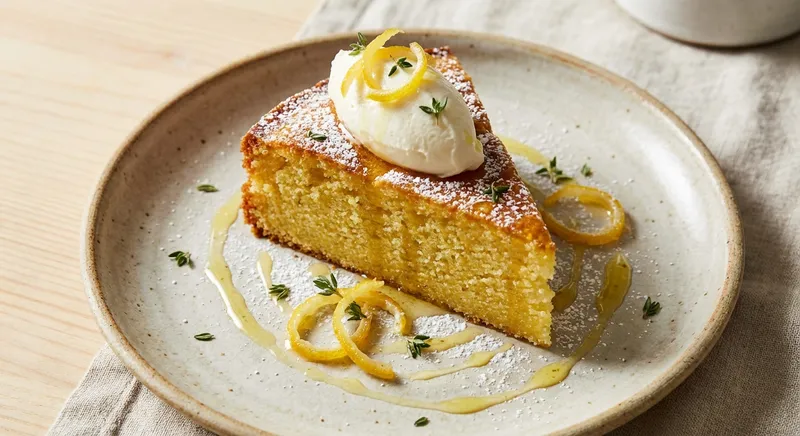
A tender, moist olive-oil cake with a fine, silken crumb and bright lemon-vanilla aromatics. The cake's delicate texture comes from whisking eggs and sugar to trap air, then gently folding in oil and flour — producing a rustic yet refined dessert that pairs beautifully with fresh fruit, whipped cream or a drizzle of honey.
Preheat the oven to 350°F (175°C). Grease an 8- or 9-inch (20–23 cm) round cake pan and line the bottom with parchment. This ensures even baking and makes unmolding simple — parchment prevents the base from sticking while greasing the sides helps the batter climb slightly for an even rise.
Whisk together dry ingredients: sift (or whisk) the all-purpose flour with the baking powder and salt in a medium bowl. Sifting aerates the flour and evenly distributes the leavening, which helps the cake rise uniformly.
In a large mixing bowl, combine the eggs and granulated sugar. Using a hand whisk or electric mixer, whisk on medium-high for 3–5 minutes until the mixture is pale, slightly thickened and forms ribbons when the whisk is lifted. This step traps air in the egg-sugar foam — those tiny air bubbles are your primary leavening in this cake and give it a light crumb without needing many eggs or excessive leavener.
Add the flavor: whisk in the vanilla extract and lemon zest (if using). Aromatics added at this stage integrate into the egg foam, distributing flavor evenly rather than settling to the bottom.
Temper in the oil: with the mixer or whisk running on low, slowly stream in about two-thirds of the oil, then stop and fold the remaining oil in by hand with a spatula. Slowly incorporating the oil helps it emulsify into the egg-sugar foam rather than separating; emulsification gives a silky crumb and prevents oily pockets.
Alternate in the dry and milk: Add one-third of the flour mixture to the egg-oil batter and fold gently to combine (folding preserves the trapped air). Add half the milk and fold again. Continue in this pattern — flour, remaining milk, then final flour — folding until just combined. Alternating prevents overmixing by minimizing the time the gluten in the flour is developing while ensuring a uniform, moist batter.
Finish the batter: give a final gentle fold to make sure there are no streaks of flour, but stop as soon as the batter is homogeneous. Overworking the batter will develop gluten and make the cake dense and chewier instead of tender.
Bake: pour the batter into the prepared pan and smooth the top. Bake for 35–40 minutes at 350°F (175°C), rotating the pan halfway through if your oven has hot spots. The cake is done when the top is golden, springs back lightly to the touch, and a toothpick inserted in the center comes out with a few moist crumbs (not wet batter). Baking at this moderate temperature ensures even set while preserving moisture.
Cool and unmold: let the cake cool in the pan on a wire rack for 10–12 minutes — the structure firms up during this time, making unmolding safer. Run a thin knife around the edge, invert onto the rack, remove parchment, then invert again if you want the top as the presentation surface. Cool completely before slicing to avoid a gummy texture.
Serve: dust with powdered sugar just before serving (it melts if left too long), or serve with fresh berries and softly whipped cream or yogurt. The gentle olive-oil flavor and fine crumb make a versatile base for many accompaniments.
423
Calories
5g
Protein
49g
Carbs
23g
Fat
1g
Fiber
How did this recipe turn out? Let others know!
to rate this recipe
By Gojo
A tender, moist olive-oil cake with a fine, silken crumb and bright lemon-vanilla aromatics. The cake's delicate texture comes from whisking eggs and sugar to trap air, then gently folding in oil and flour — producing a rustic yet refined dessert that pairs beautifully with fresh fruit, whipped cream or a drizzle of honey.
Preheat the oven to 350°F (175°C). Grease an 8- or 9-inch (20–23 cm) round cake pan and line the bottom with parchment. This ensures even baking and makes unmolding simple — parchment prevents the base from sticking while greasing the sides helps the batter climb slightly for an even rise.
Whisk together dry ingredients: sift (or whisk) the all-purpose flour with the baking powder and salt in a medium bowl. Sifting aerates the flour and evenly distributes the leavening, which helps the cake rise uniformly.
In a large mixing bowl, combine the eggs and granulated sugar. Using a hand whisk or electric mixer, whisk on medium-high for 3–5 minutes until the mixture is pale, slightly thickened and forms ribbons when the whisk is lifted. This step traps air in the egg-sugar foam — those tiny air bubbles are your primary leavening in this cake and give it a light crumb without needing many eggs or excessive leavener.
Add the flavor: whisk in the vanilla extract and lemon zest (if using). Aromatics added at this stage integrate into the egg foam, distributing flavor evenly rather than settling to the bottom.
Temper in the oil: with the mixer or whisk running on low, slowly stream in about two-thirds of the oil, then stop and fold the remaining oil in by hand with a spatula. Slowly incorporating the oil helps it emulsify into the egg-sugar foam rather than separating; emulsification gives a silky crumb and prevents oily pockets.
Alternate in the dry and milk: Add one-third of the flour mixture to the egg-oil batter and fold gently to combine (folding preserves the trapped air). Add half the milk and fold again. Continue in this pattern — flour, remaining milk, then final flour — folding until just combined. Alternating prevents overmixing by minimizing the time the gluten in the flour is developing while ensuring a uniform, moist batter.
Finish the batter: give a final gentle fold to make sure there are no streaks of flour, but stop as soon as the batter is homogeneous. Overworking the batter will develop gluten and make the cake dense and chewier instead of tender.
Bake: pour the batter into the prepared pan and smooth the top. Bake for 35–40 minutes at 350°F (175°C), rotating the pan halfway through if your oven has hot spots. The cake is done when the top is golden, springs back lightly to the touch, and a toothpick inserted in the center comes out with a few moist crumbs (not wet batter). Baking at this moderate temperature ensures even set while preserving moisture.
Cool and unmold: let the cake cool in the pan on a wire rack for 10–12 minutes — the structure firms up during this time, making unmolding safer. Run a thin knife around the edge, invert onto the rack, remove parchment, then invert again if you want the top as the presentation surface. Cool completely before slicing to avoid a gummy texture.
Serve: dust with powdered sugar just before serving (it melts if left too long), or serve with fresh berries and softly whipped cream or yogurt. The gentle olive-oil flavor and fine crumb make a versatile base for many accompaniments.
423
Calories
5g
Protein
49g
Carbs
23g
Fat
1g
Fiber
Your Rating:
