By Chris Wiggins
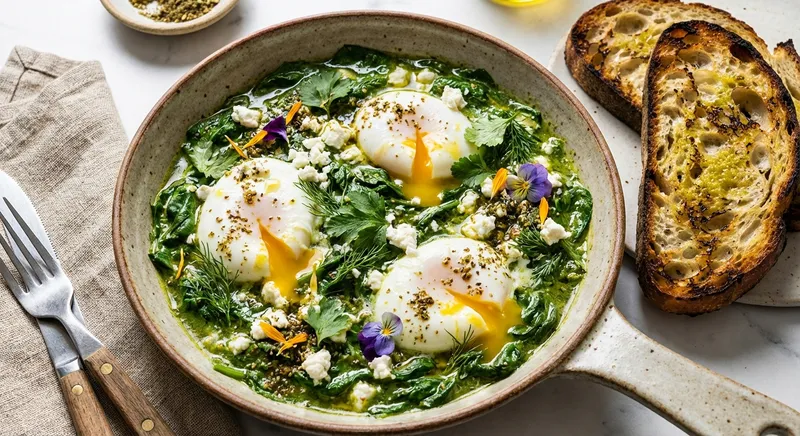
Bright, herb-forward shakshuka dressed in smoky paprika and warm cumin, studded with blistered cherry tomatoes, tender asparagus and sweet spring peas, then finished with a squeeze of lemon and a scattering of parsley and chives. Served with rustic sourdough brushed with lemon-zested olive oil, this dish balances lively acidity, silky poached eggs and toasty bread for sopping—perfect for a celebratory brunch or a fresh weeknight meal.
Prep everything first: halve the cherry tomatoes, trim and slice the asparagus on the diagonal, finely dice the shallot, mince the garlic, chop the parsley and chives, zest the lemon, and measure spices. Why: mise en place keeps the short cooking time smooth and prevents overcooking the eggs while you hunt for an ingredient.
Toast the sourdough: heat a skillet or grill pan over medium, brush each slice with 1 tsp olive oil and sprinkle the lemon zest over the top, then toast until deeply golden (about 1–2 minutes per side). Why: toasting with oil and lemon zest builds a fragrant, crisp surface that can take the juices from the shakshuka without turning soggy; the slight char adds smoky contrast.
Warm a 10–12 inch (25–30 cm) nonstick or well-seasoned cast-iron skillet over medium heat and add 1 tbsp olive oil. Add the diced shallot and a pinch of salt and sweat gently for 2–3 minutes until translucent but not browned. Why: gentle sweating extracts sweetness and softens the shallot so it melds into the tomato sauce without bitter notes that come from browning too early.
Add the minced garlic and spices (smoked paprika, cumin, crushed red pepper) to the shallot and cook for 30 seconds, stirring constantly. Why: to 'bloom' the spices—brief exposure to hot oil releases their aromatic oils and deepens flavor; too long will burn the garlic and make it bitter, so keep it short.
Increase heat to medium-high, add the halved cherry tomatoes and 1/4 tsp sea salt, and cook, stirring occasionally, until the tomatoes begin to break down and blister (about 4–6 minutes). Press a few with the back of a spoon to release juices. Why: blistering concentrates tomato flavor and creates a loose sauce with both bright acid and caramelized sweetness—key to a balanced shakshuka base.
Stir in the spring peas and sliced asparagus and cook 2 minutes to heat through and maintain a tender-crisp texture. If peas are frozen and a little dry, add a splash (1–2 tbsp) of water and cover briefly to steam for 1 minute. Why: vegetables added late keep their color and fresh bite; overcooking them would make the dish flat and mushy.
Taste and adjust seasoning—add black pepper and a little more salt if needed. Reduce heat to medium-low. Why: seasoning now ensures the vegetables and tomato base are balanced before the eggs are added; salt also helps the tomato juices relax and meld into a saucier consistency.
Make two shallow wells in the tomato-vegetable mixture with the back of a spoon. Crack two eggs into a small bowl and gently slide them into the wells; repeat for the second serving (total 4 eggs). Why: cracking eggs into a bowl first helps you slide them gently into the wells and avoids shell fragments or broken yolks.
Cover the skillet and poach the eggs to your liking: 5–6 minutes for set whites and runny yolks, 7–8 minutes for more set yolks. Alternatively, finish under a hot broiler for 2–3 minutes—watch closely. Why: covering traps steam so the eggs cook evenly from the top without stirring the tomato base; this preserves the silky yolk that's essential for dipping toast.
While the eggs finish, toss the chopped parsley and chives together with a tiny pinch of salt. Why: the salt wakes up the herbs and helps integrate their flavor when sprinkled over the finished dish.
Remove the skillet from heat. Sprinkle the herb mix over the shakshuka, grind a little fresh black pepper, and finish each portion with a squeeze of lemon. Serve each skillet portion with a lemon-zested sourdough slice for sopping. Why: finishing acids (lemon) brighten the dish and cut through the olive oil; fresh herbs add a green lift and visual contrast.
Serve immediately, encouraging diners to tear pieces of toast and dip into the runny yolk and tomato sauce. Why: shakshuka is best hot and just-cooked—the contrast of hot sauce and silky egg with crisp, zesty toast is the point of the dish.
590
Calories
25g
Protein
59g
Carbs
32g
Fat
6g
Fiber
How did this recipe turn out? Let others know!
to rate this recipe
By Chris Wiggins
Bright, herb-forward shakshuka dressed in smoky paprika and warm cumin, studded with blistered cherry tomatoes, tender asparagus and sweet spring peas, then finished with a squeeze of lemon and a scattering of parsley and chives. Served with rustic sourdough brushed with lemon-zested olive oil, this dish balances lively acidity, silky poached eggs and toasty bread for sopping—perfect for a celebratory brunch or a fresh weeknight meal.
Prep everything first: halve the cherry tomatoes, trim and slice the asparagus on the diagonal, finely dice the shallot, mince the garlic, chop the parsley and chives, zest the lemon, and measure spices. Why: mise en place keeps the short cooking time smooth and prevents overcooking the eggs while you hunt for an ingredient.
Toast the sourdough: heat a skillet or grill pan over medium, brush each slice with 1 tsp olive oil and sprinkle the lemon zest over the top, then toast until deeply golden (about 1–2 minutes per side). Why: toasting with oil and lemon zest builds a fragrant, crisp surface that can take the juices from the shakshuka without turning soggy; the slight char adds smoky contrast.
Warm a 10–12 inch (25–30 cm) nonstick or well-seasoned cast-iron skillet over medium heat and add 1 tbsp olive oil. Add the diced shallot and a pinch of salt and sweat gently for 2–3 minutes until translucent but not browned. Why: gentle sweating extracts sweetness and softens the shallot so it melds into the tomato sauce without bitter notes that come from browning too early.
Add the minced garlic and spices (smoked paprika, cumin, crushed red pepper) to the shallot and cook for 30 seconds, stirring constantly. Why: to 'bloom' the spices—brief exposure to hot oil releases their aromatic oils and deepens flavor; too long will burn the garlic and make it bitter, so keep it short.
Increase heat to medium-high, add the halved cherry tomatoes and 1/4 tsp sea salt, and cook, stirring occasionally, until the tomatoes begin to break down and blister (about 4–6 minutes). Press a few with the back of a spoon to release juices. Why: blistering concentrates tomato flavor and creates a loose sauce with both bright acid and caramelized sweetness—key to a balanced shakshuka base.
Stir in the spring peas and sliced asparagus and cook 2 minutes to heat through and maintain a tender-crisp texture. If peas are frozen and a little dry, add a splash (1–2 tbsp) of water and cover briefly to steam for 1 minute. Why: vegetables added late keep their color and fresh bite; overcooking them would make the dish flat and mushy.
Taste and adjust seasoning—add black pepper and a little more salt if needed. Reduce heat to medium-low. Why: seasoning now ensures the vegetables and tomato base are balanced before the eggs are added; salt also helps the tomato juices relax and meld into a saucier consistency.
Make two shallow wells in the tomato-vegetable mixture with the back of a spoon. Crack two eggs into a small bowl and gently slide them into the wells; repeat for the second serving (total 4 eggs). Why: cracking eggs into a bowl first helps you slide them gently into the wells and avoids shell fragments or broken yolks.
Cover the skillet and poach the eggs to your liking: 5–6 minutes for set whites and runny yolks, 7–8 minutes for more set yolks. Alternatively, finish under a hot broiler for 2–3 minutes—watch closely. Why: covering traps steam so the eggs cook evenly from the top without stirring the tomato base; this preserves the silky yolk that's essential for dipping toast.
While the eggs finish, toss the chopped parsley and chives together with a tiny pinch of salt. Why: the salt wakes up the herbs and helps integrate their flavor when sprinkled over the finished dish.
Remove the skillet from heat. Sprinkle the herb mix over the shakshuka, grind a little fresh black pepper, and finish each portion with a squeeze of lemon. Serve each skillet portion with a lemon-zested sourdough slice for sopping. Why: finishing acids (lemon) brighten the dish and cut through the olive oil; fresh herbs add a green lift and visual contrast.
Serve immediately, encouraging diners to tear pieces of toast and dip into the runny yolk and tomato sauce. Why: shakshuka is best hot and just-cooked—the contrast of hot sauce and silky egg with crisp, zesty toast is the point of the dish.
590
Calories
25g
Protein
59g
Carbs
32g
Fat
6g
Fiber
Your Rating:
