By Gojo
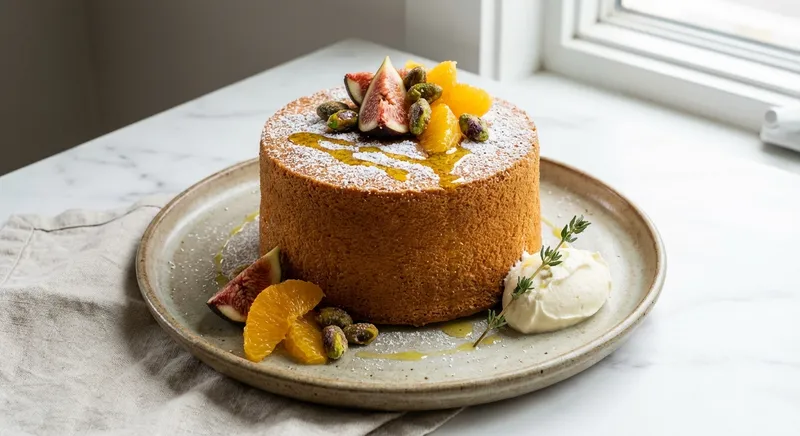
An airy, golden sponge with a silky crumb and a delicate olive-oil richness — light enough to be a breakfast centerpiece and elegant enough for a restaurant dessert. Whipping whole eggs and sugar into a glossy, voluminous ribbon before gently folding in flour and a ribbon of oil gives a tender, moist cake with a fine crumb and a fragrant olive-oil finish.
Preheat the oven to 175°C (350°F). Lightly oil an 8-inch (20 cm) round cake pan and line the bottom with parchment. Preheating ensures the oven is at the right temperature so the sponge rises properly and sets quickly, producing a light crumb.
Set a large heatproof mixing bowl over (but not touching) barely simmering water to make a bain-marie. Add the eggs and the granulated sugar to the bowl. Warm gently while whisking until the mixture reaches about 40–45°C (104–113°F) or until the sugar dissolves and the mixture feels warm to the touch. Warming the eggs and sugar dissolves the sugar and makes it easier to incorporate air when you whip them; it also stabilizes the foam and gives the cake volume and a fine crumb.
Remove the bowl from the heat. Using an electric mixer (preferred) or a whisk, beat the warm eggs and sugar on medium-high speed until the mixture is pale, tripled in volume, and falls in a ribbon when the beaters are lifted (this is called the 'ribbon stage' — takes ~6–8 minutes with a mixer, longer by hand). Achieving the ribbon stage traps warm, stable air in the eggs which is the leavening for this cake, so don't rush this step.
In a small bowl, whisk the oil with the vanilla extract. Sift the flour and the pinch of salt together twice to ensure it is lump-free and aerated. Sifting prevents clumps and makes folding easier — you want minimal deflation of the egg foam.
Fold one-third of the sifted flour into the egg-sugar foam with a large spatula using an under-and-over motion to preserve air. Do this gently and deliberately: cutting through the center, sweeping under, and turning the bowl. The goal is to incorporate dry ingredients without knocking out the aeration that creates the light structure.
Repeat folding in the remaining flour in two additions until mostly incorporated. At the final addition, drizzle half the oil mixture over the batter and fold in gently, then add the remaining oil and fold just until no streaks remain. Adding oil in two stages disperses the fat more evenly into the delicate batter and reduces the chance of breaking the foam.
Pour the batter into the prepared pan and smooth the top with a spatula. Tap the pan gently once on the counter to eliminate any large air pockets — but avoid multiple knocks that will deflate the structure you worked to create.
Bake for 20–25 minutes, or until the top is golden and a skewer inserted into the center comes out clean or with a few moist crumbs. Baking at moderate heat lets the interior set evenly without hardening the crust too fast; a too-high oven will darken the outside before the center cooks.
Remove the cake from the oven and let it cool in the pan for 10 minutes to set. Then run a thin knife around the edge, invert onto a wire rack, and remove the parchment. Cooling briefly in the pan allows the cake to finish setting and keeps it from tearing when unmolding.
Let cool completely on the rack before slicing. Serve plain, dusted with a little sugar, with fresh fruit, or a light crème fraîche for contrast. Resting the cake fully gives the crumb a chance to relax and finish its texture — slicing warm will produce a gummy interior.
229
Calories
5g
Protein
31g
Carbs
10g
Fat
0g
Fiber
How did this recipe turn out? Let others know!
to rate this recipe
By Gojo
An airy, golden sponge with a silky crumb and a delicate olive-oil richness — light enough to be a breakfast centerpiece and elegant enough for a restaurant dessert. Whipping whole eggs and sugar into a glossy, voluminous ribbon before gently folding in flour and a ribbon of oil gives a tender, moist cake with a fine crumb and a fragrant olive-oil finish.
Preheat the oven to 175°C (350°F). Lightly oil an 8-inch (20 cm) round cake pan and line the bottom with parchment. Preheating ensures the oven is at the right temperature so the sponge rises properly and sets quickly, producing a light crumb.
Set a large heatproof mixing bowl over (but not touching) barely simmering water to make a bain-marie. Add the eggs and the granulated sugar to the bowl. Warm gently while whisking until the mixture reaches about 40–45°C (104–113°F) or until the sugar dissolves and the mixture feels warm to the touch. Warming the eggs and sugar dissolves the sugar and makes it easier to incorporate air when you whip them; it also stabilizes the foam and gives the cake volume and a fine crumb.
Remove the bowl from the heat. Using an electric mixer (preferred) or a whisk, beat the warm eggs and sugar on medium-high speed until the mixture is pale, tripled in volume, and falls in a ribbon when the beaters are lifted (this is called the 'ribbon stage' — takes ~6–8 minutes with a mixer, longer by hand). Achieving the ribbon stage traps warm, stable air in the eggs which is the leavening for this cake, so don't rush this step.
In a small bowl, whisk the oil with the vanilla extract. Sift the flour and the pinch of salt together twice to ensure it is lump-free and aerated. Sifting prevents clumps and makes folding easier — you want minimal deflation of the egg foam.
Fold one-third of the sifted flour into the egg-sugar foam with a large spatula using an under-and-over motion to preserve air. Do this gently and deliberately: cutting through the center, sweeping under, and turning the bowl. The goal is to incorporate dry ingredients without knocking out the aeration that creates the light structure.
Repeat folding in the remaining flour in two additions until mostly incorporated. At the final addition, drizzle half the oil mixture over the batter and fold in gently, then add the remaining oil and fold just until no streaks remain. Adding oil in two stages disperses the fat more evenly into the delicate batter and reduces the chance of breaking the foam.
Pour the batter into the prepared pan and smooth the top with a spatula. Tap the pan gently once on the counter to eliminate any large air pockets — but avoid multiple knocks that will deflate the structure you worked to create.
Bake for 20–25 minutes, or until the top is golden and a skewer inserted into the center comes out clean or with a few moist crumbs. Baking at moderate heat lets the interior set evenly without hardening the crust too fast; a too-high oven will darken the outside before the center cooks.
Remove the cake from the oven and let it cool in the pan for 10 minutes to set. Then run a thin knife around the edge, invert onto a wire rack, and remove the parchment. Cooling briefly in the pan allows the cake to finish setting and keeps it from tearing when unmolding.
Let cool completely on the rack before slicing. Serve plain, dusted with a little sugar, with fresh fruit, or a light crème fraîche for contrast. Resting the cake fully gives the crumb a chance to relax and finish its texture — slicing warm will produce a gummy interior.
229
Calories
5g
Protein
31g
Carbs
10g
Fat
0g
Fiber
Your Rating:
