By mandi Childers
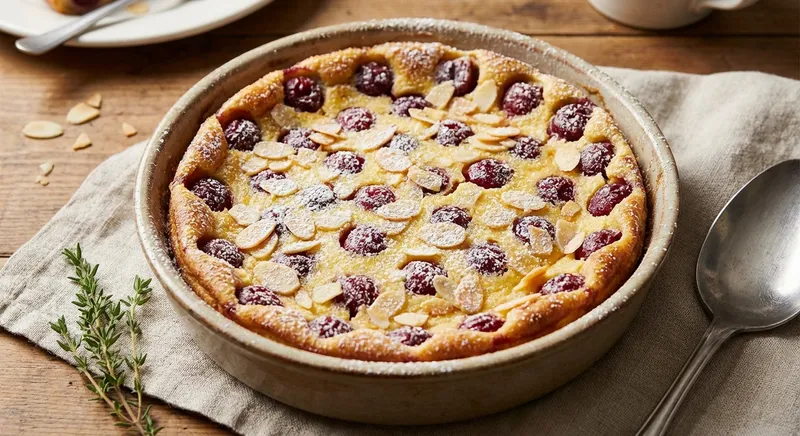
A silky, oven-baked French custard with a light, crepe-like batter that puffs gently and sets into a tender, slightly caramelized pudding. This elegant yet rustic clafoutis showcases the warm flavors of vanilla and butter with a hint of caramelized edges — deceptively simple ingredients (milk, eggs, sugar, flour) transform into a restaurant-quality dessert that’s creamy, custardy and perfect served warm with a spoonful of crème fraîche or vanilla ice cream.
Preheat the oven to 350°F (175°C). Position a rack in the middle so the clafoutis bakes evenly; a middle rack ensures a steady, gentle heat that allows the custard to set without over-browning the surface too quickly.
Butter a 9-inch (23 cm) shallow baking dish (or a similar-sized cast-iron skillet) with 1 tablespoon of the unsalted butter. Dot the remaining tablespoon in small pieces around the dish. Coating the dish with butter both prevents sticking and adds flavor; the little butter dots melt and create lovely caramelized pockets at the edges.
In a medium mixing bowl, whisk together the eggs and granulated sugar until the mixture is pale and slightly thickened, about 1–2 minutes. Whisking the eggs and sugar until pale helps incorporate air for a lighter texture and ensures the sugar dissolves into the eggs for an even custard.
Sift the all-purpose flour and fine sea salt into the egg-sugar mixture and whisk until just combined. Sifting prevents lumps and helps the flour incorporate smoothly; mix only until combined to avoid developing gluten, which would make the finished custard chewy.
Warm the milk gently until it’s just below simmering (steam at the surface, small bubbles around edges) — about 140–150°F (60–65°C). Warming the milk before adding it prevents cooking the eggs when you combine the liquids and helps the batter blend into a smooth custard without lumps.
Slowly pour the warm milk into the flour-egg mixture in a thin, steady stream while whisking continuously to create a silky batter. This tempering step ensures the eggs incorporate smoothly without scrambling; continuous whisking yields a homogeneous, lump-free custard base.
Whisk in the vanilla extract. Let the batter rest for 10 minutes at room temperature to hydrate the flour and relax any pockets of air — this yields a smoother, more tender set when baked.
Strain the batter through a fine-mesh sieve into the prepared buttered dish (or into a large measuring cup if easier to pour). Straining catches any remaining lumps, air bubbles, or tiny bits of unincorporated flour for an ultra-smooth finish — an important step for restaurant-quality texture.
Slide the baking dish into the preheated oven and bake for 35–40 minutes, rotating once halfway through if your oven runs hot. The clafoutis is done when the center is set but still slightly jiggly (it will finish setting while cooling) and the edges are puffed and lightly golden. Baking at steady moderate heat lets the custard set evenly without curdling; the slight jiggle indicates a tender, creamy interior rather than an overbaked, rubbery texture.
Remove from the oven and allow the clafoutis to cool for 10–15 minutes. It will deflate a little (that’s normal) and settle into a creamy, custard-like consistency. Serve warm or at room temperature. If desired, finish with a light dusting of powdered sugar or a dollop of crème fraîche or vanilla ice cream for contrast.
287
Calories
9g
Protein
40g
Carbs
10g
Fat
0g
Fiber
How did this recipe turn out? Let others know!
to rate this recipe
By mandi Childers
A silky, oven-baked French custard with a light, crepe-like batter that puffs gently and sets into a tender, slightly caramelized pudding. This elegant yet rustic clafoutis showcases the warm flavors of vanilla and butter with a hint of caramelized edges — deceptively simple ingredients (milk, eggs, sugar, flour) transform into a restaurant-quality dessert that’s creamy, custardy and perfect served warm with a spoonful of crème fraîche or vanilla ice cream.
Preheat the oven to 350°F (175°C). Position a rack in the middle so the clafoutis bakes evenly; a middle rack ensures a steady, gentle heat that allows the custard to set without over-browning the surface too quickly.
Butter a 9-inch (23 cm) shallow baking dish (or a similar-sized cast-iron skillet) with 1 tablespoon of the unsalted butter. Dot the remaining tablespoon in small pieces around the dish. Coating the dish with butter both prevents sticking and adds flavor; the little butter dots melt and create lovely caramelized pockets at the edges.
In a medium mixing bowl, whisk together the eggs and granulated sugar until the mixture is pale and slightly thickened, about 1–2 minutes. Whisking the eggs and sugar until pale helps incorporate air for a lighter texture and ensures the sugar dissolves into the eggs for an even custard.
Sift the all-purpose flour and fine sea salt into the egg-sugar mixture and whisk until just combined. Sifting prevents lumps and helps the flour incorporate smoothly; mix only until combined to avoid developing gluten, which would make the finished custard chewy.
Warm the milk gently until it’s just below simmering (steam at the surface, small bubbles around edges) — about 140–150°F (60–65°C). Warming the milk before adding it prevents cooking the eggs when you combine the liquids and helps the batter blend into a smooth custard without lumps.
Slowly pour the warm milk into the flour-egg mixture in a thin, steady stream while whisking continuously to create a silky batter. This tempering step ensures the eggs incorporate smoothly without scrambling; continuous whisking yields a homogeneous, lump-free custard base.
Whisk in the vanilla extract. Let the batter rest for 10 minutes at room temperature to hydrate the flour and relax any pockets of air — this yields a smoother, more tender set when baked.
Strain the batter through a fine-mesh sieve into the prepared buttered dish (or into a large measuring cup if easier to pour). Straining catches any remaining lumps, air bubbles, or tiny bits of unincorporated flour for an ultra-smooth finish — an important step for restaurant-quality texture.
Slide the baking dish into the preheated oven and bake for 35–40 minutes, rotating once halfway through if your oven runs hot. The clafoutis is done when the center is set but still slightly jiggly (it will finish setting while cooling) and the edges are puffed and lightly golden. Baking at steady moderate heat lets the custard set evenly without curdling; the slight jiggle indicates a tender, creamy interior rather than an overbaked, rubbery texture.
Remove from the oven and allow the clafoutis to cool for 10–15 minutes. It will deflate a little (that’s normal) and settle into a creamy, custard-like consistency. Serve warm or at room temperature. If desired, finish with a light dusting of powdered sugar or a dollop of crème fraîche or vanilla ice cream for contrast.
287
Calories
9g
Protein
40g
Carbs
10g
Fat
0g
Fiber
Your Rating:
