By Becky Frantz
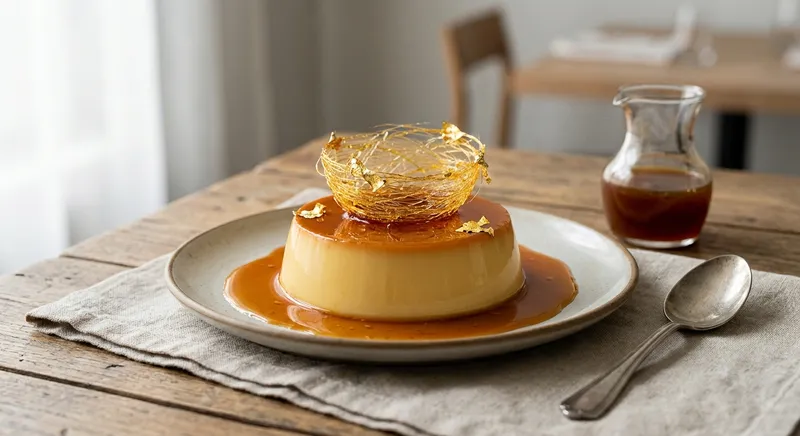
A lusciously smooth baked milk custard crowned with a glossy amber caramel — delicate, silky, and just sweet enough. The custard highlights pure milk flavor infused with vanilla while the caramel adds deep, toffee-like contrast; when inverted it becomes an elegant, restaurant-quality dessert with a satiny texture and melt-in-your-mouth finish.
Preheat and prepare: Preheat the oven to 325°F (160°C). Arrange six 6-oz (180 ml) ramekins on a roasting pan that fits them snugly. Preheating ensures even baking; the relatively low oven temperature gently cooks the custard so it sets without curdling.
Make the caramel: In a small, heavy-bottomed saucepan, add 60 g of the granulated sugar (reserve the remainder for the custard). Heat over medium — do not stir with a spoon at the start. Swirl the pan occasionally to distribute heat; stirring early can seed crystals. After the sugar melts and begins to color, you may gently swirl and, when it reaches a deep amber (watch closely — it can go from perfect to burnt in seconds), remove from heat and stir in the optional 1 tbsp butter off the heat for shine and richness. Immediately and carefully spoon 1–2 tbsp of hot caramel into the bottom of each ramekin, tilting each ramekin to coat the base evenly. The caramel both flavors the custard and becomes a glossy sauce when inverted.
Infuse and warm the milk: Pour the 800 ml whole milk into a medium saucepan, add the pinch of salt and 1 tsp of the vanilla extract, and slowly heat over medium-low until the milk is steaming and small bubbles appear at the edge (about 170°F/77°C). Do not let it reach a boil — boiling scorches the milk proteins and changes the mouthfeel. Warming dissolves sugar quicker and helps the vanilla bloom, giving a rounder flavor.
Mix eggs and sugar: In a mixing bowl, whisk together the 4 large eggs and the remaining 100 g granulated sugar until just combined and slightly frothy. Whisking lightly incorporates air but you don't want a foamy mix; too much air creates bubbles in the finished custard. Add the remaining 1 tsp vanilla now if you prefer a stronger vanilla note.
Temper the eggs: With the bowl of eggs to one side, slowly pour about one-third of the hot milk into the eggs in a thin stream while whisking constantly. This warms (tempers) the eggs without cooking them into curds. Continue adding the remaining milk in a steady stream, whisking gently until fully incorporated. Tempering prevents scrambled-egg texture and creates a uniformly smooth custard.
Strain for silkiness: Pour the milk–egg mixture through a fine-mesh sieve into a measuring jug or large bowl—this catches any tiny cooked bits or foam and ensures an ultra-smooth, restaurant-quality texture.
Fill the ramekins: Divide the strained custard among the caramel-lined ramekins, leaving a small ¼" (6 mm) gap at the top to allow for expansion while baking. Filling evenly helps ensure uniform cooking times.
Set up the water bath: Place the roasting pan with the filled ramekins on the oven rack, then carefully pour hot (not boiling) water into the pan to come about halfway up the sides of the ramekins. The water bath (bain-marie) provides gentle, even heat around the custards so they bake evenly without curdling or cracking.
Bake gently: Bake at 325°F (160°C) for about 35–40 minutes. The custards are done when the edges are set but the center still has a slight, gentle wobble (like gelatin). Overbaking will make the texture grainy and dry; underbaking leaves it too runny after chilling.
Cool slowly: Remove the ramekins from the water bath and let them cool on a wire rack until they reach room temperature—this gradual cooling reduces stress that can cause the custard to crack. Once cooled, cover and chill in the refrigerator for at least 4 hours, preferably overnight, to let the custard fully set and the flavors knit together.
Unmold and serve: To unmold, run a thin knife around the edge of each ramekin to release any contracted custard. Place a small plate over the ramekin and invert quickly. The caramel will flow over the custard as a glossy sauce. If the caramel resists, warm the bottom of the ramekin briefly over a hot surface to loosen it. Serve chilled; the contrast between cool custard and syrupy warm caramel (if you rewarm it slightly) is sublime.
Finishing touches and plating: For restaurant styling, add a small citrus zest (orange or lime) or a tiny pinch of flaked sea salt on top of the caramel for contrast. A few toasted almond slivers or a light dusting of powdered sugar and edible flowers elevates the presentation.
235
Calories
8g
Protein
33g
Carbs
8g
Fat
0g
Fiber
How did this recipe turn out? Let others know!
to rate this recipe
By Becky Frantz
A lusciously smooth baked milk custard crowned with a glossy amber caramel — delicate, silky, and just sweet enough. The custard highlights pure milk flavor infused with vanilla while the caramel adds deep, toffee-like contrast; when inverted it becomes an elegant, restaurant-quality dessert with a satiny texture and melt-in-your-mouth finish.
Preheat and prepare: Preheat the oven to 325°F (160°C). Arrange six 6-oz (180 ml) ramekins on a roasting pan that fits them snugly. Preheating ensures even baking; the relatively low oven temperature gently cooks the custard so it sets without curdling.
Make the caramel: In a small, heavy-bottomed saucepan, add 60 g of the granulated sugar (reserve the remainder for the custard). Heat over medium — do not stir with a spoon at the start. Swirl the pan occasionally to distribute heat; stirring early can seed crystals. After the sugar melts and begins to color, you may gently swirl and, when it reaches a deep amber (watch closely — it can go from perfect to burnt in seconds), remove from heat and stir in the optional 1 tbsp butter off the heat for shine and richness. Immediately and carefully spoon 1–2 tbsp of hot caramel into the bottom of each ramekin, tilting each ramekin to coat the base evenly. The caramel both flavors the custard and becomes a glossy sauce when inverted.
Infuse and warm the milk: Pour the 800 ml whole milk into a medium saucepan, add the pinch of salt and 1 tsp of the vanilla extract, and slowly heat over medium-low until the milk is steaming and small bubbles appear at the edge (about 170°F/77°C). Do not let it reach a boil — boiling scorches the milk proteins and changes the mouthfeel. Warming dissolves sugar quicker and helps the vanilla bloom, giving a rounder flavor.
Mix eggs and sugar: In a mixing bowl, whisk together the 4 large eggs and the remaining 100 g granulated sugar until just combined and slightly frothy. Whisking lightly incorporates air but you don't want a foamy mix; too much air creates bubbles in the finished custard. Add the remaining 1 tsp vanilla now if you prefer a stronger vanilla note.
Temper the eggs: With the bowl of eggs to one side, slowly pour about one-third of the hot milk into the eggs in a thin stream while whisking constantly. This warms (tempers) the eggs without cooking them into curds. Continue adding the remaining milk in a steady stream, whisking gently until fully incorporated. Tempering prevents scrambled-egg texture and creates a uniformly smooth custard.
Strain for silkiness: Pour the milk–egg mixture through a fine-mesh sieve into a measuring jug or large bowl—this catches any tiny cooked bits or foam and ensures an ultra-smooth, restaurant-quality texture.
Fill the ramekins: Divide the strained custard among the caramel-lined ramekins, leaving a small ¼" (6 mm) gap at the top to allow for expansion while baking. Filling evenly helps ensure uniform cooking times.
Set up the water bath: Place the roasting pan with the filled ramekins on the oven rack, then carefully pour hot (not boiling) water into the pan to come about halfway up the sides of the ramekins. The water bath (bain-marie) provides gentle, even heat around the custards so they bake evenly without curdling or cracking.
Bake gently: Bake at 325°F (160°C) for about 35–40 minutes. The custards are done when the edges are set but the center still has a slight, gentle wobble (like gelatin). Overbaking will make the texture grainy and dry; underbaking leaves it too runny after chilling.
Cool slowly: Remove the ramekins from the water bath and let them cool on a wire rack until they reach room temperature—this gradual cooling reduces stress that can cause the custard to crack. Once cooled, cover and chill in the refrigerator for at least 4 hours, preferably overnight, to let the custard fully set and the flavors knit together.
Unmold and serve: To unmold, run a thin knife around the edge of each ramekin to release any contracted custard. Place a small plate over the ramekin and invert quickly. The caramel will flow over the custard as a glossy sauce. If the caramel resists, warm the bottom of the ramekin briefly over a hot surface to loosen it. Serve chilled; the contrast between cool custard and syrupy warm caramel (if you rewarm it slightly) is sublime.
Finishing touches and plating: For restaurant styling, add a small citrus zest (orange or lime) or a tiny pinch of flaked sea salt on top of the caramel for contrast. A few toasted almond slivers or a light dusting of powdered sugar and edible flowers elevates the presentation.
235
Calories
8g
Protein
33g
Carbs
8g
Fat
0g
Fiber
Your Rating:
