By Jasmine Cueva
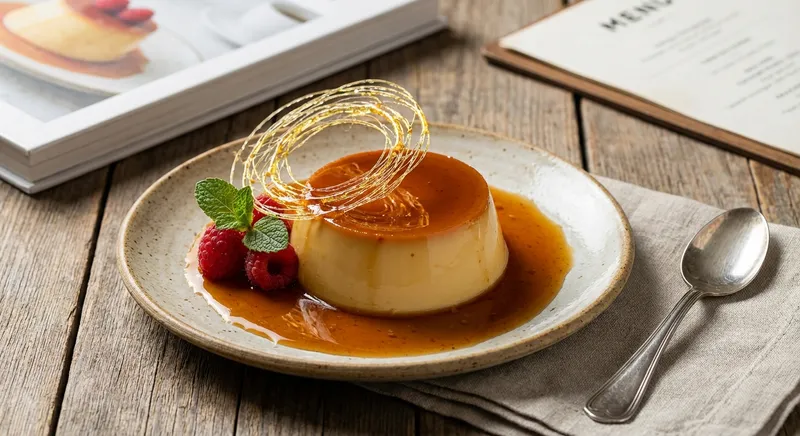
Silky, gently caramelized milk custard with a glossy amber caramel sauce — a timeless Spanish/Latin-American dessert. The custard is rich from whole milk and eggs yet light in texture; the fragrant caramel adds a bitter-sweet counterpoint that makes every spoonful indulgent and balanced.
Preheat and prep: Preheat your oven to 325°F (160°C). Place eight 4- to 6-ounce ramekins in a roasting pan or deep baking dish that will hold them snugly. Preheating ensures even baking; arranging ramekins close together helps stabilize them in the water bath so the custards set uniformly.
Make the caramel: In a heavy-bottomed saucepan, add 100 g granulated sugar over medium heat. Swirl the pan gently (do not stir with a spoon) as the sugar melts into an amber caramel — this prevents crystallization and encourages even browning. When the caramel reaches a deep golden-amber (about 6–8 minutes), quickly remove from heat and pour evenly into the bottoms of the ramekins. Tilt each ramekin to coat the base with caramel. The hot caramel will set as it cools, creating the glossy sauce that will coat the custard when inverted.
Warm the milk: In a saucepan, warm the 1 liter of whole milk with a pinch of salt over medium-low heat until it is steaming and small bubbles form at the edge (do not boil). Warming the milk prevents cooking the eggs when the hot milk is combined with them and helps the sugar dissolve more readily for a silkier custard.
Mix eggs and sugar: In a bowl, whisk together the 4 whole eggs with 100 g granulated sugar until the sugar begins to dissolve and the mixture is smooth. A light whisk is enough — over-aerating introduces bubbles that can create a spongy texture; we want a gently set custard.
Temper the eggs: Slowly pour about one cup (240 ml) of the hot milk into the egg-sugar mixture while whisking constantly. This tempers the eggs — bringing them up to temperature gradually so they don’t scramble. Then pour the tempered egg mixture back into the remaining milk in the saucepan and stir to combine. Add 1 tsp vanilla and stir briefly to distribute flavor.
Strain the custard: Pour the custard mixture through a fine-mesh sieve into a large measuring cup or bowl with a spout. Straining removes any coagulated bits or foam and yields a silky, velvety texture in the finished flan.
Fill ramekins and prepare bain-marie: Divide the strained custard evenly among the caramel-lined ramekins. Place the ramekins back in the roasting pan. Carefully pour hot (but not boiling) water into the roasting pan until it reaches about halfway up the sides of the ramekins. The water bath (bain-marie) insulates the custard, promoting gentle, even cooking and preventing the surface from cracking or curdling.
Bake gently: Transfer the roasting pan to the oven and bake at 325°F (160°C) for 40–50 minutes, or until the custards are just set — they should still wobble slightly in the center when you gently shake the pan. Baking at a lower temperature keeps the texture smooth and prevents the curdled eggy grain that comes from high heat.
Cool and chill: Carefully remove the ramekins from the water bath and let them cool to room temperature, then refrigerate for at least 3 hours, preferably overnight. Chilling allows the custard to fully set and the flavors (especially the caramel) to mellow and meld.
Unmold and serve: To unmold, run a thin knife around the edge of each ramekin to loosen the custard. Place a small plate over the ramekin, invert, and give a gentle shake — the caramel should flow over the custard. If the caramel sticks, dip the bottom of the ramekin briefly in hot water to loosen the caramel before inverting. Serve chilled. The contrast of silky custard and glossy caramel is what makes this dessert sing.
209
Calories
7g
Protein
31g
Carbs
7g
Fat
0g
Fiber
How did this recipe turn out? Let others know!
to rate this recipe
By Jasmine Cueva
Silky, gently caramelized milk custard with a glossy amber caramel sauce — a timeless Spanish/Latin-American dessert. The custard is rich from whole milk and eggs yet light in texture; the fragrant caramel adds a bitter-sweet counterpoint that makes every spoonful indulgent and balanced.
Preheat and prep: Preheat your oven to 325°F (160°C). Place eight 4- to 6-ounce ramekins in a roasting pan or deep baking dish that will hold them snugly. Preheating ensures even baking; arranging ramekins close together helps stabilize them in the water bath so the custards set uniformly.
Make the caramel: In a heavy-bottomed saucepan, add 100 g granulated sugar over medium heat. Swirl the pan gently (do not stir with a spoon) as the sugar melts into an amber caramel — this prevents crystallization and encourages even browning. When the caramel reaches a deep golden-amber (about 6–8 minutes), quickly remove from heat and pour evenly into the bottoms of the ramekins. Tilt each ramekin to coat the base with caramel. The hot caramel will set as it cools, creating the glossy sauce that will coat the custard when inverted.
Warm the milk: In a saucepan, warm the 1 liter of whole milk with a pinch of salt over medium-low heat until it is steaming and small bubbles form at the edge (do not boil). Warming the milk prevents cooking the eggs when the hot milk is combined with them and helps the sugar dissolve more readily for a silkier custard.
Mix eggs and sugar: In a bowl, whisk together the 4 whole eggs with 100 g granulated sugar until the sugar begins to dissolve and the mixture is smooth. A light whisk is enough — over-aerating introduces bubbles that can create a spongy texture; we want a gently set custard.
Temper the eggs: Slowly pour about one cup (240 ml) of the hot milk into the egg-sugar mixture while whisking constantly. This tempers the eggs — bringing them up to temperature gradually so they don’t scramble. Then pour the tempered egg mixture back into the remaining milk in the saucepan and stir to combine. Add 1 tsp vanilla and stir briefly to distribute flavor.
Strain the custard: Pour the custard mixture through a fine-mesh sieve into a large measuring cup or bowl with a spout. Straining removes any coagulated bits or foam and yields a silky, velvety texture in the finished flan.
Fill ramekins and prepare bain-marie: Divide the strained custard evenly among the caramel-lined ramekins. Place the ramekins back in the roasting pan. Carefully pour hot (but not boiling) water into the roasting pan until it reaches about halfway up the sides of the ramekins. The water bath (bain-marie) insulates the custard, promoting gentle, even cooking and preventing the surface from cracking or curdling.
Bake gently: Transfer the roasting pan to the oven and bake at 325°F (160°C) for 40–50 minutes, or until the custards are just set — they should still wobble slightly in the center when you gently shake the pan. Baking at a lower temperature keeps the texture smooth and prevents the curdled eggy grain that comes from high heat.
Cool and chill: Carefully remove the ramekins from the water bath and let them cool to room temperature, then refrigerate for at least 3 hours, preferably overnight. Chilling allows the custard to fully set and the flavors (especially the caramel) to mellow and meld.
Unmold and serve: To unmold, run a thin knife around the edge of each ramekin to loosen the custard. Place a small plate over the ramekin, invert, and give a gentle shake — the caramel should flow over the custard. If the caramel sticks, dip the bottom of the ramekin briefly in hot water to loosen the caramel before inverting. Serve chilled. The contrast of silky custard and glossy caramel is what makes this dessert sing.
209
Calories
7g
Protein
31g
Carbs
7g
Fat
0g
Fiber
Your Rating:
