By Trisha Fenske
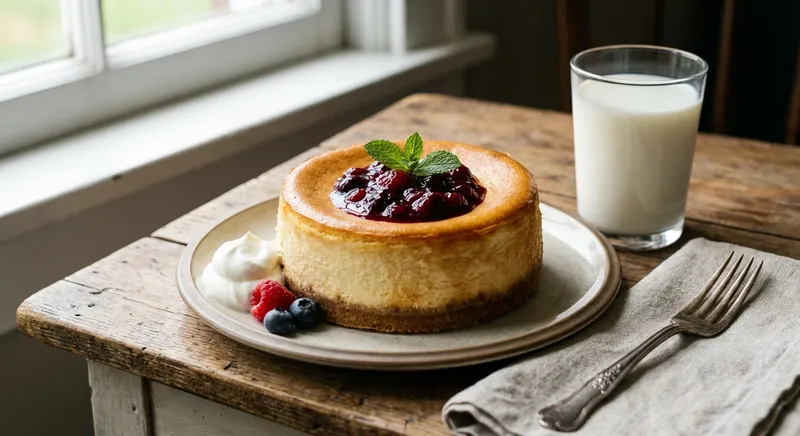
Silky, dense and luxuriously tangy, this New York–style baked cheesecake has a crisp, buttery graham crust and a rich, creamy filling lifted with a splash of whole milk for added silkiness. The texture is velvety and spoonable, the flavor brightened with lemon and vanilla — a restaurant-quality centerpiece perfect with a spoonful of fruit compote or a dusting of powdered sugar.
Prep the pan and oven: center a rack and preheat the oven to 325°F (163°C). Wrap the outside of a 9-inch (23 cm) springform pan tightly in two layers of aluminum foil (this prevents water from seeping in during the bain-marie). Greasing the pan lightly helps the crust adhere and makes removing the cake easier.
Make the crust: combine the graham cracker crumbs, 2 tablespoons sugar and 1/4 teaspoon salt in a bowl. Stir in the 6 tablespoons melted butter until the mixture resembles wet sand and holds together when pressed between your fingers. Press the crumbs evenly across the bottom (and about 1/2 inch up the sides if you like) of the prepared springform pan, using the bottom of a measuring cup to compact it. Chilling the crust for 10 minutes helps it set and keeps it from over-browning during baking.
Blind-bake the crust briefly: bake the crust for 8–10 minutes until set and fragrant (this toasts the crumbs, develops deeper flavor, and prevents a soggy bottom). Remove from the oven and let it cool while you make the filling; keep the oven at 325°F (163°C).
Bring the dairy and eggs to room temperature: take the cream cheese, eggs, sour cream and milk out of the fridge 30–60 minutes before mixing. Room-temperature ingredients blend more smoothly — you will avoid lumps and incorporate less air, which reduces cracking.
Beat the cream cheese and sugar: in a large mixing bowl or stand mixer fitted with the paddle attachment, beat the cream cheese and 1 cup sugar on medium-low speed until smooth and creamy (about 2–3 minutes). Use medium-low speed to avoid whipping in excess air; too much air causes the cake to rise then collapse and crack.
Add the eggs one at a time: scrape down the bowl, then add the eggs one at a time, mixing just until incorporated after each addition. Overbeating once the eggs are added will incorporate air; gentle mixing produces a dense, silky texture.
Add the remaining filling ingredients: mix in the 1/2 cup sour cream, 1/2 cup whole milk, softened 2 tablespoons butter, vanilla, cornstarch, lemon juice and 1/2 teaspoon salt on low speed until smooth. The milk lightens and silkens the batter without thinning it; cornstarch stabilizes the filling and gives a creamy, sliceable texture.
Strain the batter: for extra-silky results, pour the batter through a fine-mesh sieve into a clean bowl to remove any small lumps. This step makes the finished cheesecake restaurant-smooth.
Assemble the bain-marie (water bath): place the filled springform pan inside a larger roasting pan. Pour the batter into the prepared crust and smooth the top. Carefully add hot (not boiling) water to the roasting pan until it reaches about halfway up the outside of the springform (the water bath provides gentle, even heat that prevents cracking and produces a creamy center).
Bake gently: bake at 325°F (163°C) for 55–70 minutes. The edges should be set and lightly puffed; the center should still wobble slightly when you gently shake the pan — it will continue to set as it cools. Avoid overbaking; a dry, cracked cheesecake comes from too much oven time.
Cool gradually: turn the oven off, crack the oven door open and let the cheesecake sit in the oven for 30 minutes — this slow temperature change helps prevent cracks. After 30 minutes, remove the springform from the water bath, peel off the foil, and let it cool to room temperature on a wire rack.
Add the sour cream topping: whisk together 1/2 cup sour cream, 1 tablespoon sugar and 1/2 teaspoon vanilla. Spread it gently over the cooled cheesecake (do not apply while the cake is hot or the topping will slip). Return to the oven (turned off) or to the refrigerator and chill for at least 4–6 hours, preferably overnight, to firm completely and develop flavor.
Run a knife around the edge before unlocking the springform: this prevents the cake from sticking and tearing. For clean slices, chill the cake thoroughly (chilled cheesecake slices cleaner than warm). When ready to serve, dip a sharp knife into hot water, wipe dry, and slice; repeat between cuts for neat pieces.
Serve and finish: serve plain or with your choice of toppings — berry compote, salted caramel, or a simple dusting of powdered sugar. Refrigerate leftovers and consume within 4–5 days.
705
Calories
10g
Protein
51g
Carbs
52g
Fat
1g
Fiber
How did this recipe turn out? Let others know!
to rate this recipe
Silky, dense and luxuriously tangy, this New York–style baked cheesecake has a crisp, buttery graham crust and a rich, creamy filling lifted with a splash of whole milk for added silkiness. The texture is velvety and spoonable, the flavor brightened with lemon and vanilla — a restaurant-quality centerpiece perfect with a spoonful of fruit compote or a dusting of powdered sugar.
Prep the pan and oven: center a rack and preheat the oven to 325°F (163°C). Wrap the outside of a 9-inch (23 cm) springform pan tightly in two layers of aluminum foil (this prevents water from seeping in during the bain-marie). Greasing the pan lightly helps the crust adhere and makes removing the cake easier.
Make the crust: combine the graham cracker crumbs, 2 tablespoons sugar and 1/4 teaspoon salt in a bowl. Stir in the 6 tablespoons melted butter until the mixture resembles wet sand and holds together when pressed between your fingers. Press the crumbs evenly across the bottom (and about 1/2 inch up the sides if you like) of the prepared springform pan, using the bottom of a measuring cup to compact it. Chilling the crust for 10 minutes helps it set and keeps it from over-browning during baking.
Blind-bake the crust briefly: bake the crust for 8–10 minutes until set and fragrant (this toasts the crumbs, develops deeper flavor, and prevents a soggy bottom). Remove from the oven and let it cool while you make the filling; keep the oven at 325°F (163°C).
Bring the dairy and eggs to room temperature: take the cream cheese, eggs, sour cream and milk out of the fridge 30–60 minutes before mixing. Room-temperature ingredients blend more smoothly — you will avoid lumps and incorporate less air, which reduces cracking.
Beat the cream cheese and sugar: in a large mixing bowl or stand mixer fitted with the paddle attachment, beat the cream cheese and 1 cup sugar on medium-low speed until smooth and creamy (about 2–3 minutes). Use medium-low speed to avoid whipping in excess air; too much air causes the cake to rise then collapse and crack.
Add the eggs one at a time: scrape down the bowl, then add the eggs one at a time, mixing just until incorporated after each addition. Overbeating once the eggs are added will incorporate air; gentle mixing produces a dense, silky texture.
Add the remaining filling ingredients: mix in the 1/2 cup sour cream, 1/2 cup whole milk, softened 2 tablespoons butter, vanilla, cornstarch, lemon juice and 1/2 teaspoon salt on low speed until smooth. The milk lightens and silkens the batter without thinning it; cornstarch stabilizes the filling and gives a creamy, sliceable texture.
Strain the batter: for extra-silky results, pour the batter through a fine-mesh sieve into a clean bowl to remove any small lumps. This step makes the finished cheesecake restaurant-smooth.
Assemble the bain-marie (water bath): place the filled springform pan inside a larger roasting pan. Pour the batter into the prepared crust and smooth the top. Carefully add hot (not boiling) water to the roasting pan until it reaches about halfway up the outside of the springform (the water bath provides gentle, even heat that prevents cracking and produces a creamy center).
Bake gently: bake at 325°F (163°C) for 55–70 minutes. The edges should be set and lightly puffed; the center should still wobble slightly when you gently shake the pan — it will continue to set as it cools. Avoid overbaking; a dry, cracked cheesecake comes from too much oven time.
Cool gradually: turn the oven off, crack the oven door open and let the cheesecake sit in the oven for 30 minutes — this slow temperature change helps prevent cracks. After 30 minutes, remove the springform from the water bath, peel off the foil, and let it cool to room temperature on a wire rack.
Add the sour cream topping: whisk together 1/2 cup sour cream, 1 tablespoon sugar and 1/2 teaspoon vanilla. Spread it gently over the cooled cheesecake (do not apply while the cake is hot or the topping will slip). Return to the oven (turned off) or to the refrigerator and chill for at least 4–6 hours, preferably overnight, to firm completely and develop flavor.
Run a knife around the edge before unlocking the springform: this prevents the cake from sticking and tearing. For clean slices, chill the cake thoroughly (chilled cheesecake slices cleaner than warm). When ready to serve, dip a sharp knife into hot water, wipe dry, and slice; repeat between cuts for neat pieces.
Serve and finish: serve plain or with your choice of toppings — berry compote, salted caramel, or a simple dusting of powdered sugar. Refrigerate leftovers and consume within 4–5 days.
705
Calories
10g
Protein
51g
Carbs
52g
Fat
1g
Fiber
Your Rating:
