By Lori Kalb
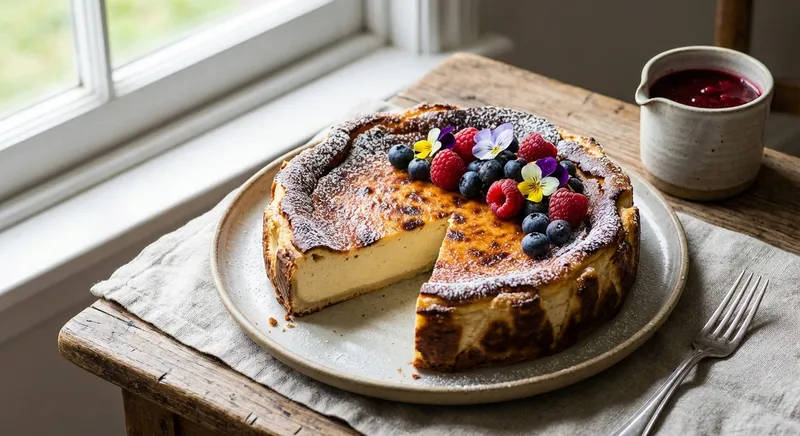
A silky, tangy cream cheese filling nestled in a tender, buttery pâte sucrée — this rustic cheesecake tart delivers the rich creaminess of a classic cheesecake with the flaky bite of a pastry crust. Bright vanilla and a delicate balance of sugar create a dessert that's elegant enough for dinner guests but easy enough for a weekday treat.
Prep and bring key ingredients to room temperature: Take the cream cheese and the 3 filling eggs out of the refrigerator for 30–60 minutes so they reach room temperature. Room-temperature cream cheese blends smoothly with fewer lumps and avoids overworking the batter (which can incorporate air and cause cracks). Preheat the oven to 350°F (175°C).
Make the pâte sucrée (sweet tart crust): In a medium bowl whisk together 160 g all-purpose flour, 50 g granulated sugar and a pinch of salt. Add 113 g cold, cubed unsalted butter. Using your fingertips, a pastry cutter, or a food processor pulse, cut the butter into the dry ingredients until the mixture resembles coarse sand with some pea-sized pieces of butter. Working cold produces flakes in the baked crust; those pea-sized bits of butter create a tender, layered crumb.
Bind the dough: Lightly beat the single crust egg and add about 1 tablespoon of it into the flour-butter mixture; use a fork to bring the dough together, adding up to 1 tablespoon of cold milk only if the dough seems dry. Mix just until it holds when pinched — overworking develops gluten and makes the crust tough. Form into a disk, wrap in plastic, and chill in the fridge for 20 minutes to relax the gluten and firm the butter (this prevents shrinking during bake).
Roll and fit the crust: On a lightly floured surface roll the chilled dough to a 12-inch circle (thicker toward center for even cooking). Gently transfer it to a 9-inch tart pan with a removable bottom (or a 9-inch springform pan), pressing the dough into the corners and trimming the excess. Chill the crust-lined pan for 10 minutes while you make the filling — chilling helps the crust hold shape and reduces shrinkage.
Beat the cream cheese smoothly: Place 680 g room-temperature cream cheese and 150 g sugar in a large mixing bowl. Beat on medium speed with a hand mixer or stand mixer (or whisk vigorously) until the mixture is smooth and free of lumps, 2–3 minutes. Starting with softened cream cheese prevents grainy texture and ensures even sugar dissolution.
Incorporate the eggs: Add the 3 room-temperature eggs one at a time, mixing on low speed after each addition until just combined. Mixing slowly minimizes air incorporation — less air in the batter reduces the chance of cracking as the tart bakes and cools.
Add milk and vanilla: Stir in 80 ml whole milk and 1½ tsp vanilla extract until the filling is silky. The milk slightly loosens the filling, yielding a creamier set; vanilla enhances the perception of sweetness and rounds the cheese flavor.
Assemble: Pour the smooth filling into the chilled crust and gently smooth the top with a spatula. Tap the pan once on the counter to release any large air bubbles that could create holes or an uneven surface.
Bake: Place the tart on the middle rack and bake at 350°F (175°C) for 45–55 minutes. The tart is done when the edges are set and just slightly puffed, while the center still has a gentle tremble when you jiggle the pan. Baking until just-set prevents overbaking, which makes the texture dry and crack-prone.
Cool gradually to avoid cracks: With the oven turned off, crack the oven door and let the tart sit inside for 30 minutes — this slow cool helps prevent rapid contraction that causes cracks. Then transfer to a wire rack to cool completely for about 1 hour before refrigerating.
Chill: Place the tart in the refrigerator for at least 4 hours (or overnight) to fully set. Chilling firms the filling and improves slicing cleanly; flavor also blooms as the tart rests.
Serve: Run a thin knife around the tart edge before releasing from the pan. For clean slices, dip the knife in hot water and wipe dry between cuts. Serve plain, or add seasonal fruit, a dusting of powdered sugar, or a drizzle of honey if desired.
607
Calories
11g
Protein
44g
Carbs
44g
Fat
1g
Fiber
How did this recipe turn out? Let others know!
to rate this recipe
By Lori Kalb
A silky, tangy cream cheese filling nestled in a tender, buttery pâte sucrée — this rustic cheesecake tart delivers the rich creaminess of a classic cheesecake with the flaky bite of a pastry crust. Bright vanilla and a delicate balance of sugar create a dessert that's elegant enough for dinner guests but easy enough for a weekday treat.
Prep and bring key ingredients to room temperature: Take the cream cheese and the 3 filling eggs out of the refrigerator for 30–60 minutes so they reach room temperature. Room-temperature cream cheese blends smoothly with fewer lumps and avoids overworking the batter (which can incorporate air and cause cracks). Preheat the oven to 350°F (175°C).
Make the pâte sucrée (sweet tart crust): In a medium bowl whisk together 160 g all-purpose flour, 50 g granulated sugar and a pinch of salt. Add 113 g cold, cubed unsalted butter. Using your fingertips, a pastry cutter, or a food processor pulse, cut the butter into the dry ingredients until the mixture resembles coarse sand with some pea-sized pieces of butter. Working cold produces flakes in the baked crust; those pea-sized bits of butter create a tender, layered crumb.
Bind the dough: Lightly beat the single crust egg and add about 1 tablespoon of it into the flour-butter mixture; use a fork to bring the dough together, adding up to 1 tablespoon of cold milk only if the dough seems dry. Mix just until it holds when pinched — overworking develops gluten and makes the crust tough. Form into a disk, wrap in plastic, and chill in the fridge for 20 minutes to relax the gluten and firm the butter (this prevents shrinking during bake).
Roll and fit the crust: On a lightly floured surface roll the chilled dough to a 12-inch circle (thicker toward center for even cooking). Gently transfer it to a 9-inch tart pan with a removable bottom (or a 9-inch springform pan), pressing the dough into the corners and trimming the excess. Chill the crust-lined pan for 10 minutes while you make the filling — chilling helps the crust hold shape and reduces shrinkage.
Beat the cream cheese smoothly: Place 680 g room-temperature cream cheese and 150 g sugar in a large mixing bowl. Beat on medium speed with a hand mixer or stand mixer (or whisk vigorously) until the mixture is smooth and free of lumps, 2–3 minutes. Starting with softened cream cheese prevents grainy texture and ensures even sugar dissolution.
Incorporate the eggs: Add the 3 room-temperature eggs one at a time, mixing on low speed after each addition until just combined. Mixing slowly minimizes air incorporation — less air in the batter reduces the chance of cracking as the tart bakes and cools.
Add milk and vanilla: Stir in 80 ml whole milk and 1½ tsp vanilla extract until the filling is silky. The milk slightly loosens the filling, yielding a creamier set; vanilla enhances the perception of sweetness and rounds the cheese flavor.
Assemble: Pour the smooth filling into the chilled crust and gently smooth the top with a spatula. Tap the pan once on the counter to release any large air bubbles that could create holes or an uneven surface.
Bake: Place the tart on the middle rack and bake at 350°F (175°C) for 45–55 minutes. The tart is done when the edges are set and just slightly puffed, while the center still has a gentle tremble when you jiggle the pan. Baking until just-set prevents overbaking, which makes the texture dry and crack-prone.
Cool gradually to avoid cracks: With the oven turned off, crack the oven door and let the tart sit inside for 30 minutes — this slow cool helps prevent rapid contraction that causes cracks. Then transfer to a wire rack to cool completely for about 1 hour before refrigerating.
Chill: Place the tart in the refrigerator for at least 4 hours (or overnight) to fully set. Chilling firms the filling and improves slicing cleanly; flavor also blooms as the tart rests.
Serve: Run a thin knife around the tart edge before releasing from the pan. For clean slices, dip the knife in hot water and wipe dry between cuts. Serve plain, or add seasonal fruit, a dusting of powdered sugar, or a drizzle of honey if desired.
607
Calories
11g
Protein
44g
Carbs
44g
Fat
1g
Fiber
Your Rating:
