By Terry Gallagher
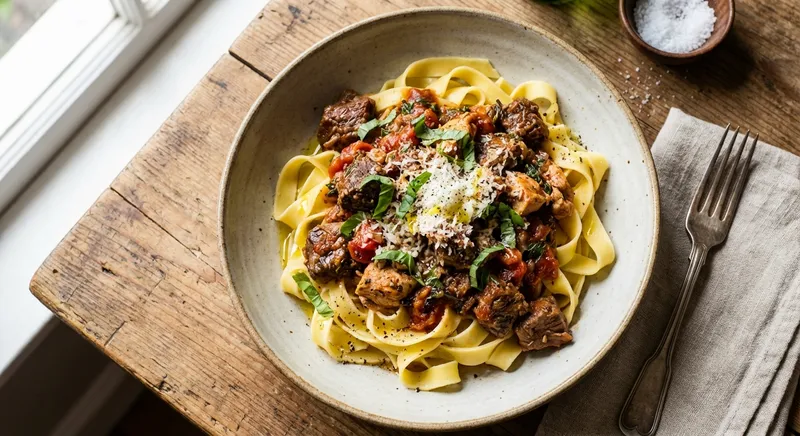
A deeply flavored Italian-inspired tagliatelle tossed in a silky, slow-simmered ragu made from both beef and chicken for concentrated meaty depth and tender, comforting texture. Notes of caramelized tomato paste, a splash of white wine, and a finish of butter and Parmesan make this pasta rich and balanced — rustic, restaurant-quality, and perfect for a special weeknight dinner.
Prep everything before you start (mise en place). Finely dice the onion, carrot and celery; mince the garlic; measure liquids and cheese. Pasta cooks quickly and the sauce will be finished while the pasta is cooking, so having ingredients ready prevents overcooking and ensures timing sync.
Heat a large, heavy-bottomed sauté pan or Dutch oven over medium-high heat and add 1 tablespoon olive oil. Add the ground beef first in a single layer and let it sear without stirring for 2–3 minutes to develop a brown crust (Maillard reaction) — this creates deep savory flavor. Break it up after it’s browned and transfer to a bowl leaving the browned bits (fond) in the pan.
Lower heat to medium and add the remaining 1 tablespoon olive oil and the ground chicken. Cook until it’s just browned and no longer pink, breaking it up — chicken cooks faster and can dry out if overbrowned. Cooking the beef and chicken separately (or searing beef first) lets you render beef fat and capture its browned fond while preventing the lean chicken from getting tough.
Remove the cooked meats and set aside with the beef. Add the butter to the pan; once it foams, add the diced onion, carrot and celery (soffritto). Sweat them gently over medium-low heat for 6–8 minutes until softened and translucent — this builds the aromatic base without browning, yielding a sweeter, rounder sauce.
Add the minced garlic and red pepper flakes and cook 30–45 seconds until fragrant. Push the vegetables to the side, add the tomato paste to the center of the pan and cook it for 1–2 minutes, stirring — caramelizing the tomato paste concentrates sweetness and deepens umami.
Deglaze with the white wine, scraping up the fond with a wooden spoon. Let the wine simmer for 2–3 minutes to reduce slightly and cook off most alcohol — this lifts browned bits and adds a bright acidity that balances the tomatoes.
Return the browned meats to the pan and stir to combine with the soffritto. Add crushed tomatoes and stock, stir to combine. Bring the mixture to a gentle simmer, then reduce heat to low. Partially cover and simmer gently for 35–40 minutes, stirring occasionally — a long, gentle simmer melds flavors, breaks down the meat into silky pieces, and thickens the sauce.
After 30 minutes, stir in the milk. Milk (or a splash of cream) softens tomato acidity and rounds the sauce, giving it a silkier mouthfeel. Continue to simmer uncovered for another 10 minutes to let the sauce thicken to a saucy consistency (not dry). Taste and season with salt and pepper as needed.
About 12 minutes before the sauce is done, bring a large pot of generously salted water to a boil (1 tablespoon kosher salt per 4–5 liters). Add the tagliatelle and cook to 1–2 minutes before the package’s al dente time — you’ll finish cooking the pasta in the sauce so it absorbs flavor and the sauce clings better.
Reserve 1 to 1 1/2 cups (240–360 ml) of the starchy pasta cooking water, then drain the pasta. The starchy water is a key emulsifier that helps the sauce adhere to the pasta; use it to loosen the sauce or create a glossy finish.
Raise the heat under the sauce to medium, add the drained pasta to the pan and toss to combine. Add 1/4–1/2 cup of reserved pasta water as needed to achieve a silky sauce that coats each ribbon of pasta. Toss in the grated Parmesan and torn basil; the cheese will melt into the sauce and help emulsify it for a silky finish.
Remove from heat and finish with a small knob of butter (optional) and another grind of black pepper; the butter adds shine and richness. Let the pasta sit for 1 minute so flavors marry — this resting time allows the sauce to cling and flavors to settle.
Serve immediately with extra grated Parmesan and a few torn basil leaves on top. Encourage diners to taste and add salt or pepper at the table; a squeeze of lemon or extra Parmesan can brighten individual bowls.
780
Calories
43g
Protein
78g
Carbs
30g
Fat
6g
Fiber
How did this recipe turn out? Let others know!
to rate this recipe
By Terry Gallagher
A deeply flavored Italian-inspired tagliatelle tossed in a silky, slow-simmered ragu made from both beef and chicken for concentrated meaty depth and tender, comforting texture. Notes of caramelized tomato paste, a splash of white wine, and a finish of butter and Parmesan make this pasta rich and balanced — rustic, restaurant-quality, and perfect for a special weeknight dinner.
Prep everything before you start (mise en place). Finely dice the onion, carrot and celery; mince the garlic; measure liquids and cheese. Pasta cooks quickly and the sauce will be finished while the pasta is cooking, so having ingredients ready prevents overcooking and ensures timing sync.
Heat a large, heavy-bottomed sauté pan or Dutch oven over medium-high heat and add 1 tablespoon olive oil. Add the ground beef first in a single layer and let it sear without stirring for 2–3 minutes to develop a brown crust (Maillard reaction) — this creates deep savory flavor. Break it up after it’s browned and transfer to a bowl leaving the browned bits (fond) in the pan.
Lower heat to medium and add the remaining 1 tablespoon olive oil and the ground chicken. Cook until it’s just browned and no longer pink, breaking it up — chicken cooks faster and can dry out if overbrowned. Cooking the beef and chicken separately (or searing beef first) lets you render beef fat and capture its browned fond while preventing the lean chicken from getting tough.
Remove the cooked meats and set aside with the beef. Add the butter to the pan; once it foams, add the diced onion, carrot and celery (soffritto). Sweat them gently over medium-low heat for 6–8 minutes until softened and translucent — this builds the aromatic base without browning, yielding a sweeter, rounder sauce.
Add the minced garlic and red pepper flakes and cook 30–45 seconds until fragrant. Push the vegetables to the side, add the tomato paste to the center of the pan and cook it for 1–2 minutes, stirring — caramelizing the tomato paste concentrates sweetness and deepens umami.
Deglaze with the white wine, scraping up the fond with a wooden spoon. Let the wine simmer for 2–3 minutes to reduce slightly and cook off most alcohol — this lifts browned bits and adds a bright acidity that balances the tomatoes.
Return the browned meats to the pan and stir to combine with the soffritto. Add crushed tomatoes and stock, stir to combine. Bring the mixture to a gentle simmer, then reduce heat to low. Partially cover and simmer gently for 35–40 minutes, stirring occasionally — a long, gentle simmer melds flavors, breaks down the meat into silky pieces, and thickens the sauce.
After 30 minutes, stir in the milk. Milk (or a splash of cream) softens tomato acidity and rounds the sauce, giving it a silkier mouthfeel. Continue to simmer uncovered for another 10 minutes to let the sauce thicken to a saucy consistency (not dry). Taste and season with salt and pepper as needed.
About 12 minutes before the sauce is done, bring a large pot of generously salted water to a boil (1 tablespoon kosher salt per 4–5 liters). Add the tagliatelle and cook to 1–2 minutes before the package’s al dente time — you’ll finish cooking the pasta in the sauce so it absorbs flavor and the sauce clings better.
Reserve 1 to 1 1/2 cups (240–360 ml) of the starchy pasta cooking water, then drain the pasta. The starchy water is a key emulsifier that helps the sauce adhere to the pasta; use it to loosen the sauce or create a glossy finish.
Raise the heat under the sauce to medium, add the drained pasta to the pan and toss to combine. Add 1/4–1/2 cup of reserved pasta water as needed to achieve a silky sauce that coats each ribbon of pasta. Toss in the grated Parmesan and torn basil; the cheese will melt into the sauce and help emulsify it for a silky finish.
Remove from heat and finish with a small knob of butter (optional) and another grind of black pepper; the butter adds shine and richness. Let the pasta sit for 1 minute so flavors marry — this resting time allows the sauce to cling and flavors to settle.
Serve immediately with extra grated Parmesan and a few torn basil leaves on top. Encourage diners to taste and add salt or pepper at the table; a squeeze of lemon or extra Parmesan can brighten individual bowls.
780
Calories
43g
Protein
78g
Carbs
30g
Fat
6g
Fiber
Your Rating:
