By Terry Gallagher
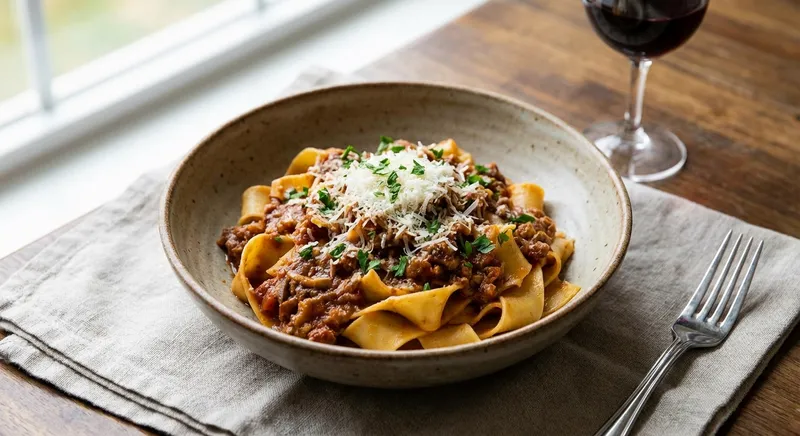
A rich, restaurant-quality duet ragù that marries the sweet tenderness of braised chicken thighs with the savory depth of ground beef, tossed with wide pappardelle in a silky tomato–cream sauce. Layers of sautéed soffritto, reduced wine, and a splash of cream and Parmesan turn humble pantry ingredients into a luxurious, comforting pasta that balances umami, acidity and a touch of herbaceous brightness.
Prep everything first: dice the onion, carrots and celery (soffritto); trim and cut the chicken into 1/2" pieces; measure the wine, stock and tomatoes. Having mise en place keeps the cooking flow smooth and prevents burning the aromatics.
Bring a large pot of salted water to a rolling boil for the pasta. Salt it well — it should taste like the sea — because pasta water seasons the starches and helps the sauce cling to the noodles later.
In a wide, heavy-bottomed sauté pan or shallow Dutch oven, heat 1 tablespoon olive oil and 1 tablespoon butter over medium-high heat until the butter foams. Add the diced chicken in a single layer, seasoning lightly with salt and pepper. Sear just until golden on the outside (about 2 minutes per side) but not cooked through, then remove to a plate. Searing develops Maillard flavors that add savory depth to the sauce.
Add the remaining 1 tbsp olive oil to the pan. Add the ground beef, season lightly, and break it up with a spatula. Brown it until no longer pink and it starts to leave browned bits on the pan (about 6–8 minutes). Browning the meat concentrates flavor — those browned fond bits are flavor gold for the sauce.
Push the beef to one side, add the remaining 1 tablespoon butter to the empty space, then add the diced onion, carrot and celery. Reduce heat to medium and sweat the vegetables until soft and translucent (6–8 minutes). Sweating rather than high-heat browning extracts sweetness and builds the aromatic base typical of classic ragù.
Stir in the minced garlic and tomato paste and cook 60–90 seconds, stirring constantly — this 'toasts' the tomato paste, deepening and concentrating its flavor by removing raw, acidic notes.
Deglaze with the white wine, scraping up the browned bits from the bottom of the pan. Let the wine reduce by half (about 2–3 minutes). This not only adds acidity and brightness, it also releases the fond into the sauce, layering flavor.
Return the seared chicken to the pan. Add crushed tomatoes, chicken stock, dried oregano, dried thyme, bay leaves and a pinch of red pepper flakes. Stir to combine and bring to a gentle simmer. Lower the heat and let the ragù cook gently, uncovered, for 20–25 minutes until it thickens and the chicken is tender. A gentle simmer allows collagen in meat to break down without toughening protein or evaporating the sauce too quickly.
While the sauce simmers, cook the pappardelle in the boiling salted water until 2 minutes shy of package directions (al dente). Reserve 1 cup of the pasta cooking water before draining. Cooking pasta slightly underdone lets it finish in the sauce and absorb flavor without becoming mushy.
Remove the bay leaves. Stir the heavy cream into the ragù and simmer 1–2 minutes more to marry the flavors. Crush a few pieces of chicken against the side of the pan with your spoon if you like a less chunky texture — this builds a cohesive sauce that clings to the pasta.
Add the drained pasta directly into the ragù with 1/2 cup of reserved pasta water. Toss over medium heat for 1–2 minutes until the sauce emulsifies and clings to the noodles. Add more pasta water, a tablespoon at a time, if you want a looser sauce. Emulsifying the sauce with pasta water (rich in starch) creates a glossy coating and improves adhesion.
Turn off the heat; stir in the grated Parmigiano-Reggiano, chopped parsley and lemon zest if using. Taste and adjust seasoning with salt and pepper. Cheese adds umami and helps thicken the sauce; lemon zest brightens the final dish.
Plate hot pappardelle, spoon extra ragù on top, finish with more grated Parmigiano and a drizzle of good olive oil if you like. Serve immediately so the texture stays perfect.
817
Calories
37g
Protein
82g
Carbs
36g
Fat
7g
Fiber
How did this recipe turn out? Let others know!
to rate this recipe
By Terry Gallagher
A rich, restaurant-quality duet ragù that marries the sweet tenderness of braised chicken thighs with the savory depth of ground beef, tossed with wide pappardelle in a silky tomato–cream sauce. Layers of sautéed soffritto, reduced wine, and a splash of cream and Parmesan turn humble pantry ingredients into a luxurious, comforting pasta that balances umami, acidity and a touch of herbaceous brightness.
Prep everything first: dice the onion, carrots and celery (soffritto); trim and cut the chicken into 1/2" pieces; measure the wine, stock and tomatoes. Having mise en place keeps the cooking flow smooth and prevents burning the aromatics.
Bring a large pot of salted water to a rolling boil for the pasta. Salt it well — it should taste like the sea — because pasta water seasons the starches and helps the sauce cling to the noodles later.
In a wide, heavy-bottomed sauté pan or shallow Dutch oven, heat 1 tablespoon olive oil and 1 tablespoon butter over medium-high heat until the butter foams. Add the diced chicken in a single layer, seasoning lightly with salt and pepper. Sear just until golden on the outside (about 2 minutes per side) but not cooked through, then remove to a plate. Searing develops Maillard flavors that add savory depth to the sauce.
Add the remaining 1 tbsp olive oil to the pan. Add the ground beef, season lightly, and break it up with a spatula. Brown it until no longer pink and it starts to leave browned bits on the pan (about 6–8 minutes). Browning the meat concentrates flavor — those browned fond bits are flavor gold for the sauce.
Push the beef to one side, add the remaining 1 tablespoon butter to the empty space, then add the diced onion, carrot and celery. Reduce heat to medium and sweat the vegetables until soft and translucent (6–8 minutes). Sweating rather than high-heat browning extracts sweetness and builds the aromatic base typical of classic ragù.
Stir in the minced garlic and tomato paste and cook 60–90 seconds, stirring constantly — this 'toasts' the tomato paste, deepening and concentrating its flavor by removing raw, acidic notes.
Deglaze with the white wine, scraping up the browned bits from the bottom of the pan. Let the wine reduce by half (about 2–3 minutes). This not only adds acidity and brightness, it also releases the fond into the sauce, layering flavor.
Return the seared chicken to the pan. Add crushed tomatoes, chicken stock, dried oregano, dried thyme, bay leaves and a pinch of red pepper flakes. Stir to combine and bring to a gentle simmer. Lower the heat and let the ragù cook gently, uncovered, for 20–25 minutes until it thickens and the chicken is tender. A gentle simmer allows collagen in meat to break down without toughening protein or evaporating the sauce too quickly.
While the sauce simmers, cook the pappardelle in the boiling salted water until 2 minutes shy of package directions (al dente). Reserve 1 cup of the pasta cooking water before draining. Cooking pasta slightly underdone lets it finish in the sauce and absorb flavor without becoming mushy.
Remove the bay leaves. Stir the heavy cream into the ragù and simmer 1–2 minutes more to marry the flavors. Crush a few pieces of chicken against the side of the pan with your spoon if you like a less chunky texture — this builds a cohesive sauce that clings to the pasta.
Add the drained pasta directly into the ragù with 1/2 cup of reserved pasta water. Toss over medium heat for 1–2 minutes until the sauce emulsifies and clings to the noodles. Add more pasta water, a tablespoon at a time, if you want a looser sauce. Emulsifying the sauce with pasta water (rich in starch) creates a glossy coating and improves adhesion.
Turn off the heat; stir in the grated Parmigiano-Reggiano, chopped parsley and lemon zest if using. Taste and adjust seasoning with salt and pepper. Cheese adds umami and helps thicken the sauce; lemon zest brightens the final dish.
Plate hot pappardelle, spoon extra ragù on top, finish with more grated Parmigiano and a drizzle of good olive oil if you like. Serve immediately so the texture stays perfect.
817
Calories
37g
Protein
82g
Carbs
36g
Fat
7g
Fiber
Your Rating:
