By Kris P
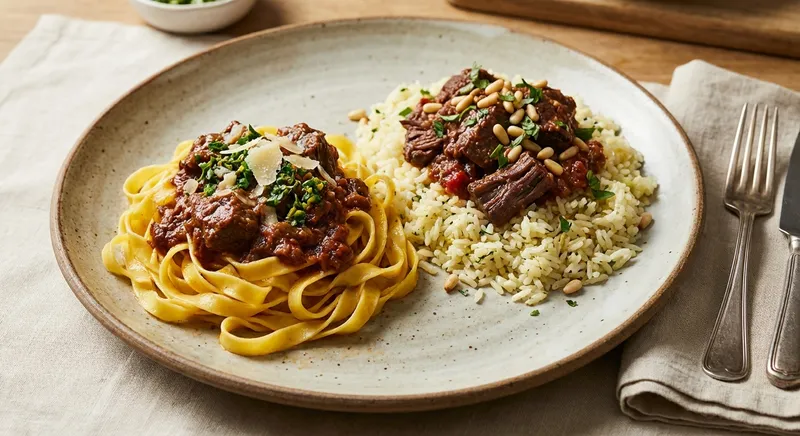
A luxurious, Italian-inspired braised beef ragù served two ways: tossed with silky garlic-butter tagliatelle and spooned over bright lemon-herb rice. Rich, slow-simmered beef develops deep umami and glossy texture; the buttered pasta and citrusy rice provide contrasting comfort and brightness, making each bite layered, satisfying, and restaurant-worthy.
Prep the vegetables and measure ingredients. Finely dice the onion, carrot and celery (the Italian soffritto); mince the garlic; zest and juice the lemon; grate the Parmesan and measure pasta and rice. Mise en place speeds cooking and ensures you can build flavors without rushing.
Brown the ground beef: Heat 1 tbsp olive oil in a wide, heavy-bottomed sauté pan or shallow Dutch oven over medium-high heat until shimmering. Add the ground beef in an even layer and let it sit undisturbed for 2–3 minutes to develop browning (Maillard reaction). Break it up and continue cooking until mostly browned but not dry, about 4–5 minutes. Season with a pinch of salt and black pepper. Browning creates complex, savory compounds that are the backbone of the ragù.
Remove most of the rendered fat, leaving about 1–2 tbsp in the pan (this prevents the sauce from becoming greasy while keeping flavor). Add 1 tbsp olive oil (if needed) and the diced onion, carrot and celery. Cook over medium heat, stirring occasionally, until the vegetables soften and the onion turns translucent, about 6–8 minutes. Sweating the soffritto slowly extracts natural sugars and builds a sweet, savory base for the sauce.
Add the garlic and tomato paste and cook for 60–90 seconds, stirring constantly to 'toast' the paste. Toasting tomato paste caramelizes its sugars and reduces raw tomato taste, deepening the sauce's color and flavor.
Deglaze with red wine: pour in the 1/2 cup red wine and scrape up any browned bits from the bottom of the pan with a wooden spoon. Let the wine reduce by half over 2–3 minutes; this concentrates flavor and cooks off alcohol so it doesn't taste boozy.
Add crushed tomatoes, beef stock, sugar, bay leaf, and dried thyme. Stir to combine, bring to a gentle simmer, then lower heat to maintain a low, steady simmer. Partially cover and cook for 30–35 minutes, stirring occasionally—longer if you want a thicker, more concentrated ragù. Slow simmering allows collagen and flavors to meld, producing a glossy, velvety sauce rather than a thin tomato soup.
While the ragù simmers, cook the rice: Rinse 1 cup rice under cold water until the water runs clear (this removes surface starch so the cooked rice is fluffy). In a medium saucepan, bring 1 3/4 cups water (or use low-sodium stock for extra flavor), a pinch of salt, and the lemon zest to a boil. Add the rice, reduce to the lowest simmer, cover tightly and cook 15 minutes. Remove from heat and let sit, covered, 10 minutes. Fluff with a fork and stir in 1/2 tbsp butter, 1 tbsp chopped parsley and 1 tbsp lemon juice for brightness. The resting time lets steam finish the rice, producing properly separated grains.
Cook the pasta: When the ragù has about 10 minutes left, bring a large pot of well-salted water to a rolling boil (it should taste like the sea). Cook the tagliatelle until just before al dente per package instructions (usually 7–9 minutes). Reserve 1 cup of pasta cooking water, then drain the pasta. Salting the water seasons the pasta internally; reserving water gives you starchy liquid to marry sauce and noodles.
Finish ragù: Remove and discard the bay leaf. Taste and adjust seasoning with salt, pepper and a pinch of sugar if needed. If the ragù feels too acidic or tight, stir in 1 tbsp butter to round flavors and add gloss (emulsifying butter with the sauce mellows acidity and creates a silky mouthfeel).
Assemble the garlic-butter pasta: In the empty pasta pot (or a large sauté pan), melt 1/2 tbsp butter with a splash (2 tbsp) of olive oil over medium heat. Add a crushed clove of garlic (optional) and cook 20–30 seconds to infuse the fat—don't let it brown. Add the drained tagliatelle plus about 1/2 cup reserved pasta water and 1/3 cup ragù; toss vigorously until the pasta is coated and the sauce clings, 1–2 minutes. Finish with 2 tbsp grated Parmesan and a few grinds of black pepper. Tossing pasta with starchy water and a little fat helps the sauce emulsify and cling to noodles.
Plate two ways for each diner: 1) A nest of garlic-butter tagliatelle topped with a generous spoonful of ragù, finished with a drizzle of extra-virgin olive oil, a dusting of Parmesan and parsley. 2) A shallow bowl of lemon-herb rice, ladled with warmed ragù and a sprinkle of Parmesan and parsley. Serving both textures—silky noodles and bright rice—creates contrast and makes the dish feel specially composed.
Garnish and serve: Add optional red pepper flakes for heat, an extra grind of black pepper and a final sprinkle of lemon zest on the rice for pop. Serve immediately.
908
Calories
46g
Protein
91g
Carbs
37g
Fat
5g
Fiber
How did this recipe turn out? Let others know!
to rate this recipe
By Kris P
A luxurious, Italian-inspired braised beef ragù served two ways: tossed with silky garlic-butter tagliatelle and spooned over bright lemon-herb rice. Rich, slow-simmered beef develops deep umami and glossy texture; the buttered pasta and citrusy rice provide contrasting comfort and brightness, making each bite layered, satisfying, and restaurant-worthy.
Prep the vegetables and measure ingredients. Finely dice the onion, carrot and celery (the Italian soffritto); mince the garlic; zest and juice the lemon; grate the Parmesan and measure pasta and rice. Mise en place speeds cooking and ensures you can build flavors without rushing.
Brown the ground beef: Heat 1 tbsp olive oil in a wide, heavy-bottomed sauté pan or shallow Dutch oven over medium-high heat until shimmering. Add the ground beef in an even layer and let it sit undisturbed for 2–3 minutes to develop browning (Maillard reaction). Break it up and continue cooking until mostly browned but not dry, about 4–5 minutes. Season with a pinch of salt and black pepper. Browning creates complex, savory compounds that are the backbone of the ragù.
Remove most of the rendered fat, leaving about 1–2 tbsp in the pan (this prevents the sauce from becoming greasy while keeping flavor). Add 1 tbsp olive oil (if needed) and the diced onion, carrot and celery. Cook over medium heat, stirring occasionally, until the vegetables soften and the onion turns translucent, about 6–8 minutes. Sweating the soffritto slowly extracts natural sugars and builds a sweet, savory base for the sauce.
Add the garlic and tomato paste and cook for 60–90 seconds, stirring constantly to 'toast' the paste. Toasting tomato paste caramelizes its sugars and reduces raw tomato taste, deepening the sauce's color and flavor.
Deglaze with red wine: pour in the 1/2 cup red wine and scrape up any browned bits from the bottom of the pan with a wooden spoon. Let the wine reduce by half over 2–3 minutes; this concentrates flavor and cooks off alcohol so it doesn't taste boozy.
Add crushed tomatoes, beef stock, sugar, bay leaf, and dried thyme. Stir to combine, bring to a gentle simmer, then lower heat to maintain a low, steady simmer. Partially cover and cook for 30–35 minutes, stirring occasionally—longer if you want a thicker, more concentrated ragù. Slow simmering allows collagen and flavors to meld, producing a glossy, velvety sauce rather than a thin tomato soup.
While the ragù simmers, cook the rice: Rinse 1 cup rice under cold water until the water runs clear (this removes surface starch so the cooked rice is fluffy). In a medium saucepan, bring 1 3/4 cups water (or use low-sodium stock for extra flavor), a pinch of salt, and the lemon zest to a boil. Add the rice, reduce to the lowest simmer, cover tightly and cook 15 minutes. Remove from heat and let sit, covered, 10 minutes. Fluff with a fork and stir in 1/2 tbsp butter, 1 tbsp chopped parsley and 1 tbsp lemon juice for brightness. The resting time lets steam finish the rice, producing properly separated grains.
Cook the pasta: When the ragù has about 10 minutes left, bring a large pot of well-salted water to a rolling boil (it should taste like the sea). Cook the tagliatelle until just before al dente per package instructions (usually 7–9 minutes). Reserve 1 cup of pasta cooking water, then drain the pasta. Salting the water seasons the pasta internally; reserving water gives you starchy liquid to marry sauce and noodles.
Finish ragù: Remove and discard the bay leaf. Taste and adjust seasoning with salt, pepper and a pinch of sugar if needed. If the ragù feels too acidic or tight, stir in 1 tbsp butter to round flavors and add gloss (emulsifying butter with the sauce mellows acidity and creates a silky mouthfeel).
Assemble the garlic-butter pasta: In the empty pasta pot (or a large sauté pan), melt 1/2 tbsp butter with a splash (2 tbsp) of olive oil over medium heat. Add a crushed clove of garlic (optional) and cook 20–30 seconds to infuse the fat—don't let it brown. Add the drained tagliatelle plus about 1/2 cup reserved pasta water and 1/3 cup ragù; toss vigorously until the pasta is coated and the sauce clings, 1–2 minutes. Finish with 2 tbsp grated Parmesan and a few grinds of black pepper. Tossing pasta with starchy water and a little fat helps the sauce emulsify and cling to noodles.
Plate two ways for each diner: 1) A nest of garlic-butter tagliatelle topped with a generous spoonful of ragù, finished with a drizzle of extra-virgin olive oil, a dusting of Parmesan and parsley. 2) A shallow bowl of lemon-herb rice, ladled with warmed ragù and a sprinkle of Parmesan and parsley. Serving both textures—silky noodles and bright rice—creates contrast and makes the dish feel specially composed.
Garnish and serve: Add optional red pepper flakes for heat, an extra grind of black pepper and a final sprinkle of lemon zest on the rice for pop. Serve immediately.
908
Calories
46g
Protein
91g
Carbs
37g
Fat
5g
Fiber
Your Rating:
