By Katie England
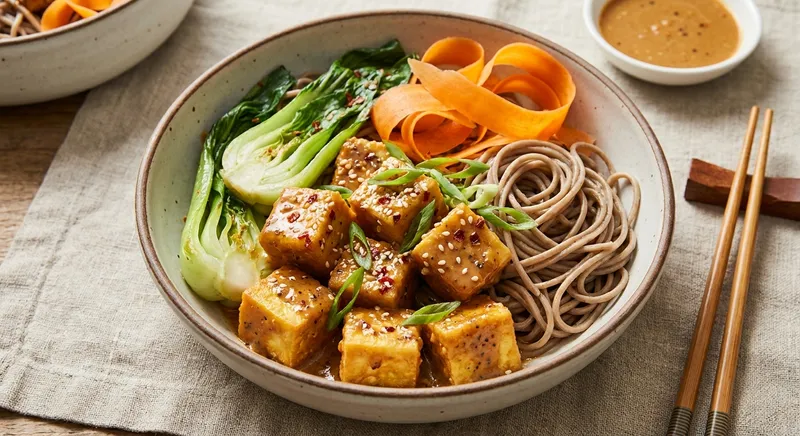
Silky cubes of seared tofu glazed in a spicy, umami-rich miso-sesame sauce tossed with nutty soba noodles, crisp-tender baby bok choy and bright carrot ribbons. The dish balances savory miso, toasty sesame, sharp ginger-garlic and a lively squeeze of lime for a Japanese-inspired weeknight meal that feels restaurant-level special.
Bring a medium pot of water to a rolling boil. Add a generous pinch of salt (this seasons the noodles from the inside). Cook the dry soba according to package directions until just al dente (usually 4–5 minutes). Why: Soba becomes gummy if overcooked — drain promptly to keep the noodles separate and toothsome.
Reserve 1/3 to 1/2 cup of the pasta water, then drain the soba and rinse briefly under warm water to stop cooking and remove excess starch. Toss with a drizzle (½ tsp) neutral oil to prevent sticking. Why: Reserved pasta water contains starch that helps the sauce cling to the noodles; rinsing prevents them from continuing to cook and becoming mushy.
While the water is heating, make the miso-spice sauce: in a small bowl whisk together white miso, tamari, rice vinegar, grated ginger, minced garlic, chili-garlic paste (start with 1 tsp), optional pinch of sugar or honey, and 2–3 tablespoons of the reserved pasta water until smooth. Why: Dissolving miso in warm liquid releases its flavor and creates a glossy sauce that will coat noodles and tofu evenly.
Pat the pressed tofu dry again with paper towels and cut into 2 cm cubes. Season lightly with salt and a few grinds of black pepper. Why: Removing surface moisture helps the tofu brown; seasoning draws flavor into otherwise neutral tofu.
Heat a large nonstick skillet or a well-seasoned cast-iron pan over medium-high heat until hot. Add the neutral oil and swirl to coat. Add tofu cubes in a single layer (work in two batches if necessary) and press gently — leave undisturbed 2–3 minutes until the bottoms are deeply golden. Flip and brown the other sides until you have a crisp, golden crust all around (another 3–4 minutes). Why: Searing on high heat creates Maillard browning, which adds savory depth; a golden crust keeps the interior tender while adding texture contrast.
Push tofu to the edge of the pan, reduce heat to medium, add the carrots and white parts of the spring onions and quickly stir-fry for 60–90 seconds to soften slightly. Add halved baby bok choy cut-side down and cook 1–2 minutes until bright green and just tender — the leaves wilt faster than the stalks. Why: Cooking aromatics and vegetables briefly preserves their crunch and color; placing bok choy cut-side down promotes browning on the stalks and speeds cooking.
Pour the prepared miso sauce over the tofu and vegetables, add the cooked soba, and toss or gently fold using tongs or two spatulas to coat everything. If the sauce seems thick, add a tablespoon or two of reserved pasta water to loosen it; you want a glossy, clingy coating. Why: Tossing with a starchy liquid helps the miso emulsion adhere to the noodles and tofu, giving a silky finish rather than a dry, pasty glaze.
Turn off the heat and finish with toasted sesame oil (drizzle) and half the sesame seeds. Taste and adjust seasoning — more tamari for salt, more chili paste for heat, or a squeeze of lime to brighten. Why: Finishing oil and acid add aromatic lift and balance heavy umami; always taste at the end because miso and tamari can vary in saltiness.
Plate the noodles and tofu, scatter the remaining spring onion greens, cilantro leaves and the rest of the sesame seeds. Serve immediately with lime wedges on the side for squeezing. Why: Fresh herbs and acid at the table let each diner customize brightness and herbaceous balance, keeping the dish lively.
600
Calories
32g
Protein
71g
Carbs
22g
Fat
8g
Fiber
How did this recipe turn out? Let others know!
to rate this recipe
By Katie England
Silky cubes of seared tofu glazed in a spicy, umami-rich miso-sesame sauce tossed with nutty soba noodles, crisp-tender baby bok choy and bright carrot ribbons. The dish balances savory miso, toasty sesame, sharp ginger-garlic and a lively squeeze of lime for a Japanese-inspired weeknight meal that feels restaurant-level special.
Bring a medium pot of water to a rolling boil. Add a generous pinch of salt (this seasons the noodles from the inside). Cook the dry soba according to package directions until just al dente (usually 4–5 minutes). Why: Soba becomes gummy if overcooked — drain promptly to keep the noodles separate and toothsome.
Reserve 1/3 to 1/2 cup of the pasta water, then drain the soba and rinse briefly under warm water to stop cooking and remove excess starch. Toss with a drizzle (½ tsp) neutral oil to prevent sticking. Why: Reserved pasta water contains starch that helps the sauce cling to the noodles; rinsing prevents them from continuing to cook and becoming mushy.
While the water is heating, make the miso-spice sauce: in a small bowl whisk together white miso, tamari, rice vinegar, grated ginger, minced garlic, chili-garlic paste (start with 1 tsp), optional pinch of sugar or honey, and 2–3 tablespoons of the reserved pasta water until smooth. Why: Dissolving miso in warm liquid releases its flavor and creates a glossy sauce that will coat noodles and tofu evenly.
Pat the pressed tofu dry again with paper towels and cut into 2 cm cubes. Season lightly with salt and a few grinds of black pepper. Why: Removing surface moisture helps the tofu brown; seasoning draws flavor into otherwise neutral tofu.
Heat a large nonstick skillet or a well-seasoned cast-iron pan over medium-high heat until hot. Add the neutral oil and swirl to coat. Add tofu cubes in a single layer (work in two batches if necessary) and press gently — leave undisturbed 2–3 minutes until the bottoms are deeply golden. Flip and brown the other sides until you have a crisp, golden crust all around (another 3–4 minutes). Why: Searing on high heat creates Maillard browning, which adds savory depth; a golden crust keeps the interior tender while adding texture contrast.
Push tofu to the edge of the pan, reduce heat to medium, add the carrots and white parts of the spring onions and quickly stir-fry for 60–90 seconds to soften slightly. Add halved baby bok choy cut-side down and cook 1–2 minutes until bright green and just tender — the leaves wilt faster than the stalks. Why: Cooking aromatics and vegetables briefly preserves their crunch and color; placing bok choy cut-side down promotes browning on the stalks and speeds cooking.
Pour the prepared miso sauce over the tofu and vegetables, add the cooked soba, and toss or gently fold using tongs or two spatulas to coat everything. If the sauce seems thick, add a tablespoon or two of reserved pasta water to loosen it; you want a glossy, clingy coating. Why: Tossing with a starchy liquid helps the miso emulsion adhere to the noodles and tofu, giving a silky finish rather than a dry, pasty glaze.
Turn off the heat and finish with toasted sesame oil (drizzle) and half the sesame seeds. Taste and adjust seasoning — more tamari for salt, more chili paste for heat, or a squeeze of lime to brighten. Why: Finishing oil and acid add aromatic lift and balance heavy umami; always taste at the end because miso and tamari can vary in saltiness.
Plate the noodles and tofu, scatter the remaining spring onion greens, cilantro leaves and the rest of the sesame seeds. Serve immediately with lime wedges on the side for squeezing. Why: Fresh herbs and acid at the table let each diner customize brightness and herbaceous balance, keeping the dish lively.
600
Calories
32g
Protein
71g
Carbs
22g
Fat
8g
Fiber
Your Rating:
