By Amanda Miller
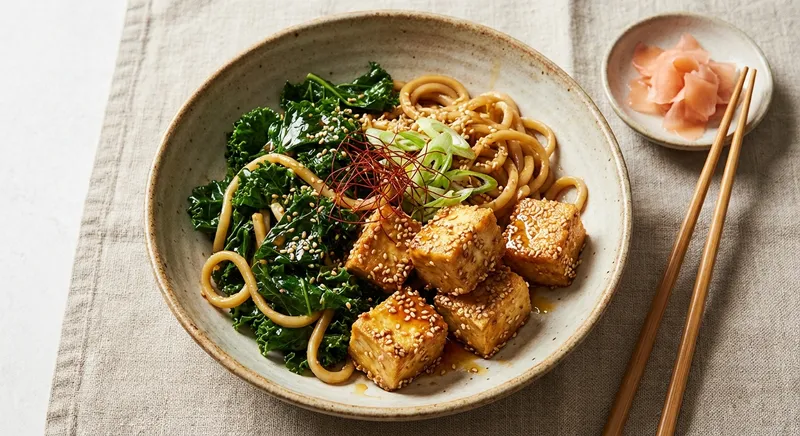
Crispy-edged, ginger-sesame glazed tofu meets chewy wholewheat udon and bright, garlicky kale in this satisfying, restaurant-style bowl. The tofu is pan-fried until golden, glazed with a soy-ginger reduction for sheen and umami, while quick-stirred kale and wholewheat noodles absorb the savory-sesame sauce — a harmony of textures (crisp, chewy, tender) and flavors (toasty sesame, fresh ginger, bright rice vinegar).
Bring a medium pot of salted water to a gentle boil and cook the wholewheat udon according to package directions until al dente (usually 6–8 minutes). Drain, reserve 2–3 tablespoons of the cooking water, toss the noodles with a drizzle (½ tsp) of neutral oil to prevent sticking, and set aside. Reason: cooking the noodles first frees you to stir-fry; reserving starchy cooking water lets you loosen the sauce later without diluting flavor.
Pat the pressed tofu slabs dry on both sides with paper towels; the drier the surface, the better the Maillard crust will form. If you like extra-crisp tofu, lightly dust both sides with cornstarch and shake off excess. Reason: moisture prevents browning and creates steam — drying and cornstarch ensure a golden, crunchy exterior.
Make the sauce: combine 3 tbsp low-sodium soy sauce, 2 tsp grated ginger, minced garlic (reserve half for the kale), and 2 tsp rice vinegar in a small bowl. Reserve 1 tbsp of this mixture for a quick marinade/glaze and keep the rest for the stir-fry. Reason: building the sauce now gives the flavors time to harmonize and makes the cooking sequence smooth.
Heat a large nonstick or well-seasoned cast-iron skillet over medium-high heat until hot. Add 1 tbsp neutral oil (half of the total). When shimmering, carefully arrange the tofu slabs in a single layer without crowding. Fry undisturbed for 3–4 minutes until the underside is deeply golden — this sear develops flavor through Maillard browning. Flip and cook the other side 3 minutes until golden. If using cornstarch, you should see a crisp, crackly surface.
Turn the heat to medium-low, pour the reserved 1 tbsp sauce over the tofu and tilt the pan so the sauce pools under the slabs; cook for 30–45 seconds until it reduces slightly and glazes the tofu. Reason: finishing the tofu in the sauce gives it a glossy coat and a concentrated burst of umami without overcooking.
Remove the tofu to a plate and tent loosely with foil to keep warm. Wipe the pan clean with kitchen paper if there are bits burning; return to medium heat and add the remaining 1 tbsp neutral oil. Reason: clearing the pan prevents burnt flavors and creates a clean surface for the vegetables and noodles.
Add the reserved minced garlic (1 clove) and a teaspoon of grated ginger to the hot pan and stir for 20–30 seconds — until fragrant but not browned — to bloom the aromatics. Add the chopped kale and a pinch of salt; toss and cook 2–3 minutes until the leaves are bright and just tender. Reason: cooking garlic and ginger briefly releases their essential oils; adding the kale next cooks it quickly while preserving color and texture.
Add the cooked udon to the pan with the kale. Pour the remaining sauce over (the rest of the soy-ginger mixture) and toss briskly for 1–2 minutes to coat. If the mixture looks dry or clumps, add 1–2 tablespoons of the reserved noodle cooking water to loosen the sauce — the starch in the water helps the sauce cling to the noodles. Reason: finishing the noodles in the pan lets them absorb flavor and marry with the kale.
Turn off the heat and stir in 2 tsp sesame oil, toasted sesame seeds, and most of the sliced spring onion (reserve a little for garnish). Adjust seasoning with a little black pepper and — if needed — a pinch of salt. Reason: sesame oil is delicate; adding it off the heat preserves its nutty aroma and prevents it from going bitter.
Plate the noodles and kale in two shallow bowls, arrange the glazed tofu slabs on top, and finish with a sprinkle of sesame seeds, the reserved spring onion, and an extra drizzle of sesame oil if you like. Serve immediately. Reason: plating warm bowls keeps the textures distinct (crisp tofu vs. tender noodles) and creates an attractive, restaurant-style presentation.
615
Calories
25g
Protein
65g
Carbs
29g
Fat
9g
Fiber
How did this recipe turn out? Let others know!
to rate this recipe
By Amanda Miller
Crispy-edged, ginger-sesame glazed tofu meets chewy wholewheat udon and bright, garlicky kale in this satisfying, restaurant-style bowl. The tofu is pan-fried until golden, glazed with a soy-ginger reduction for sheen and umami, while quick-stirred kale and wholewheat noodles absorb the savory-sesame sauce — a harmony of textures (crisp, chewy, tender) and flavors (toasty sesame, fresh ginger, bright rice vinegar).
Bring a medium pot of salted water to a gentle boil and cook the wholewheat udon according to package directions until al dente (usually 6–8 minutes). Drain, reserve 2–3 tablespoons of the cooking water, toss the noodles with a drizzle (½ tsp) of neutral oil to prevent sticking, and set aside. Reason: cooking the noodles first frees you to stir-fry; reserving starchy cooking water lets you loosen the sauce later without diluting flavor.
Pat the pressed tofu slabs dry on both sides with paper towels; the drier the surface, the better the Maillard crust will form. If you like extra-crisp tofu, lightly dust both sides with cornstarch and shake off excess. Reason: moisture prevents browning and creates steam — drying and cornstarch ensure a golden, crunchy exterior.
Make the sauce: combine 3 tbsp low-sodium soy sauce, 2 tsp grated ginger, minced garlic (reserve half for the kale), and 2 tsp rice vinegar in a small bowl. Reserve 1 tbsp of this mixture for a quick marinade/glaze and keep the rest for the stir-fry. Reason: building the sauce now gives the flavors time to harmonize and makes the cooking sequence smooth.
Heat a large nonstick or well-seasoned cast-iron skillet over medium-high heat until hot. Add 1 tbsp neutral oil (half of the total). When shimmering, carefully arrange the tofu slabs in a single layer without crowding. Fry undisturbed for 3–4 minutes until the underside is deeply golden — this sear develops flavor through Maillard browning. Flip and cook the other side 3 minutes until golden. If using cornstarch, you should see a crisp, crackly surface.
Turn the heat to medium-low, pour the reserved 1 tbsp sauce over the tofu and tilt the pan so the sauce pools under the slabs; cook for 30–45 seconds until it reduces slightly and glazes the tofu. Reason: finishing the tofu in the sauce gives it a glossy coat and a concentrated burst of umami without overcooking.
Remove the tofu to a plate and tent loosely with foil to keep warm. Wipe the pan clean with kitchen paper if there are bits burning; return to medium heat and add the remaining 1 tbsp neutral oil. Reason: clearing the pan prevents burnt flavors and creates a clean surface for the vegetables and noodles.
Add the reserved minced garlic (1 clove) and a teaspoon of grated ginger to the hot pan and stir for 20–30 seconds — until fragrant but not browned — to bloom the aromatics. Add the chopped kale and a pinch of salt; toss and cook 2–3 minutes until the leaves are bright and just tender. Reason: cooking garlic and ginger briefly releases their essential oils; adding the kale next cooks it quickly while preserving color and texture.
Add the cooked udon to the pan with the kale. Pour the remaining sauce over (the rest of the soy-ginger mixture) and toss briskly for 1–2 minutes to coat. If the mixture looks dry or clumps, add 1–2 tablespoons of the reserved noodle cooking water to loosen the sauce — the starch in the water helps the sauce cling to the noodles. Reason: finishing the noodles in the pan lets them absorb flavor and marry with the kale.
Turn off the heat and stir in 2 tsp sesame oil, toasted sesame seeds, and most of the sliced spring onion (reserve a little for garnish). Adjust seasoning with a little black pepper and — if needed — a pinch of salt. Reason: sesame oil is delicate; adding it off the heat preserves its nutty aroma and prevents it from going bitter.
Plate the noodles and kale in two shallow bowls, arrange the glazed tofu slabs on top, and finish with a sprinkle of sesame seeds, the reserved spring onion, and an extra drizzle of sesame oil if you like. Serve immediately. Reason: plating warm bowls keeps the textures distinct (crisp tofu vs. tender noodles) and creates an attractive, restaurant-style presentation.
615
Calories
25g
Protein
65g
Carbs
29g
Fat
9g
Fiber
Your Rating:
