By emensah m
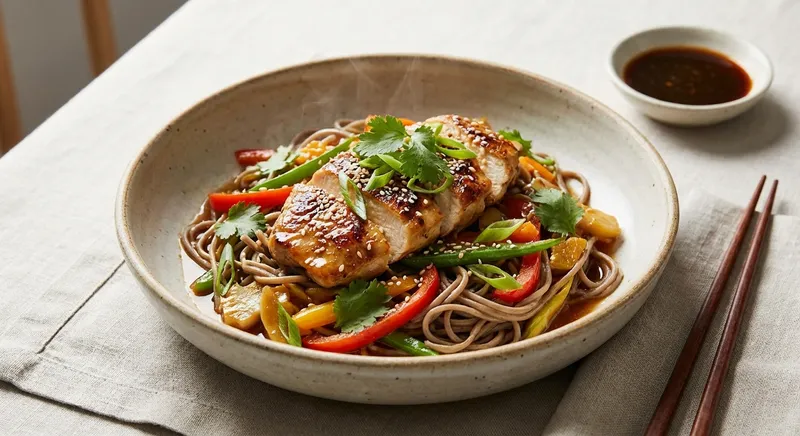
A vibrant, restaurant-quality stir-fry balancing tender, ginger-scallion chicken with crisp-tender vegetables and nutty soba noodles. Bright soy-ginger seasoning, a finishing drizzle of sesame oil and quick high-heat cooking deliver glossy, caramelized edges and fresh crunchy texture — all in about 30 minutes.
Prepare the chicken and noodles: Slice the chicken breast into thin, even strips (about 1/4-inch thick). Cutting thin and against the grain yields more tender bites and maximizes surface area for browning. Pat the pieces dry with paper towel — moisture on the surface prevents good browning.
Lightly coat the chicken: Toss the sliced chicken with 1/2 tsp cornstarch and a pinch of black pepper. The cornstarch creates a thin velvety coating that promotes a glossy, slightly crisp exterior and helps the sauce cling to the chicken.
Make the sauce: In a small bowl combine 1 1/2 tbsp soy sauce (or tamari), grated ginger, minced garlic, and 1 tsp of the sliced green-onion whites. Set aside. This simple mixture is your flavor backbone — the ginger and garlic provide fresh heat while the soy delivers umami; adding it later concentrates flavor on the proteins and vegetables.
Prep the vegetables: Trim and slice the bell pepper, cut broccoli into small florets, peel and slice the carrot on a bias, and trim the snap peas. Keep pieces uniform in size so everything cooks evenly and finishes at the same time.
Blanch the broccoli (optional but recommended): Bring a small pot of salted water to a boil, add the broccoli for 30–45 seconds until bright green and slightly tender, then plunge into an ice bath to stop cooking. Blanching ensures the broccoli is vivid green and tender-crisp before the high-heat stir-fry, reducing total pan time and avoiding overcooking.
Heat the wok or skillet: Place a large nonstick skillet or a 12-inch wok over high heat until very hot (about 2–3 minutes). A properly preheated pan gives immediate searing and Maillard browning — essential for depth of flavor.
Sear the chicken: Add 1 tbsp neutral oil and swirl to coat. Add the chicken in a single layer without overcrowding; if necessary cook in two quick batches. Let the chicken sit undisturbed 60–90 seconds to form a golden crust, then stir and cook another 30–60 seconds until almost cooked through. High-heat searing creates concentrated savory flavors and caramelized edges.
Remove and rest the chicken: Transfer the chicken to a clean plate. Resting briefly keeps the chicken juicy and prevents carryover cooking while you cook the vegetables.
Cook the aromatics and vegetables: Return the pan to high heat, add a drizzle (about 1–2 tsp) of oil if the pan looks dry. Add the green onion whites, remaining garlic and ginger, and stir 10–15 seconds to bloom their aromatics — this gently toasts the garlic/ginger and deepens their flavor without letting them burn. Add the carrots and bell pepper first and toss 1–2 minutes; they take slightly longer. Add the blanched broccoli and snap peas, tossing another 1–2 minutes until the vegetables are bright and crisp-tender.
Return chicken and add noodles: Add the chicken back to the pan along with the cooked soba noodles. Toss to combine so the noodles warm through and the chicken finishes cooking. The short time over high heat keeps vegetables crunchy and noodles from becoming gummy.
Add the sauce and finish: Pour the soy-ginger mixture over everything and toss constantly for 30–60 seconds so the sauce reduces slightly and coats the ingredients. If the sauce looks too salty or thick, add 1–2 tsp water to loosen. Finish by drizzling 1 tbsp sesame oil over the stir-fry and tossing once — sesame oil is aromatic and should be added at the end to preserve its fragrance.
Taste and adjust: Taste a bite and adjust with a pinch of salt (if needed) or freshly ground black pepper. Transfer to a warmed plate and sprinkle the sliced green onion greens over the top for brightness and color.
Serve: Plate the stir-fry immediately so textures—crisp vegetables, tender chicken, and springy noodles—are at their best. Serve with optional lime wedges or a sprinkle of toasted sesame seeds if you like.
706
Calories
61g
Protein
43g
Carbs
35g
Fat
8g
Fiber
How did this recipe turn out? Let others know!
to rate this recipe
By emensah m
A vibrant, restaurant-quality stir-fry balancing tender, ginger-scallion chicken with crisp-tender vegetables and nutty soba noodles. Bright soy-ginger seasoning, a finishing drizzle of sesame oil and quick high-heat cooking deliver glossy, caramelized edges and fresh crunchy texture — all in about 30 minutes.
Prepare the chicken and noodles: Slice the chicken breast into thin, even strips (about 1/4-inch thick). Cutting thin and against the grain yields more tender bites and maximizes surface area for browning. Pat the pieces dry with paper towel — moisture on the surface prevents good browning.
Lightly coat the chicken: Toss the sliced chicken with 1/2 tsp cornstarch and a pinch of black pepper. The cornstarch creates a thin velvety coating that promotes a glossy, slightly crisp exterior and helps the sauce cling to the chicken.
Make the sauce: In a small bowl combine 1 1/2 tbsp soy sauce (or tamari), grated ginger, minced garlic, and 1 tsp of the sliced green-onion whites. Set aside. This simple mixture is your flavor backbone — the ginger and garlic provide fresh heat while the soy delivers umami; adding it later concentrates flavor on the proteins and vegetables.
Prep the vegetables: Trim and slice the bell pepper, cut broccoli into small florets, peel and slice the carrot on a bias, and trim the snap peas. Keep pieces uniform in size so everything cooks evenly and finishes at the same time.
Blanch the broccoli (optional but recommended): Bring a small pot of salted water to a boil, add the broccoli for 30–45 seconds until bright green and slightly tender, then plunge into an ice bath to stop cooking. Blanching ensures the broccoli is vivid green and tender-crisp before the high-heat stir-fry, reducing total pan time and avoiding overcooking.
Heat the wok or skillet: Place a large nonstick skillet or a 12-inch wok over high heat until very hot (about 2–3 minutes). A properly preheated pan gives immediate searing and Maillard browning — essential for depth of flavor.
Sear the chicken: Add 1 tbsp neutral oil and swirl to coat. Add the chicken in a single layer without overcrowding; if necessary cook in two quick batches. Let the chicken sit undisturbed 60–90 seconds to form a golden crust, then stir and cook another 30–60 seconds until almost cooked through. High-heat searing creates concentrated savory flavors and caramelized edges.
Remove and rest the chicken: Transfer the chicken to a clean plate. Resting briefly keeps the chicken juicy and prevents carryover cooking while you cook the vegetables.
Cook the aromatics and vegetables: Return the pan to high heat, add a drizzle (about 1–2 tsp) of oil if the pan looks dry. Add the green onion whites, remaining garlic and ginger, and stir 10–15 seconds to bloom their aromatics — this gently toasts the garlic/ginger and deepens their flavor without letting them burn. Add the carrots and bell pepper first and toss 1–2 minutes; they take slightly longer. Add the blanched broccoli and snap peas, tossing another 1–2 minutes until the vegetables are bright and crisp-tender.
Return chicken and add noodles: Add the chicken back to the pan along with the cooked soba noodles. Toss to combine so the noodles warm through and the chicken finishes cooking. The short time over high heat keeps vegetables crunchy and noodles from becoming gummy.
Add the sauce and finish: Pour the soy-ginger mixture over everything and toss constantly for 30–60 seconds so the sauce reduces slightly and coats the ingredients. If the sauce looks too salty or thick, add 1–2 tsp water to loosen. Finish by drizzling 1 tbsp sesame oil over the stir-fry and tossing once — sesame oil is aromatic and should be added at the end to preserve its fragrance.
Taste and adjust: Taste a bite and adjust with a pinch of salt (if needed) or freshly ground black pepper. Transfer to a warmed plate and sprinkle the sliced green onion greens over the top for brightness and color.
Serve: Plate the stir-fry immediately so textures—crisp vegetables, tender chicken, and springy noodles—are at their best. Serve with optional lime wedges or a sprinkle of toasted sesame seeds if you like.
706
Calories
61g
Protein
43g
Carbs
35g
Fat
8g
Fiber
Your Rating:
