By emensah m
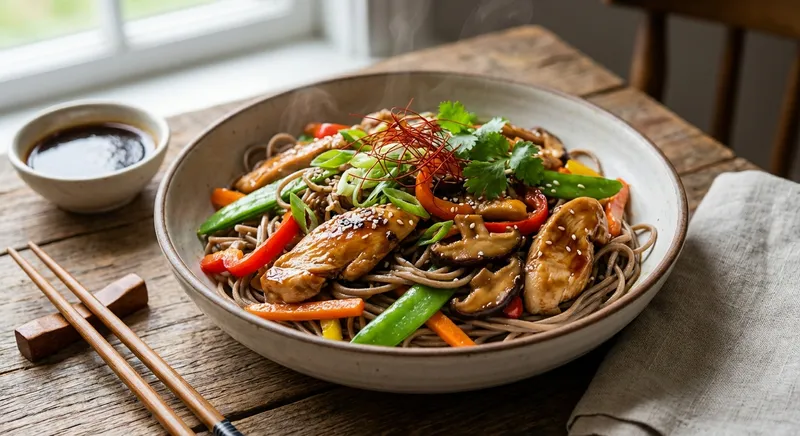
Tender, caramelized chicken tossed with springy soba noodles, crisp-tender snap peas and bright red pepper in a glossy soy-ginger sauce finished with toasted sesame — savory, slightly sweet and deeply aromatic. Quick to make but layered with restaurant techniques (high-heat sear, sauce reduction and a light cornstarch glaze) so every bite has a contrast of textures and a bold, balanced flavor.
Prep the chicken: Pat the chicken thighs dry with paper towels and cut into 1/2-inch strips. Season lightly with 1/2 tsp salt and a few grinds of black pepper. Drying the meat removes surface moisture so it sears instead of steaming — that golden crust adds flavor and texture.
Make the sauce: In a bowl whisk together the soy sauce, grated ginger, minced garlic, brown sugar, 1 tablespoon sesame oil and 1/4 cup (60 ml) water. In a small cup dissolve the cornstarch in 1 tablespoon cold water to make a slurry. The sauce components are balanced for salty, sweet and aromatic notes; the cornstarch slurry will be added toward the end to lightly glaze the noodles and vegetables.
Cook the soba: Bring a large pot of salted water to a rolling boil and cook the soba according to package directions (usually 4–5 minutes) until just tender. Drain and immediately rinse under cool running water to stop cooking and remove surface starch — this keeps the noodles separate and springy rather than gummy. Toss with a drizzle (about 1/2 tsp) of neutral oil to prevent sticking and set aside.
Heat the wok or large skillet: Place a 12-inch wok or large heavy skillet over high heat until smoking hot (about 2–3 minutes). Add the neutral oil and swirl to coat. A very hot pan is essential for quick searing and preserving the crispness of vegetables.
Sear the chicken: Working in one or two batches so the pan stays hot, add the chicken strips in a single layer and spread them out. Let them brown without moving for 1½–2 minutes, then stir and continue to cook until the strips are mostly cooked through (about 3–4 minutes total). High-heat searing locks in juices and creates flavorful browned bits (fond) that will enrich the sauce.
Remove chicken and rest: Transfer the chicken to a plate and tent loosely with foil. Resting briefly lets the juices redistribute and prevents overcooking as you finish the vegetables.
Flash-cook the vegetables: Add the sliced red pepper and the white portions of the scallions to the hot pan and stir-fry 30–45 seconds until they begin to soften. Add the snap peas and stir 45–60 seconds more — you want the peas bright green and crisp-tender. Cooking vegetables fast over high heat seals in color and a pleasant snap.
Recombine and add sauce: Return the chicken to the pan with any accumulated juices. Pour the prepared soy-ginger sauce over everything and bring to a simmer. Reduce the heat slightly — simmering briefly melds flavors and allows the ginger and garlic aromas to bloom.
Glaze with slurry: Give the cornstarch slurry a quick stir, then pour it into the simmering pan, stirring constantly; the sauce will thicken and become glossy in 20–30 seconds. This step gives the dish that restaurant-quality cling: a silky sauce that coats noodles and vegetables instead of pooling.
Finish with noodles and sesame oil: Add the cooked soba and the green parts of the scallions, tossing gently to combine and warm through (about 30–60 seconds). Drizzle the remaining 1/2 tablespoon sesame oil and adjust seasoning with salt and pepper. Finishing with sesame oil preserves its toasty aroma, which is lost if exposed to prolonged high heat.
Serve: Divide among 4 bowls and, if you like, garnish with extra sliced scallions and a light sprinkle of black pepper. Serve immediately so the noodles maintain their texture.
571
Calories
31g
Protein
53g
Carbs
28g
Fat
6g
Fiber
How did this recipe turn out? Let others know!
to rate this recipe
By emensah m
Tender, caramelized chicken tossed with springy soba noodles, crisp-tender snap peas and bright red pepper in a glossy soy-ginger sauce finished with toasted sesame — savory, slightly sweet and deeply aromatic. Quick to make but layered with restaurant techniques (high-heat sear, sauce reduction and a light cornstarch glaze) so every bite has a contrast of textures and a bold, balanced flavor.
Prep the chicken: Pat the chicken thighs dry with paper towels and cut into 1/2-inch strips. Season lightly with 1/2 tsp salt and a few grinds of black pepper. Drying the meat removes surface moisture so it sears instead of steaming — that golden crust adds flavor and texture.
Make the sauce: In a bowl whisk together the soy sauce, grated ginger, minced garlic, brown sugar, 1 tablespoon sesame oil and 1/4 cup (60 ml) water. In a small cup dissolve the cornstarch in 1 tablespoon cold water to make a slurry. The sauce components are balanced for salty, sweet and aromatic notes; the cornstarch slurry will be added toward the end to lightly glaze the noodles and vegetables.
Cook the soba: Bring a large pot of salted water to a rolling boil and cook the soba according to package directions (usually 4–5 minutes) until just tender. Drain and immediately rinse under cool running water to stop cooking and remove surface starch — this keeps the noodles separate and springy rather than gummy. Toss with a drizzle (about 1/2 tsp) of neutral oil to prevent sticking and set aside.
Heat the wok or large skillet: Place a 12-inch wok or large heavy skillet over high heat until smoking hot (about 2–3 minutes). Add the neutral oil and swirl to coat. A very hot pan is essential for quick searing and preserving the crispness of vegetables.
Sear the chicken: Working in one or two batches so the pan stays hot, add the chicken strips in a single layer and spread them out. Let them brown without moving for 1½–2 minutes, then stir and continue to cook until the strips are mostly cooked through (about 3–4 minutes total). High-heat searing locks in juices and creates flavorful browned bits (fond) that will enrich the sauce.
Remove chicken and rest: Transfer the chicken to a plate and tent loosely with foil. Resting briefly lets the juices redistribute and prevents overcooking as you finish the vegetables.
Flash-cook the vegetables: Add the sliced red pepper and the white portions of the scallions to the hot pan and stir-fry 30–45 seconds until they begin to soften. Add the snap peas and stir 45–60 seconds more — you want the peas bright green and crisp-tender. Cooking vegetables fast over high heat seals in color and a pleasant snap.
Recombine and add sauce: Return the chicken to the pan with any accumulated juices. Pour the prepared soy-ginger sauce over everything and bring to a simmer. Reduce the heat slightly — simmering briefly melds flavors and allows the ginger and garlic aromas to bloom.
Glaze with slurry: Give the cornstarch slurry a quick stir, then pour it into the simmering pan, stirring constantly; the sauce will thicken and become glossy in 20–30 seconds. This step gives the dish that restaurant-quality cling: a silky sauce that coats noodles and vegetables instead of pooling.
Finish with noodles and sesame oil: Add the cooked soba and the green parts of the scallions, tossing gently to combine and warm through (about 30–60 seconds). Drizzle the remaining 1/2 tablespoon sesame oil and adjust seasoning with salt and pepper. Finishing with sesame oil preserves its toasty aroma, which is lost if exposed to prolonged high heat.
Serve: Divide among 4 bowls and, if you like, garnish with extra sliced scallions and a light sprinkle of black pepper. Serve immediately so the noodles maintain their texture.
571
Calories
31g
Protein
53g
Carbs
28g
Fat
6g
Fiber
Your Rating:
