By Chef
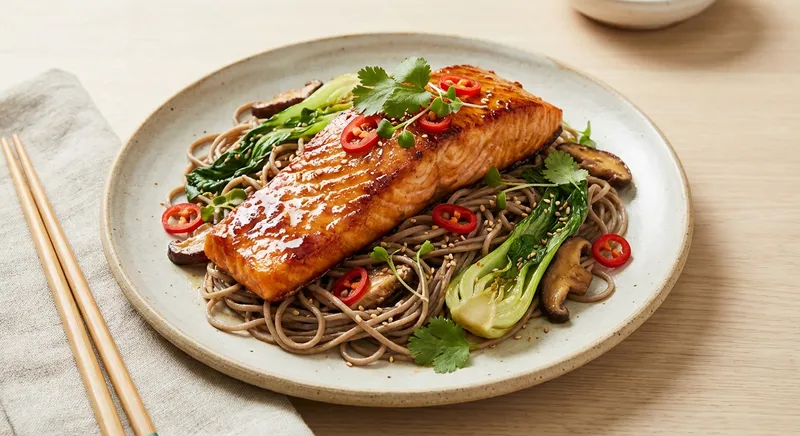
Succulent miso-honey glazed salmon sits atop warm buckwheat soba tossed with sesame and umami-rich shiitake, while tender braised baby bok choy adds bright, crunchy greens. The glaze balances savory white miso, honey and rice vinegar; sesame oil and toasted seeds lend aromatic depth—this is a Japanese-inspired, restaurant-quality plate that’s fast enough for a weeknight but elegant enough for guests.
Bring a medium pot of salted water to a boil for the soba. Cooking soba in well-salted water seasons the noodles and keeps the starch on the exterior from making the sauce gloppy. Have a sieve/strainer and a bowl of cold water ready to stop the cooking quickly if you prefer firmer noodles.
While the water heats, make the miso-honey glaze: in a small bowl whisk together the white miso, honey, light soy sauce, rice vinegar, grated ginger, minced garlic and orange zest. Add 1 tablespoon water and whisk until smooth. Taste and adjust: miso is salty, honey balances it — the glaze should be glossy and slightly runny so it will cling to the salmon.
Trim and season the salmon lightly: pat dry with paper towels, then season the flesh side with a small pinch of salt and freshly ground pepper. Patting dry ensures a proper sear; salt too early leaches moisture but a light seasoning pre-sear enhances flavor.
Cook the soba: add the 70 g dried soba to the boiling water and follow package timing (typically 4–6 minutes) until al dente. Stir once or twice to prevent sticking. Reserve 2 tablespoons of the cooking water before draining—this starchy water helps loosen and emulsify the sauce for the noodles.
Shock and drain the noodles: immediately drain soba and run under cold water briefly to stop cooking and remove surface starch (this keeps the noodles pleasantly firm and prevents clumping). Toss briefly with a tiny neutral oil if you won’t dress them right away.
Sear the salmon: heat a nonstick or stainless steel skillet over medium-high. Add 1 tsp neutral oil and swirl. When the oil shimmers, place the salmon fillet skin-side down (if skin-on). Press gently with a spatula for 10–15 seconds to ensure full contact—this prevents curling. Sear skin-side down for 3–4 minutes until the skin is crisp and the bottom is golden.
Flip and finish with glaze: flip the salmon, reduce heat to medium-low and spoon about half the glaze over the top. The lower heat prevents the glaze from burning while allowing it to warm and adhere to the fish—cook 2–3 more minutes, spooning glaze once more. If your fillet is thicker than 2.5 cm (1 in), tent loosely with foil and rest in the warm pan off the heat for 2–3 minutes to bring through without overcooking. Aim for moist, just-cooked salmon (internal temp ~50–52°C/122–125°F for medium-rare to medium).
While the salmon finishes, sauté the shiitake: in a separate skillet, heat 1/2 tsp sesame oil over medium heat. Add the sliced shiitake and sauté 3–4 minutes until edges caramelize—browning concentrates the mushroom’s umami and adds texture. Season lightly with a pinch of salt and 1/4 tsp soy sauce if you like more savory depth.
Braised baby bok choy: push the mushrooms to one side, add the halved bok choy cut-side down into the same mushroom skillet or use a small separate pan. Add 2–3 tablespoons water, cover and steam 2–3 minutes until stems are tender-crisp. Finishing cut-side down first gives attractive browning and a sweeter flavor from mild caramelization. Finish with a tiny drizzle of sesame oil and a pinch of salt to taste.
Dress the soba: return drained soba to the pot or a warm bowl. Stir in the remaining glaze (reserve a tablespoon for finishing the plate) and the reserved 2 tablespoons soba water to loosen into a silky sauce that coats the noodles. Add the sautéed shiitake and toss gently so the noodles pick up the mushroom flavor. The starchy water helps the miso-honey emulsify with the oil and cling to the soba.
Plate for impact: mound the warm soba in the center of a shallow bowl or plate. Place the glazed salmon on top or to the side. Arrange the braised bok choy next to the noodles, spoon any pan juices over the salmon, and brush with the reserved tablespoon of glaze for a glossy finish.
Garnish and finish: sprinkle thinly sliced scallions, toasted sesame seeds and a final tiny pinch of orange zest over the fish and noodles. The scallions add brightness; sesame seeds give nutty crunch and the zest adds a citrus perfume that lifts the dish.
Rest and serve: let the plated salmon rest 1 minute so the glaze sets slightly, then serve immediately. A quick rest avoids cold spots and keeps the glaze tacky and glossy.
747
Calories
46g
Protein
63g
Carbs
33g
Fat
7g
Fiber
How did this recipe turn out? Let others know!
to rate this recipe
By Chef
Succulent miso-honey glazed salmon sits atop warm buckwheat soba tossed with sesame and umami-rich shiitake, while tender braised baby bok choy adds bright, crunchy greens. The glaze balances savory white miso, honey and rice vinegar; sesame oil and toasted seeds lend aromatic depth—this is a Japanese-inspired, restaurant-quality plate that’s fast enough for a weeknight but elegant enough for guests.
Bring a medium pot of salted water to a boil for the soba. Cooking soba in well-salted water seasons the noodles and keeps the starch on the exterior from making the sauce gloppy. Have a sieve/strainer and a bowl of cold water ready to stop the cooking quickly if you prefer firmer noodles.
While the water heats, make the miso-honey glaze: in a small bowl whisk together the white miso, honey, light soy sauce, rice vinegar, grated ginger, minced garlic and orange zest. Add 1 tablespoon water and whisk until smooth. Taste and adjust: miso is salty, honey balances it — the glaze should be glossy and slightly runny so it will cling to the salmon.
Trim and season the salmon lightly: pat dry with paper towels, then season the flesh side with a small pinch of salt and freshly ground pepper. Patting dry ensures a proper sear; salt too early leaches moisture but a light seasoning pre-sear enhances flavor.
Cook the soba: add the 70 g dried soba to the boiling water and follow package timing (typically 4–6 minutes) until al dente. Stir once or twice to prevent sticking. Reserve 2 tablespoons of the cooking water before draining—this starchy water helps loosen and emulsify the sauce for the noodles.
Shock and drain the noodles: immediately drain soba and run under cold water briefly to stop cooking and remove surface starch (this keeps the noodles pleasantly firm and prevents clumping). Toss briefly with a tiny neutral oil if you won’t dress them right away.
Sear the salmon: heat a nonstick or stainless steel skillet over medium-high. Add 1 tsp neutral oil and swirl. When the oil shimmers, place the salmon fillet skin-side down (if skin-on). Press gently with a spatula for 10–15 seconds to ensure full contact—this prevents curling. Sear skin-side down for 3–4 minutes until the skin is crisp and the bottom is golden.
Flip and finish with glaze: flip the salmon, reduce heat to medium-low and spoon about half the glaze over the top. The lower heat prevents the glaze from burning while allowing it to warm and adhere to the fish—cook 2–3 more minutes, spooning glaze once more. If your fillet is thicker than 2.5 cm (1 in), tent loosely with foil and rest in the warm pan off the heat for 2–3 minutes to bring through without overcooking. Aim for moist, just-cooked salmon (internal temp ~50–52°C/122–125°F for medium-rare to medium).
While the salmon finishes, sauté the shiitake: in a separate skillet, heat 1/2 tsp sesame oil over medium heat. Add the sliced shiitake and sauté 3–4 minutes until edges caramelize—browning concentrates the mushroom’s umami and adds texture. Season lightly with a pinch of salt and 1/4 tsp soy sauce if you like more savory depth.
Braised baby bok choy: push the mushrooms to one side, add the halved bok choy cut-side down into the same mushroom skillet or use a small separate pan. Add 2–3 tablespoons water, cover and steam 2–3 minutes until stems are tender-crisp. Finishing cut-side down first gives attractive browning and a sweeter flavor from mild caramelization. Finish with a tiny drizzle of sesame oil and a pinch of salt to taste.
Dress the soba: return drained soba to the pot or a warm bowl. Stir in the remaining glaze (reserve a tablespoon for finishing the plate) and the reserved 2 tablespoons soba water to loosen into a silky sauce that coats the noodles. Add the sautéed shiitake and toss gently so the noodles pick up the mushroom flavor. The starchy water helps the miso-honey emulsify with the oil and cling to the soba.
Plate for impact: mound the warm soba in the center of a shallow bowl or plate. Place the glazed salmon on top or to the side. Arrange the braised bok choy next to the noodles, spoon any pan juices over the salmon, and brush with the reserved tablespoon of glaze for a glossy finish.
Garnish and finish: sprinkle thinly sliced scallions, toasted sesame seeds and a final tiny pinch of orange zest over the fish and noodles. The scallions add brightness; sesame seeds give nutty crunch and the zest adds a citrus perfume that lifts the dish.
Rest and serve: let the plated salmon rest 1 minute so the glaze sets slightly, then serve immediately. A quick rest avoids cold spots and keeps the glaze tacky and glossy.
747
Calories
46g
Protein
63g
Carbs
33g
Fat
7g
Fiber
Your Rating:
