By Rayven Laury
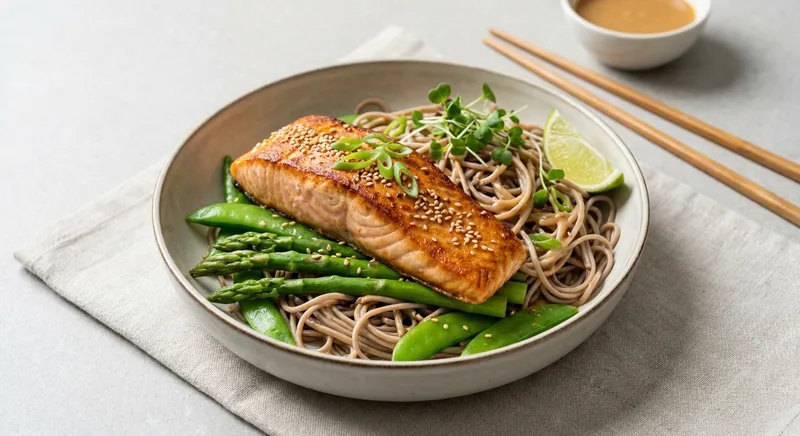
A glossy miso-sesame glaze caramelizes on pan-seared salmon to create a savory-sweet crust, served over warm buckwheat soba tossed with crisp-tender asparagus and snap peas. Bright rice vinegar, lime, fresh cilantro and crunchy toasted sesame seeds lift the dish into a restaurant-quality, balanced meal that’s fast enough for weeknights but elegant enough for guests.
Bring a medium pot of water to a rolling boil. Salt generously (about ½ tsp for the pot) so the soba absorbs seasoning while it cooks — salted water seasons the noodles from the inside and prevents them tasting flat.
Make the miso-sesame glaze: in a small bowl whisk together the white miso paste, mirin (or dry sherry), light soy sauce and sesame oil until smooth. The mirin adds sweetness and shine while the low-salt soy and sesame oil round the flavor; whisking loosens the miso so it spreads easily on the fish.
Pat the salmon dry with paper towels (dry skin crisps better). Season the flesh lightly with black pepper (miso and soy are salty, so avoid extra salt). Spread about two-thirds of the glaze across the top (skinless side) of each fillet — glazing before searing gives the sugar in the mirin and miso a chance to caramelize and form a glossy crust.
Cook the soba: add the dry soba to the boiling water and cook according to package directions until just al dente (usually 4–5 minutes). Stir once or twice early so they don’t stick. Reserve ¼ cup (60 ml) of the starchy cooking water before draining — the starch will help dress the noodles and bind the rice vinegar and oil to the strands.
While the soba cooks, preheat a large heavy skillet (cast iron or stainless) over medium-high heat until very hot. Add the neutral oil and swirl to coat. A properly preheated pan is essential for a good sear — it gives the salmon instant contact heat so the glaze caramelizes instead of steaming.
Place the salmon skin-side down in the hot skillet and press gently with a spatula for the first 20 seconds to keep the skin flat — this ensures even browning. Sear salmon skin-side down for 3–4 minutes (depending on thickness) until the skin is crisp and the fish is cooked about two-thirds of the way through. Do not move the fillets while searing or the crust won’t form properly.
Flip the fillets and reduce heat to medium. Spoon the remaining glaze over the tops and cook 1–2 minutes more until the glaze is shiny and the salmon reaches your desired doneness (aim for 52–56°C / 125–133°F for medium-rare to medium). Miso burns easily — adding glaze after the initial sear and lowering the heat prevents bitter char while still achieving caramelization.
Transfer the salmon to a plate to rest briefly while you finish the noodles and vegetables. Resting lets the juices redistribute and keeps the fish tender.
In the same (still-warm) skillet, add the asparagus and snap peas. Stir-fry 1–2 minutes to pick up any fond (brown bits) from the salmon — that's flavor. Add a splash (1–2 Tbsp) of the reserved noodle water and a small pinch of salt, then toss until the vegetables are bright and crisp-tender (another 1–2 minutes). Keeping the vegetables slightly underdone preserves their snap and color.
Combine the warm soba and dressing: return the drained soba to the pot off the heat (or place in a large bowl). Add rice vinegar, the neutral oil used for searing (or ½ tsp extra sesame oil if you like), the sliced spring onions, chopped cilantro (reserve a few leaves for garnish), and radish rounds. Add the cooked asparagus and snap peas, then toss vigorously; add a tablespoon at a time of the reserved noodle water to loosen until the noodles are silky and coated. Warming the dressing with the hot noodles and vegetables helps the rice vinegar mellow and cling to the noodles.
Taste and adjust: soy/miso contribute saltiness, so taste the noodle salad now and add a tiny splash of light soy sauce if it needs salt, or a squeeze of lime if it needs brightness. The goal is balanced sweet-salty-acid without overpowering the salmon.
Plate: divide the warm soba and vegetables between two bowls or plates. Top each with a glazed salmon fillet (skin-side up so it stays crisp). Sprinkle with toasted sesame seeds, scatter the remaining cilantro and spring onion, add radish slices for crunch and beauty, and finish with a lime wedge and a light pinch of chili flakes if you like heat. Serve immediately so the salmon skin remains crisp and the noodles are warm.
708
Calories
43g
Protein
69g
Carbs
30g
Fat
6g
Fiber
How did this recipe turn out? Let others know!
to rate this recipe
By Rayven Laury
A glossy miso-sesame glaze caramelizes on pan-seared salmon to create a savory-sweet crust, served over warm buckwheat soba tossed with crisp-tender asparagus and snap peas. Bright rice vinegar, lime, fresh cilantro and crunchy toasted sesame seeds lift the dish into a restaurant-quality, balanced meal that’s fast enough for weeknights but elegant enough for guests.
Bring a medium pot of water to a rolling boil. Salt generously (about ½ tsp for the pot) so the soba absorbs seasoning while it cooks — salted water seasons the noodles from the inside and prevents them tasting flat.
Make the miso-sesame glaze: in a small bowl whisk together the white miso paste, mirin (or dry sherry), light soy sauce and sesame oil until smooth. The mirin adds sweetness and shine while the low-salt soy and sesame oil round the flavor; whisking loosens the miso so it spreads easily on the fish.
Pat the salmon dry with paper towels (dry skin crisps better). Season the flesh lightly with black pepper (miso and soy are salty, so avoid extra salt). Spread about two-thirds of the glaze across the top (skinless side) of each fillet — glazing before searing gives the sugar in the mirin and miso a chance to caramelize and form a glossy crust.
Cook the soba: add the dry soba to the boiling water and cook according to package directions until just al dente (usually 4–5 minutes). Stir once or twice early so they don’t stick. Reserve ¼ cup (60 ml) of the starchy cooking water before draining — the starch will help dress the noodles and bind the rice vinegar and oil to the strands.
While the soba cooks, preheat a large heavy skillet (cast iron or stainless) over medium-high heat until very hot. Add the neutral oil and swirl to coat. A properly preheated pan is essential for a good sear — it gives the salmon instant contact heat so the glaze caramelizes instead of steaming.
Place the salmon skin-side down in the hot skillet and press gently with a spatula for the first 20 seconds to keep the skin flat — this ensures even browning. Sear salmon skin-side down for 3–4 minutes (depending on thickness) until the skin is crisp and the fish is cooked about two-thirds of the way through. Do not move the fillets while searing or the crust won’t form properly.
Flip the fillets and reduce heat to medium. Spoon the remaining glaze over the tops and cook 1–2 minutes more until the glaze is shiny and the salmon reaches your desired doneness (aim for 52–56°C / 125–133°F for medium-rare to medium). Miso burns easily — adding glaze after the initial sear and lowering the heat prevents bitter char while still achieving caramelization.
Transfer the salmon to a plate to rest briefly while you finish the noodles and vegetables. Resting lets the juices redistribute and keeps the fish tender.
In the same (still-warm) skillet, add the asparagus and snap peas. Stir-fry 1–2 minutes to pick up any fond (brown bits) from the salmon — that's flavor. Add a splash (1–2 Tbsp) of the reserved noodle water and a small pinch of salt, then toss until the vegetables are bright and crisp-tender (another 1–2 minutes). Keeping the vegetables slightly underdone preserves their snap and color.
Combine the warm soba and dressing: return the drained soba to the pot off the heat (or place in a large bowl). Add rice vinegar, the neutral oil used for searing (or ½ tsp extra sesame oil if you like), the sliced spring onions, chopped cilantro (reserve a few leaves for garnish), and radish rounds. Add the cooked asparagus and snap peas, then toss vigorously; add a tablespoon at a time of the reserved noodle water to loosen until the noodles are silky and coated. Warming the dressing with the hot noodles and vegetables helps the rice vinegar mellow and cling to the noodles.
Taste and adjust: soy/miso contribute saltiness, so taste the noodle salad now and add a tiny splash of light soy sauce if it needs salt, or a squeeze of lime if it needs brightness. The goal is balanced sweet-salty-acid without overpowering the salmon.
Plate: divide the warm soba and vegetables between two bowls or plates. Top each with a glazed salmon fillet (skin-side up so it stays crisp). Sprinkle with toasted sesame seeds, scatter the remaining cilantro and spring onion, add radish slices for crunch and beauty, and finish with a lime wedge and a light pinch of chili flakes if you like heat. Serve immediately so the salmon skin remains crisp and the noodles are warm.
708
Calories
43g
Protein
69g
Carbs
30g
Fat
6g
Fiber
Your Rating:
