By j
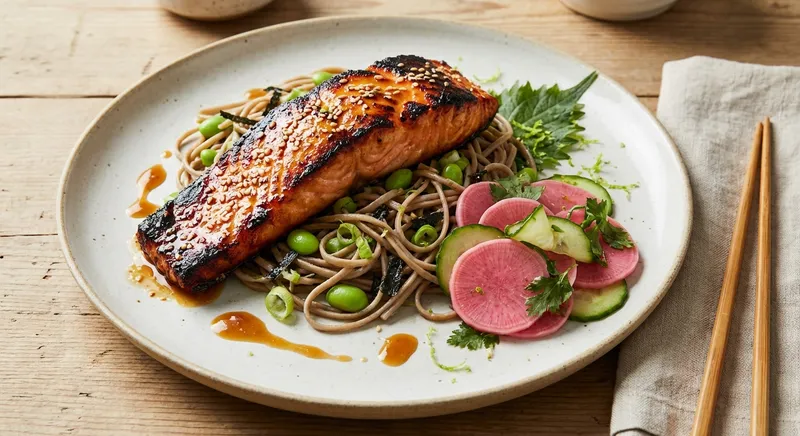
An elegant, Japanese-inspired weeknight main: a tender, umami-rich salmon fillet glazed in a glossy maple-miso reduction and served over warm sesame-scented soba. Bright, quick-pickled radish and scallions add crunch and acidity to balance the sweet-savory glaze, while toasted sesame seeds finish the dish with nutty perfume.
Bring the salmon to room temperature for 10 minutes and pat it very dry with paper towels. Drying the surface removes excess moisture so the salmon can sear properly and develop a golden crust—moisture is the enemy of browning.
Season both sides lightly with salt and a pinch of black pepper. Remember miso is salty, so be conservative with salt on the flesh side—you can always adjust at the end.
Make the maple-miso glaze: in a small bowl whisk together the white miso, maple syrup, and rice wine vinegar until smooth. The miso adds umami and salt; maple brings sweetness and helps with caramelization; vinegar brightens the flavor and thins the miso so it will glaze evenly.
Heat a 10-inch (25 cm) nonstick or well-seasoned stainless-steel skillet over medium-high heat until hot. Add the neutral oil and swirl to coat. A properly heated pan and a thin film of oil ensure rapid browning without sticking.
If your fillet has skin, place it skin-side down in the pan and press gently with a spatula for the first 10–15 seconds to ensure full contact—this prevents curling and yields an even, crisp skin. Sear for 3–4 minutes without moving it, until the skin is deeply golden and releases easily.
Flip the salmon and reduce the heat to medium. Spoon or brush half of the maple-miso glaze over the top of the salmon. Reducing the heat prevents the sugars in maple from burning while allowing the glaze to warm, loosen, and start to tack onto the fish.
Cook the salmon on the flesh side 1–2 minutes more, basting once or twice with the glaze. For a slightly more caramelized finish, transfer the pan to a preheated broiler for 45–75 seconds—watch closely as sugars burn fast. The goal is an internal temperature of 50–55°C (122–131°F) for medium-rare to medium; the fish will continue to carryover cook while resting.
Remove the salmon to a plate and loosely tent with foil to rest for 3–4 minutes. Resting redistributes juices and lets the glaze set instead of running off immediately when cut.
While the salmon rests, warm the soba: heat a small nonstick pan over medium-low heat, add the sesame oil and the rice wine vinegar, then add the cooked soba and toss just until warmed through (about 1–2 minutes). Warming the noodles in sesame oil blooms its aroma and allows the vinegar to lightly brighten the noodle flavor and help the radish meld in.
Season the soba with a small pinch of salt and add the sliced scallions and the quick-pickled radish. Toss gently to combine. The quick pickles provide acidity and crunch that cut through the glaze’s sweetness—add them last so they retain texture.
Plate: mound the warm sesame soba in the center of the plate, place the glazed salmon on top or to one side, spoon any remaining warmed glaze from the pan over the salmon, scatter the toasted sesame seeds and extra scallion, and finish with a quick squeeze of lemon if using. A final touch of acid brightens the whole dish and lifts the flavors.
Serve immediately. Leftover glaze can be refrigerated up to 48 hours. If preparing in advance, keep noodles and salmon separate and reheat briefly so textures stay true.
554
Calories
38g
Protein
32g
Carbs
30g
Fat
3g
Fiber
How did this recipe turn out? Let others know!
to rate this recipe
By j
An elegant, Japanese-inspired weeknight main: a tender, umami-rich salmon fillet glazed in a glossy maple-miso reduction and served over warm sesame-scented soba. Bright, quick-pickled radish and scallions add crunch and acidity to balance the sweet-savory glaze, while toasted sesame seeds finish the dish with nutty perfume.
Bring the salmon to room temperature for 10 minutes and pat it very dry with paper towels. Drying the surface removes excess moisture so the salmon can sear properly and develop a golden crust—moisture is the enemy of browning.
Season both sides lightly with salt and a pinch of black pepper. Remember miso is salty, so be conservative with salt on the flesh side—you can always adjust at the end.
Make the maple-miso glaze: in a small bowl whisk together the white miso, maple syrup, and rice wine vinegar until smooth. The miso adds umami and salt; maple brings sweetness and helps with caramelization; vinegar brightens the flavor and thins the miso so it will glaze evenly.
Heat a 10-inch (25 cm) nonstick or well-seasoned stainless-steel skillet over medium-high heat until hot. Add the neutral oil and swirl to coat. A properly heated pan and a thin film of oil ensure rapid browning without sticking.
If your fillet has skin, place it skin-side down in the pan and press gently with a spatula for the first 10–15 seconds to ensure full contact—this prevents curling and yields an even, crisp skin. Sear for 3–4 minutes without moving it, until the skin is deeply golden and releases easily.
Flip the salmon and reduce the heat to medium. Spoon or brush half of the maple-miso glaze over the top of the salmon. Reducing the heat prevents the sugars in maple from burning while allowing the glaze to warm, loosen, and start to tack onto the fish.
Cook the salmon on the flesh side 1–2 minutes more, basting once or twice with the glaze. For a slightly more caramelized finish, transfer the pan to a preheated broiler for 45–75 seconds—watch closely as sugars burn fast. The goal is an internal temperature of 50–55°C (122–131°F) for medium-rare to medium; the fish will continue to carryover cook while resting.
Remove the salmon to a plate and loosely tent with foil to rest for 3–4 minutes. Resting redistributes juices and lets the glaze set instead of running off immediately when cut.
While the salmon rests, warm the soba: heat a small nonstick pan over medium-low heat, add the sesame oil and the rice wine vinegar, then add the cooked soba and toss just until warmed through (about 1–2 minutes). Warming the noodles in sesame oil blooms its aroma and allows the vinegar to lightly brighten the noodle flavor and help the radish meld in.
Season the soba with a small pinch of salt and add the sliced scallions and the quick-pickled radish. Toss gently to combine. The quick pickles provide acidity and crunch that cut through the glaze’s sweetness—add them last so they retain texture.
Plate: mound the warm sesame soba in the center of the plate, place the glazed salmon on top or to one side, spoon any remaining warmed glaze from the pan over the salmon, scatter the toasted sesame seeds and extra scallion, and finish with a quick squeeze of lemon if using. A final touch of acid brightens the whole dish and lifts the flavors.
Serve immediately. Leftover glaze can be refrigerated up to 48 hours. If preparing in advance, keep noodles and salmon separate and reheat briefly so textures stay true.
554
Calories
38g
Protein
32g
Carbs
30g
Fat
3g
Fiber
Your Rating:
