By Jodi Chila
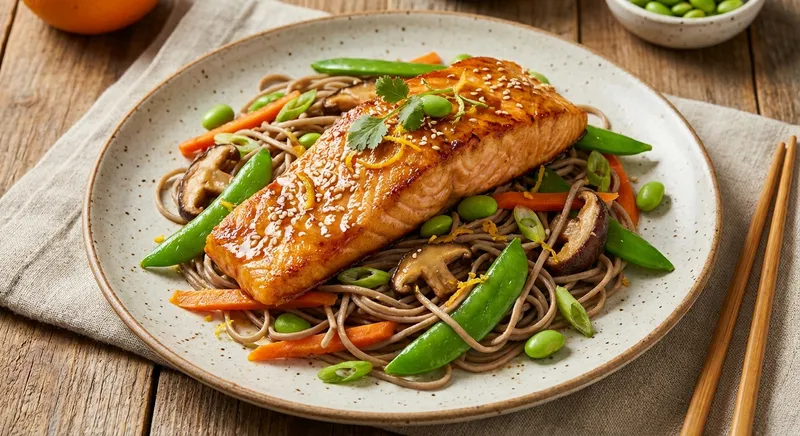
A bright, umami-forward weeknight special: perfectly pan-seared, skin-on salmon glazed with a citrus-miso dressing, served over nutty buckwheat soba tossed with crisp sugar snap peas, crunchy radish and carrot ribbons, and scallions. The miso-orange glaze gives the salmon a glossy, savory-sweet finish while the sesame-ginger dressing ties the soba and vegetables together for a lively Japanese-fusion plate.
Bring a large pot of salted water to a rolling boil for the soba. Salted water seasons the noodles from the inside as they cook.
While the water heats, pat the salmon fillets very dry with paper towels and season the skin and flesh lightly with salt and a few grinds of black pepper. Dry skin ensures a better sear and crisp skin.
Make the citrus-miso glaze: in a small bowl whisk together white miso, fresh orange (or yuzu) juice, light soy sauce, rice vinegar, 20 ml (about 1 1/3 tbsp) sesame oil, minced garlic and grated ginger. Whisk until smooth. Taste and adjust: you want a balance of salty (miso/soy), bright (citrus/vinegar) and a little sweet — if it tastes flat, add a 1/2 tsp sugar or a drop more orange juice. Preparing the glaze now lets flavors marry while you cook the rest.
Cook the soba noodles according to package instructions (usually 4–6 minutes) until just tender. Stir once or twice early to prevent clumping. Reserve 1/2 cup (120 ml) of the cooking water before draining—starchy water will help loosen the dressing and lightly coat the noodles. Rinse the drained soba briefly under cold water to stop cooking and remove excess surface starch (this keeps the noodles from getting gummy) and set aside.
Heat a wide nonstick or well-seasoned stainless steel skillet over medium-high heat. Add the neutral oil (20 ml) and let it come up to shimmering but not smoking. A hot pan is essential to get the salmon skin crisp without overcooking the interior.
Place the salmon fillets skin-side down in the hot pan, pressing gently with a spatula for the first 10–15 seconds to ensure full contact and even browning. Cook skin-side down for 4–5 minutes without moving — you want a deeply browned, crisp skin. The longer skin cooks uninterrupted, the crisper it becomes and the more fat renders out to flavor the fish.
Flip the fillets and cook flesh-side 1½–2½ minutes, depending on thickness, until salmon reaches about 120–125°F (49–52°C) for a medium doneness (it will rise several degrees off the heat). Spoon 1–2 tablespoons of the citrus-miso glaze over each fillet in the final minute to warm and slightly caramelize it. Cooking to medium keeps the salmon moist and demonstrates the glossy glaze; if you prefer well done, cook a minute longer.
While the salmon cooks, heat a separate wide skillet or wok over medium-high heat and add 1 tbsp (15 ml) sesame oil. Add the sugar snap peas and stir-fry 1–2 minutes until bright green and still crisp-tender; the quick high-heat toss preserves color and snap. Add the sliced radish and carrot ribbons and the white parts of the scallions and toss another 30–45 seconds — you want the vegetables warm but retaining bite and crunch.
Combine the cooked soba with the warm vegetable mix in the skillet or in a roomy mixing bowl. Add the reserved 120 ml soba water a little at a time and pour in any remaining citrus-miso glaze; toss gently to combine. The starchy water helps the glaze cling to the noodles and gives a silky finish. Taste and add a splash of soy or a pinch of salt if needed.
Divide the glazed soba and vegetables among four warm plates. Place a salmon fillet atop each nest of noodles, spooning any remaining pan glaze over the fish. Scatter the green parts of the scallions and toasted sesame seeds over everything, and finish with a lemon wedge on the side for a bright squeeze just before eating.
Serve immediately so the salmon skin stays crisp and the soba is warm and glossy. Encourage guests to squeeze a hint of lemon over the salmon and noodles to lift the flavors.
773
Calories
46g
Protein
66g
Carbs
37g
Fat
6g
Fiber
How did this recipe turn out? Let others know!
to rate this recipe
By Jodi Chila
A bright, umami-forward weeknight special: perfectly pan-seared, skin-on salmon glazed with a citrus-miso dressing, served over nutty buckwheat soba tossed with crisp sugar snap peas, crunchy radish and carrot ribbons, and scallions. The miso-orange glaze gives the salmon a glossy, savory-sweet finish while the sesame-ginger dressing ties the soba and vegetables together for a lively Japanese-fusion plate.
Bring a large pot of salted water to a rolling boil for the soba. Salted water seasons the noodles from the inside as they cook.
While the water heats, pat the salmon fillets very dry with paper towels and season the skin and flesh lightly with salt and a few grinds of black pepper. Dry skin ensures a better sear and crisp skin.
Make the citrus-miso glaze: in a small bowl whisk together white miso, fresh orange (or yuzu) juice, light soy sauce, rice vinegar, 20 ml (about 1 1/3 tbsp) sesame oil, minced garlic and grated ginger. Whisk until smooth. Taste and adjust: you want a balance of salty (miso/soy), bright (citrus/vinegar) and a little sweet — if it tastes flat, add a 1/2 tsp sugar or a drop more orange juice. Preparing the glaze now lets flavors marry while you cook the rest.
Cook the soba noodles according to package instructions (usually 4–6 minutes) until just tender. Stir once or twice early to prevent clumping. Reserve 1/2 cup (120 ml) of the cooking water before draining—starchy water will help loosen the dressing and lightly coat the noodles. Rinse the drained soba briefly under cold water to stop cooking and remove excess surface starch (this keeps the noodles from getting gummy) and set aside.
Heat a wide nonstick or well-seasoned stainless steel skillet over medium-high heat. Add the neutral oil (20 ml) and let it come up to shimmering but not smoking. A hot pan is essential to get the salmon skin crisp without overcooking the interior.
Place the salmon fillets skin-side down in the hot pan, pressing gently with a spatula for the first 10–15 seconds to ensure full contact and even browning. Cook skin-side down for 4–5 minutes without moving — you want a deeply browned, crisp skin. The longer skin cooks uninterrupted, the crisper it becomes and the more fat renders out to flavor the fish.
Flip the fillets and cook flesh-side 1½–2½ minutes, depending on thickness, until salmon reaches about 120–125°F (49–52°C) for a medium doneness (it will rise several degrees off the heat). Spoon 1–2 tablespoons of the citrus-miso glaze over each fillet in the final minute to warm and slightly caramelize it. Cooking to medium keeps the salmon moist and demonstrates the glossy glaze; if you prefer well done, cook a minute longer.
While the salmon cooks, heat a separate wide skillet or wok over medium-high heat and add 1 tbsp (15 ml) sesame oil. Add the sugar snap peas and stir-fry 1–2 minutes until bright green and still crisp-tender; the quick high-heat toss preserves color and snap. Add the sliced radish and carrot ribbons and the white parts of the scallions and toss another 30–45 seconds — you want the vegetables warm but retaining bite and crunch.
Combine the cooked soba with the warm vegetable mix in the skillet or in a roomy mixing bowl. Add the reserved 120 ml soba water a little at a time and pour in any remaining citrus-miso glaze; toss gently to combine. The starchy water helps the glaze cling to the noodles and gives a silky finish. Taste and add a splash of soy or a pinch of salt if needed.
Divide the glazed soba and vegetables among four warm plates. Place a salmon fillet atop each nest of noodles, spooning any remaining pan glaze over the fish. Scatter the green parts of the scallions and toasted sesame seeds over everything, and finish with a lemon wedge on the side for a bright squeeze just before eating.
Serve immediately so the salmon skin stays crisp and the soba is warm and glossy. Encourage guests to squeeze a hint of lemon over the salmon and noodles to lift the flavors.
773
Calories
46g
Protein
66g
Carbs
37g
Fat
6g
Fiber
Your Rating:
