By Zoey Mann
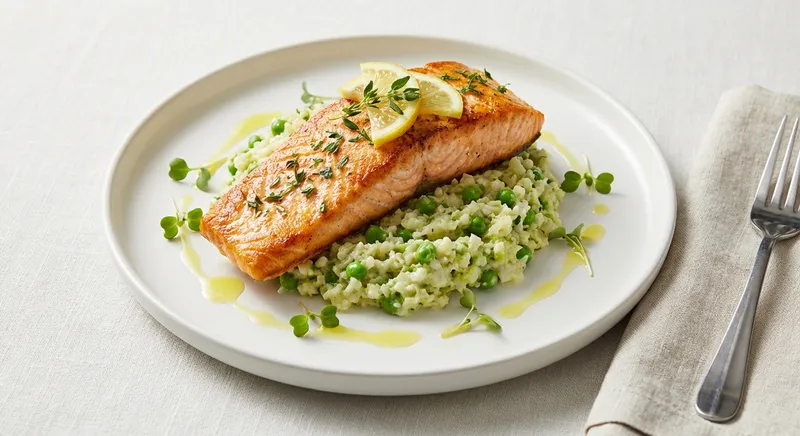
Crisp-skinned salmon finished with bright lemon and fresh dill sits atop a creamy, olive oil–kissed cauliflower 'risotto' studded with sweet spring peas and capers. The dish balances rich, buttery salmon fat with lively citrus, fresh herbs and a pop of briny caper — restaurant-quality flavor in a light, low-carb plate.
Prep the fish and aromatics. Pat the salmon fillets very dry with paper towels — moisture is the enemy of a crisp skin. Season both sides generously with sea salt and cracked black pepper and let sit at room temperature while you build the risotto base (5–10 minutes). Drying and resting the salmon helps the skin brown quickly and evenly and lets the seasoning penetrate.
Make the lemon cauliflower 'risotto' base: Heat a wide skillet over medium heat and add 2 tbsp extra-virgin olive oil. Add the finely diced shallot and sauté 1–2 minutes until translucent — this softens the shallot and releases sweetness without browning. Add the minced garlic and cook 20–30 seconds until fragrant to bloom the aromatic oils; don't let it burn.
Add the riced cauliflower to the pan and increase heat to medium-high. Sauté 4–6 minutes, stirring frequently, until the cauliflower has softened and any raw, watery flavor cooks off — you want it tender but slightly al dente. Toasting the cauliflower concentrates flavor and prevents a watery final texture.
Stir in the peas and 1 tbsp of the lemon juice (reserve the rest for the salmon). Cook 1–2 minutes until peas are heated through but still bright green — this preserves sweetness and texture. If the mixture looks dry, splash up to 1–2 tbsp water to loosen; the goal is a creamy, risotto-like coating, not a soupy pan.
Finish the cauliflower: Remove the pan from heat and stir in the lemon zest, chopped dill, 1 tsp rinsed capers (if using), 1 tsp extra-virgin olive oil, and a pinch of red pepper flakes (if using). Taste and adjust salt, pepper and lemon. The acid and herb at this stage brighten the dish without overpowering the salmon.
Preheat a heavy skillet (cast-iron or stainless steel) over medium-high heat for 2–3 minutes — a properly preheated pan gives an immediate sear and prevents sticking. Add 2 tsp ghee or avocado oil and swirl to coat. Ghee or avocado oil has a higher smoke point than butter and helps deliver a golden crust without burning.
Sear the salmon, skin-side down first. Place the fillets in the pan skin-side down and press gently with a spatula for 10–15 seconds to ensure full skin contact — this prevents the skin from buckling and encourages even crisping. Cook skin-side down for 4–6 minutes depending on thickness; you want the skin deeply golden and crisp and the flesh to be cooked about two-thirds of the way up the side.
Flip and finish the salmon. Turn the fillets over and cook flesh-side down 30–90 seconds only — the goal is to finish cooking without overcooking. Spoon 1 tsp extra-virgin olive oil and the remaining 1 tbsp lemon juice over the top as it finishes to add brightness. If you like, add a small pat of butter (optional) and baste briefly for extra gloss and flavor; remove from heat when salmon reaches an internal temperature of 50–52°C (122–125°F) for medium-rare to medium — carryover heat will continue to cook it to about 55°C (131°F).
Rest the salmon 2 minutes. Resting lets the juices redistribute and prevents the fillet from drying out. Meanwhile, reheat the cauliflower risotto gently if needed — it should be warm and saucy enough to mound on the plate.
Plate: Spoon a nest of lemon cauliflower 'risotto' in the center of each plate. Place a salmon fillet on top, skin-side up to showcase the crisp skin (or skin-side down if you prefer the glossy finish). Scatter remaining chopped dill, a few capers, red pepper flakes, and a small handful of microgreens or pea shoots. Finish with a final drizzle of extra-virgin olive oil and a light grinding of cracked black pepper.
693
Calories
43g
Protein
27g
Carbs
46g
Fat
9g
Fiber
How did this recipe turn out? Let others know!
to rate this recipe
By Zoey Mann
Crisp-skinned salmon finished with bright lemon and fresh dill sits atop a creamy, olive oil–kissed cauliflower 'risotto' studded with sweet spring peas and capers. The dish balances rich, buttery salmon fat with lively citrus, fresh herbs and a pop of briny caper — restaurant-quality flavor in a light, low-carb plate.
Prep the fish and aromatics. Pat the salmon fillets very dry with paper towels — moisture is the enemy of a crisp skin. Season both sides generously with sea salt and cracked black pepper and let sit at room temperature while you build the risotto base (5–10 minutes). Drying and resting the salmon helps the skin brown quickly and evenly and lets the seasoning penetrate.
Make the lemon cauliflower 'risotto' base: Heat a wide skillet over medium heat and add 2 tbsp extra-virgin olive oil. Add the finely diced shallot and sauté 1–2 minutes until translucent — this softens the shallot and releases sweetness without browning. Add the minced garlic and cook 20–30 seconds until fragrant to bloom the aromatic oils; don't let it burn.
Add the riced cauliflower to the pan and increase heat to medium-high. Sauté 4–6 minutes, stirring frequently, until the cauliflower has softened and any raw, watery flavor cooks off — you want it tender but slightly al dente. Toasting the cauliflower concentrates flavor and prevents a watery final texture.
Stir in the peas and 1 tbsp of the lemon juice (reserve the rest for the salmon). Cook 1–2 minutes until peas are heated through but still bright green — this preserves sweetness and texture. If the mixture looks dry, splash up to 1–2 tbsp water to loosen; the goal is a creamy, risotto-like coating, not a soupy pan.
Finish the cauliflower: Remove the pan from heat and stir in the lemon zest, chopped dill, 1 tsp rinsed capers (if using), 1 tsp extra-virgin olive oil, and a pinch of red pepper flakes (if using). Taste and adjust salt, pepper and lemon. The acid and herb at this stage brighten the dish without overpowering the salmon.
Preheat a heavy skillet (cast-iron or stainless steel) over medium-high heat for 2–3 minutes — a properly preheated pan gives an immediate sear and prevents sticking. Add 2 tsp ghee or avocado oil and swirl to coat. Ghee or avocado oil has a higher smoke point than butter and helps deliver a golden crust without burning.
Sear the salmon, skin-side down first. Place the fillets in the pan skin-side down and press gently with a spatula for 10–15 seconds to ensure full skin contact — this prevents the skin from buckling and encourages even crisping. Cook skin-side down for 4–6 minutes depending on thickness; you want the skin deeply golden and crisp and the flesh to be cooked about two-thirds of the way up the side.
Flip and finish the salmon. Turn the fillets over and cook flesh-side down 30–90 seconds only — the goal is to finish cooking without overcooking. Spoon 1 tsp extra-virgin olive oil and the remaining 1 tbsp lemon juice over the top as it finishes to add brightness. If you like, add a small pat of butter (optional) and baste briefly for extra gloss and flavor; remove from heat when salmon reaches an internal temperature of 50–52°C (122–125°F) for medium-rare to medium — carryover heat will continue to cook it to about 55°C (131°F).
Rest the salmon 2 minutes. Resting lets the juices redistribute and prevents the fillet from drying out. Meanwhile, reheat the cauliflower risotto gently if needed — it should be warm and saucy enough to mound on the plate.
Plate: Spoon a nest of lemon cauliflower 'risotto' in the center of each plate. Place a salmon fillet on top, skin-side up to showcase the crisp skin (or skin-side down if you prefer the glossy finish). Scatter remaining chopped dill, a few capers, red pepper flakes, and a small handful of microgreens or pea shoots. Finish with a final drizzle of extra-virgin olive oil and a light grinding of cracked black pepper.
693
Calories
43g
Protein
27g
Carbs
46g
Fat
9g
Fiber
Your Rating:
