By Jessie H
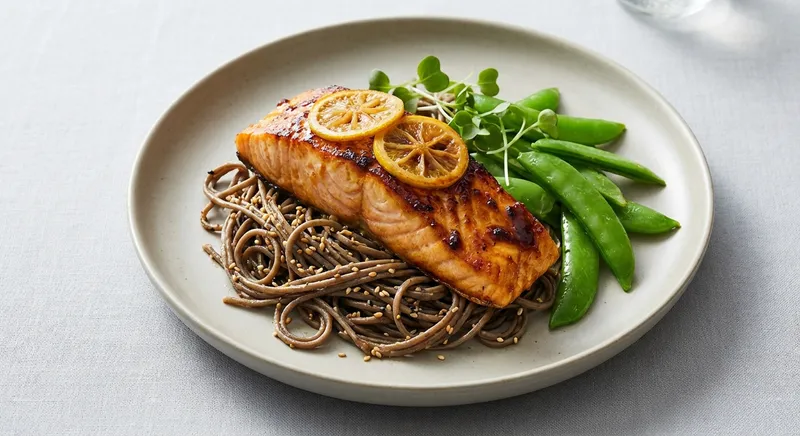
A bright, umami-rich bowl that pairs a caramelized miso-citrus glaze on seared salmon with chewy sesame soba noodles and crisp blanched sugar snap peas. The glaze balances sweet mirin and honey with tangy orange and savory white miso; toasted sesame and rice vinegar lift the noodles for a restaurant-quality finish that’s quick enough for weeknights.
Make the citrus-miso glaze: In a small bowl combine 1 tbsp white miso, 1 tbsp mirin, 1 tbsp fresh orange juice, 1/2 tsp grated ginger, the minced garlic clove, 1/2 tbsp (7.5 ml) of the soy sauce (half of the 1 tbsp), and 1/2 tsp honey or maple syrup. Whisk until smooth. This mixture blends salty miso sweetness with bright citrus—mirin and honey add caramelization potential so the glaze will brown when searing.
Pat the salmon dry and season: Using paper towels, pat the 160 g salmon fillet dry (important so it sears, not steams). Lightly score the skin if skin-on to prevent curling. Season both sides with a pinch of kosher salt and a few grinds of black pepper. Dry surface = better Maillard reaction for a golden crust.
Prep noodles and vegetables: Bring a medium pot of well-salted water to a boil. Add 75 g dried soba and cook 1 minute less than package instructions for a slightly al dente texture (soba firms up a bit as it cools). One minute before the noodles are done, add the 75 g sugar snap peas to blanch; this retains their crunch and bright color. Drain the noodles and peas together and immediately plunge into an ice bath or rinse under cold water to stop cooking and preserve chew and color. Why: cooling stops carryover cooking and firms the snap peas.
Make the sesame noodle dressing: In a large mixing bowl whisk together the remaining 1/2 tbsp soy sauce, 1 tsp toasted sesame oil, 1 tsp rice vinegar, and a small pinch of salt. Add the drained soba and peas and toss to coat. The sesame oil adds aroma while the rice vinegar gives brightness; room-temperature dressing clings better to noodles than a cold one straight from the fridge.
Sear the salmon (two-stage): Heat a heavy nonstick or stainless steel skillet over medium-high until hot—water should sizzle on contact. Add 1 tsp neutral oil and swirl. Place salmon in the pan, presentation side down (skin side up if skin-off; skin side down if skin-on). Sear without moving for 2–3 minutes to develop a golden crust (this Maillard crust adds deep flavor). Reduce heat to medium-low, flip, and brush the seared side with about half the citrus-miso glaze. Cook another 1–2 minutes (depending on thickness) until the glaze bubbles and becomes glossy; brush the other side with remaining glaze and cook 30–60 more seconds. Why two-stage sear: high heat builds crust, lower heat finishes through gently so the glaze doesn’t burn and the center stays moist.
Rest the salmon: Transfer salmon to a plate and let rest 2 minutes. Resting lets juices redistribute and the glaze set slightly—resting also prevents the hot pan from overcooking the fish while you assemble the bowls.
Assemble the bowl: Toss the soba and snap peas again with sliced scallion (reserve a little for garnish). Pile the noodles in the bowl, fan the glazed salmon on top, and scatter 30 g thinly sliced radish and small handful (≈5 g) cilantro or chopped chives over the dish. Sprinkle with 1 tsp toasted sesame seeds and a final drizzle of toasted sesame oil if you like extra aroma. Finish with a small squeeze of fresh orange or yuzu for brightness. Why plating matters: contrasting textures—chewy soba, crisp peas, snappy radish, and tender salmon—make each bite interesting.
Final seasoning and serve: Taste the noodles and adjust with salt or a few drops of soy if needed. Serve immediately to enjoy the contrast between warm, glazed salmon and room-temperature sesame soba. Leftovers: keep components separate and reheat salmon gently in a 300°F/150°C oven for a few minutes to avoid drying.
830
Calories
49g
Protein
75g
Carbs
36g
Fat
7g
Fiber
How did this recipe turn out? Let others know!
to rate this recipe
By Jessie H
A bright, umami-rich bowl that pairs a caramelized miso-citrus glaze on seared salmon with chewy sesame soba noodles and crisp blanched sugar snap peas. The glaze balances sweet mirin and honey with tangy orange and savory white miso; toasted sesame and rice vinegar lift the noodles for a restaurant-quality finish that’s quick enough for weeknights.
Make the citrus-miso glaze: In a small bowl combine 1 tbsp white miso, 1 tbsp mirin, 1 tbsp fresh orange juice, 1/2 tsp grated ginger, the minced garlic clove, 1/2 tbsp (7.5 ml) of the soy sauce (half of the 1 tbsp), and 1/2 tsp honey or maple syrup. Whisk until smooth. This mixture blends salty miso sweetness with bright citrus—mirin and honey add caramelization potential so the glaze will brown when searing.
Pat the salmon dry and season: Using paper towels, pat the 160 g salmon fillet dry (important so it sears, not steams). Lightly score the skin if skin-on to prevent curling. Season both sides with a pinch of kosher salt and a few grinds of black pepper. Dry surface = better Maillard reaction for a golden crust.
Prep noodles and vegetables: Bring a medium pot of well-salted water to a boil. Add 75 g dried soba and cook 1 minute less than package instructions for a slightly al dente texture (soba firms up a bit as it cools). One minute before the noodles are done, add the 75 g sugar snap peas to blanch; this retains their crunch and bright color. Drain the noodles and peas together and immediately plunge into an ice bath or rinse under cold water to stop cooking and preserve chew and color. Why: cooling stops carryover cooking and firms the snap peas.
Make the sesame noodle dressing: In a large mixing bowl whisk together the remaining 1/2 tbsp soy sauce, 1 tsp toasted sesame oil, 1 tsp rice vinegar, and a small pinch of salt. Add the drained soba and peas and toss to coat. The sesame oil adds aroma while the rice vinegar gives brightness; room-temperature dressing clings better to noodles than a cold one straight from the fridge.
Sear the salmon (two-stage): Heat a heavy nonstick or stainless steel skillet over medium-high until hot—water should sizzle on contact. Add 1 tsp neutral oil and swirl. Place salmon in the pan, presentation side down (skin side up if skin-off; skin side down if skin-on). Sear without moving for 2–3 minutes to develop a golden crust (this Maillard crust adds deep flavor). Reduce heat to medium-low, flip, and brush the seared side with about half the citrus-miso glaze. Cook another 1–2 minutes (depending on thickness) until the glaze bubbles and becomes glossy; brush the other side with remaining glaze and cook 30–60 more seconds. Why two-stage sear: high heat builds crust, lower heat finishes through gently so the glaze doesn’t burn and the center stays moist.
Rest the salmon: Transfer salmon to a plate and let rest 2 minutes. Resting lets juices redistribute and the glaze set slightly—resting also prevents the hot pan from overcooking the fish while you assemble the bowls.
Assemble the bowl: Toss the soba and snap peas again with sliced scallion (reserve a little for garnish). Pile the noodles in the bowl, fan the glazed salmon on top, and scatter 30 g thinly sliced radish and small handful (≈5 g) cilantro or chopped chives over the dish. Sprinkle with 1 tsp toasted sesame seeds and a final drizzle of toasted sesame oil if you like extra aroma. Finish with a small squeeze of fresh orange or yuzu for brightness. Why plating matters: contrasting textures—chewy soba, crisp peas, snappy radish, and tender salmon—make each bite interesting.
Final seasoning and serve: Taste the noodles and adjust with salt or a few drops of soy if needed. Serve immediately to enjoy the contrast between warm, glazed salmon and room-temperature sesame soba. Leftovers: keep components separate and reheat salmon gently in a 300°F/150°C oven for a few minutes to avoid drying.
830
Calories
49g
Protein
75g
Carbs
36g
Fat
7g
Fiber
Your Rating:
