By emensah m
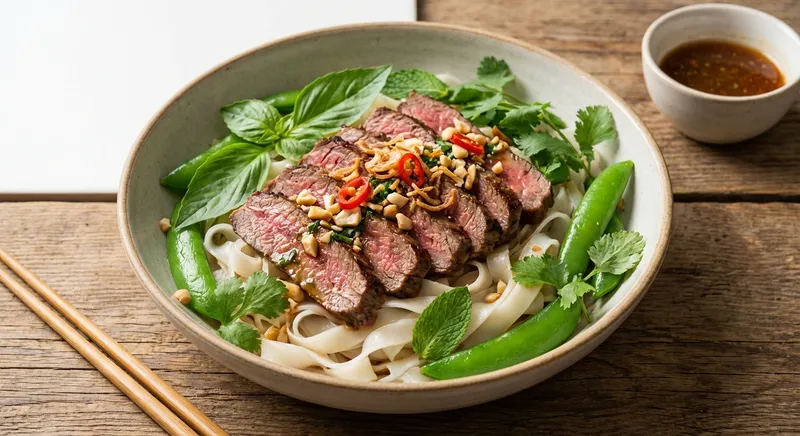
Juicy, thinly sliced flank steak is quickly seared to develop a caramelized crust, then tossed with silky wide rice noodles, bright lime, fragrant Thai basil and crisp sugar snap peas for contrast. The sauce—soy, fish sauce, brown sugar and lime—balances salty, sweet and tangy notes; fresh herbs and a final drizzle of toasted sesame oil lift the dish into restaurant territory.
Bring a large pot of water to a rolling boil for the rice noodles. Use a wide pot so the noodles can separate easily when you add them. Boiling water quickly rehydrates wide rice noodles evenly; starting with hot water prevents clumping and a gummy texture.
Meanwhile, prepare the steak: season the thin slices lightly with 1/2 tsp kosher salt and 1/4 tsp freshly ground black pepper. Pat the slices as dry as possible with paper towels. Dry meat sears better; moisture prevents proper browning, which is where the beef develops flavor.
Soak or cook the rice noodles according to package instructions until just tender (al dente) — usually 4–6 minutes for wide dry rice noodles. Drain, rinse briefly under cool water to stop cooking and toss with a drizzle (1 tsp) of vegetable oil to keep them from sticking. Rinsing halts carryover cooking and the oil prevents a clump of noodles in the wok.
Make the sauce: in a small bowl whisk together 4 tbsp light soy sauce, 4 tsp fish sauce (use less or omit if you prefer), 4 tbsp fresh lime juice, and 2 tsp brown sugar until the sugar dissolves. Taste for balance — you want salty, bright and slightly sweet. The acid from lime keeps the beef lively while sugar softens the edges.
Preheat a large heavy-bottomed skillet or wok over high heat until very hot (it should shimmer when oil is added). High heat is essential for a quick sear that creates Maillard browning without overcooking the thin beef slices.
Add 2 tbsp vegetable oil to the hot wok and swirl. Add half the steak slices in a single layer — don’t overcrowd — and sear, undisturbed, for 45–60 seconds until deeply browned on the bottom; flip and cook 20–30 seconds more until barely medium. Remove browned slices to a platter and repeat with another 2 tbsp oil and the remaining steak. Searing in batches ensures each piece gets maximum contact with the pan to build flavor; thin steak cooks extremely quickly so watch carefully.
Wipe the pan briefly with a paper towel (careful), return to high heat, then add a light drizzle of oil if needed and the minced garlic. Cook 20–30 seconds until fragrant but not browned — toasting garlic releases its aromatics; if it burns it turns bitter.
Add the sugar snap peas and stir-fry 60–90 seconds until bright green and still crisp-tender. Sugar snap peas cook quickly; you want crunch to contrast the soft noodles and tender beef.
Lower heat to medium-high, add the cooked noodles and the prepared sauce to the pan. Toss gently with tongs or two spatulas to coat and warm the noodles — gently folding prevents tearing. Heating the sauce helps the sugar dissolve fully and lets the noodles absorb flavor without becoming mushy.
Return the seared beef and any accumulated juices to the pan; toss with the noodles and vegetables just until everything is evenly coated and the beef is warmed through, about 30–45 seconds. Overcooking will toughen the thin flank steak; a quick toss warms the protein without drying it out.
Remove from heat and immediately stir in the Thai basil leaves, cilantro, sliced spring onions and sliced chilies (if using). Stirring off the heat keeps the herbs bright and aromatic rather than wilted. Adjust seasoning with a pinch of salt or an extra splash of lime if desired.
Divide among 4 plates, finish each with a lime wedge and a tiny drizzle (about 1/4 tsp) of toasted sesame oil per plate for aroma. Serve hot. The final sesame oil and lime wedge add an aromatic, toasty finish and bright acidity that round the dish.
773
Calories
45g
Protein
75g
Carbs
28g
Fat
3g
Fiber
How did this recipe turn out? Let others know!
to rate this recipe
By emensah m
Juicy, thinly sliced flank steak is quickly seared to develop a caramelized crust, then tossed with silky wide rice noodles, bright lime, fragrant Thai basil and crisp sugar snap peas for contrast. The sauce—soy, fish sauce, brown sugar and lime—balances salty, sweet and tangy notes; fresh herbs and a final drizzle of toasted sesame oil lift the dish into restaurant territory.
Bring a large pot of water to a rolling boil for the rice noodles. Use a wide pot so the noodles can separate easily when you add them. Boiling water quickly rehydrates wide rice noodles evenly; starting with hot water prevents clumping and a gummy texture.
Meanwhile, prepare the steak: season the thin slices lightly with 1/2 tsp kosher salt and 1/4 tsp freshly ground black pepper. Pat the slices as dry as possible with paper towels. Dry meat sears better; moisture prevents proper browning, which is where the beef develops flavor.
Soak or cook the rice noodles according to package instructions until just tender (al dente) — usually 4–6 minutes for wide dry rice noodles. Drain, rinse briefly under cool water to stop cooking and toss with a drizzle (1 tsp) of vegetable oil to keep them from sticking. Rinsing halts carryover cooking and the oil prevents a clump of noodles in the wok.
Make the sauce: in a small bowl whisk together 4 tbsp light soy sauce, 4 tsp fish sauce (use less or omit if you prefer), 4 tbsp fresh lime juice, and 2 tsp brown sugar until the sugar dissolves. Taste for balance — you want salty, bright and slightly sweet. The acid from lime keeps the beef lively while sugar softens the edges.
Preheat a large heavy-bottomed skillet or wok over high heat until very hot (it should shimmer when oil is added). High heat is essential for a quick sear that creates Maillard browning without overcooking the thin beef slices.
Add 2 tbsp vegetable oil to the hot wok and swirl. Add half the steak slices in a single layer — don’t overcrowd — and sear, undisturbed, for 45–60 seconds until deeply browned on the bottom; flip and cook 20–30 seconds more until barely medium. Remove browned slices to a platter and repeat with another 2 tbsp oil and the remaining steak. Searing in batches ensures each piece gets maximum contact with the pan to build flavor; thin steak cooks extremely quickly so watch carefully.
Wipe the pan briefly with a paper towel (careful), return to high heat, then add a light drizzle of oil if needed and the minced garlic. Cook 20–30 seconds until fragrant but not browned — toasting garlic releases its aromatics; if it burns it turns bitter.
Add the sugar snap peas and stir-fry 60–90 seconds until bright green and still crisp-tender. Sugar snap peas cook quickly; you want crunch to contrast the soft noodles and tender beef.
Lower heat to medium-high, add the cooked noodles and the prepared sauce to the pan. Toss gently with tongs or two spatulas to coat and warm the noodles — gently folding prevents tearing. Heating the sauce helps the sugar dissolve fully and lets the noodles absorb flavor without becoming mushy.
Return the seared beef and any accumulated juices to the pan; toss with the noodles and vegetables just until everything is evenly coated and the beef is warmed through, about 30–45 seconds. Overcooking will toughen the thin flank steak; a quick toss warms the protein without drying it out.
Remove from heat and immediately stir in the Thai basil leaves, cilantro, sliced spring onions and sliced chilies (if using). Stirring off the heat keeps the herbs bright and aromatic rather than wilted. Adjust seasoning with a pinch of salt or an extra splash of lime if desired.
Divide among 4 plates, finish each with a lime wedge and a tiny drizzle (about 1/4 tsp) of toasted sesame oil per plate for aroma. Serve hot. The final sesame oil and lime wedge add an aromatic, toasty finish and bright acidity that round the dish.
773
Calories
45g
Protein
75g
Carbs
28g
Fat
3g
Fiber
Your Rating:
