By emensah m
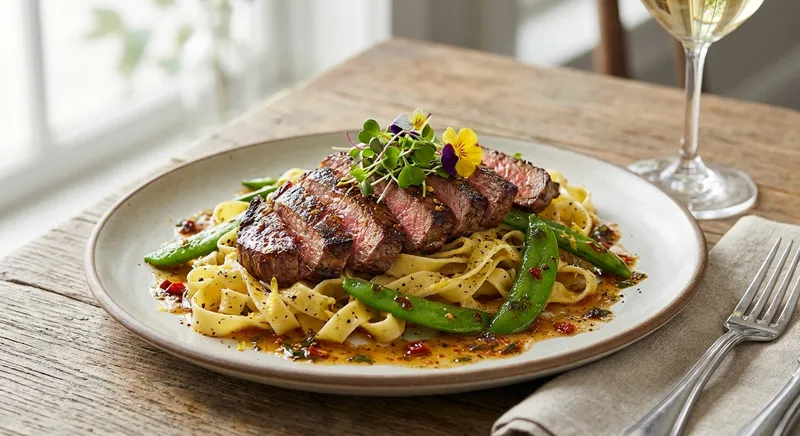
Tender, thinly sliced flank steak marinated with garlic and lemon, seared quickly to a caramelized edge and tossed with fresh tagliatelle, crunchy snap peas and baby spinach. A nutty chili brown butter and bright lemon zest finish the dish—silky pasta, crisp-green snap peas and peppery steak combine for bold, balanced flavors with a restaurant-quality presentation.
Marinate the steak briefly: in a shallow bowl combine the minced garlic, 2 tsp lemon zest, 2 tsp cracked black pepper and 2 tbsp olive oil (reserve the remaining searing oil). Add the thinly sliced flank steak and toss to coat. Marinate at room temperature for 10–15 minutes while you prep other ingredients. Why: a short marinade with garlic and lemon imparts aromatics and softens the surface fibers without breaking down the steak — long acidic marinades can make thin slices mealy.
Bring a large pot of salted water to a rolling boil for the pasta. Salt it generously (water should taste like the sea). Why: salting the water seasons the pasta from the inside and brings out the wheat flavor in the fresh tagliatelle.
Blanch the snap peas: when the pasta water is 2 minutes from boiling, add the snap peas and cook 1 minute only (they should stay bright green and crisp-tender). Remove with a slotted spoon into an ice bath or cold water to stop cooking, then drain and set aside. Why: quick blanch preserves crunch, color and nutrients; shocking retains that color and prevents overcooking while you finish the dish.
Cook the tagliatelle: add the fresh tagliatelle to the boiling water and cook 2–3 minutes (fresh) until al dente — test by tasting. Reserve 1 cup (240 ml) of the pasta cooking water, then drain the pasta. Why: reserving starchy pasta water gives you the liquid you need to bind the sauce and adjust consistency without adding cream.
While the pasta cooks, heat a large heavy skillet (cast-iron or stainless steel) over high heat until very hot. Add 2 tbsp of the olive oil for searing and swirl to coat. Why: a screaming-hot pan gives an immediate Maillard sear on the thin steak slices, creating caramelized flavor without overcooking the interior.
Pat the steak slices dry with paper towel (remove excess marinade solids) — moisture prevents a good sear. Season lightly with additional salt if needed. In two quick batches (do not overcrowd), lay the steak strips in the hot pan in a single layer and sear 45–60 seconds per side for medium-rare to medium (thin slices cook rapidly). Transfer seared strips to a warm plate and tent loosely with foil to rest. Why: searing in small batches preserves pan heat so you get a proper crust; resting lets juices redistribute and prevents them from running into the pasta.
Make the chili brown butter in the same skillet: lower the heat to medium, wipe the pan if there are excessive burnt bits but leave the fond (brown bits) for flavor. Add the 80 g butter and let it melt; swirl continuously until the butter foams and the milk solids turn golden-brown and smell nutty (about 2–3 minutes). Add the red chili flakes and the remaining 2 tbsp olive oil to stop the butter from smoking and to give a glossy finish. Remove from heat and add 1 tsp lemon zest. Why: browning butter develops deep, toasty, nutty notes that complement beef and pasta; adding oil raises the smoke point and gives a silky sheen.
Combine pasta and vegetables: return the skillet to low heat, add the drained tagliatelle, blanched snap peas and baby spinach. Toss with several tablespoons of reserved pasta water (start with 2–3 tbsp) and the chili brown butter. Toss until the spinach wilts and sauce coats the strands—if too thick, add more pasta water until glossy and clingy. Why: the starchy water emulsifies with butter and oil to create a silky sauce that clings to the pasta.
Add the seared steak strips and toss gently for 30–60 seconds to warm through and marry flavors. Taste and adjust seasoning with kosher salt, cracked black pepper and a squeeze of lemon if desired. Why: finishing the steak in the pasta lets the juices mingle without overcooking the meat; final seasoning brightens and balances the richness.
Plate and finish: divide among 4 warmed plates, grate or sprinkle the 40 g Parmesan across the portions if using, finish each plate with a light drizzle of the remaining finishing olive oil (1 tsp per plate) and an extra grind of cracked black pepper and the remaining lemon wedges. Serve immediately. Why: finishing oil adds fragrance and gloss; serving hot preserves texture and aroma.
855
Calories
45g
Protein
37g
Carbs
58g
Fat
5g
Fiber
How did this recipe turn out? Let others know!
to rate this recipe
By emensah m
Tender, thinly sliced flank steak marinated with garlic and lemon, seared quickly to a caramelized edge and tossed with fresh tagliatelle, crunchy snap peas and baby spinach. A nutty chili brown butter and bright lemon zest finish the dish—silky pasta, crisp-green snap peas and peppery steak combine for bold, balanced flavors with a restaurant-quality presentation.
Marinate the steak briefly: in a shallow bowl combine the minced garlic, 2 tsp lemon zest, 2 tsp cracked black pepper and 2 tbsp olive oil (reserve the remaining searing oil). Add the thinly sliced flank steak and toss to coat. Marinate at room temperature for 10–15 minutes while you prep other ingredients. Why: a short marinade with garlic and lemon imparts aromatics and softens the surface fibers without breaking down the steak — long acidic marinades can make thin slices mealy.
Bring a large pot of salted water to a rolling boil for the pasta. Salt it generously (water should taste like the sea). Why: salting the water seasons the pasta from the inside and brings out the wheat flavor in the fresh tagliatelle.
Blanch the snap peas: when the pasta water is 2 minutes from boiling, add the snap peas and cook 1 minute only (they should stay bright green and crisp-tender). Remove with a slotted spoon into an ice bath or cold water to stop cooking, then drain and set aside. Why: quick blanch preserves crunch, color and nutrients; shocking retains that color and prevents overcooking while you finish the dish.
Cook the tagliatelle: add the fresh tagliatelle to the boiling water and cook 2–3 minutes (fresh) until al dente — test by tasting. Reserve 1 cup (240 ml) of the pasta cooking water, then drain the pasta. Why: reserving starchy pasta water gives you the liquid you need to bind the sauce and adjust consistency without adding cream.
While the pasta cooks, heat a large heavy skillet (cast-iron or stainless steel) over high heat until very hot. Add 2 tbsp of the olive oil for searing and swirl to coat. Why: a screaming-hot pan gives an immediate Maillard sear on the thin steak slices, creating caramelized flavor without overcooking the interior.
Pat the steak slices dry with paper towel (remove excess marinade solids) — moisture prevents a good sear. Season lightly with additional salt if needed. In two quick batches (do not overcrowd), lay the steak strips in the hot pan in a single layer and sear 45–60 seconds per side for medium-rare to medium (thin slices cook rapidly). Transfer seared strips to a warm plate and tent loosely with foil to rest. Why: searing in small batches preserves pan heat so you get a proper crust; resting lets juices redistribute and prevents them from running into the pasta.
Make the chili brown butter in the same skillet: lower the heat to medium, wipe the pan if there are excessive burnt bits but leave the fond (brown bits) for flavor. Add the 80 g butter and let it melt; swirl continuously until the butter foams and the milk solids turn golden-brown and smell nutty (about 2–3 minutes). Add the red chili flakes and the remaining 2 tbsp olive oil to stop the butter from smoking and to give a glossy finish. Remove from heat and add 1 tsp lemon zest. Why: browning butter develops deep, toasty, nutty notes that complement beef and pasta; adding oil raises the smoke point and gives a silky sheen.
Combine pasta and vegetables: return the skillet to low heat, add the drained tagliatelle, blanched snap peas and baby spinach. Toss with several tablespoons of reserved pasta water (start with 2–3 tbsp) and the chili brown butter. Toss until the spinach wilts and sauce coats the strands—if too thick, add more pasta water until glossy and clingy. Why: the starchy water emulsifies with butter and oil to create a silky sauce that clings to the pasta.
Add the seared steak strips and toss gently for 30–60 seconds to warm through and marry flavors. Taste and adjust seasoning with kosher salt, cracked black pepper and a squeeze of lemon if desired. Why: finishing the steak in the pasta lets the juices mingle without overcooking the meat; final seasoning brightens and balances the richness.
Plate and finish: divide among 4 warmed plates, grate or sprinkle the 40 g Parmesan across the portions if using, finish each plate with a light drizzle of the remaining finishing olive oil (1 tsp per plate) and an extra grind of cracked black pepper and the remaining lemon wedges. Serve immediately. Why: finishing oil adds fragrance and gloss; serving hot preserves texture and aroma.
855
Calories
45g
Protein
37g
Carbs
58g
Fat
5g
Fiber
Your Rating:
