By Kayla Alaniz
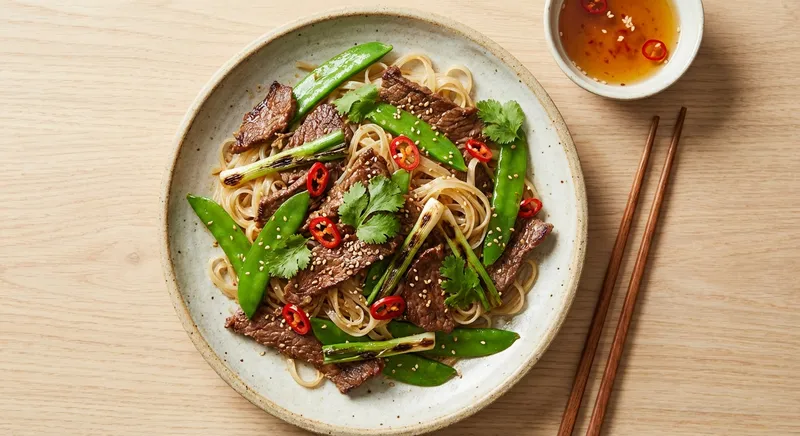
Tender ribbons of flank or sirloin seared quickly with fragrant grated ginger, garlic and bright scallions, tossed with crunchy snow peas and silky rice noodles in a savory fish-soy glaze. The combination of ginger’s warmth, a hit of lime, and the umami punch from fish and soy sauce makes this a fast, restaurant-quality Vietnamese stir-fry that’s both comforting and vibrantly fresh.
Bring a large pot of water to a rolling boil. Turn off the heat, add the dried rice noodles, and let them soak according to package instructions until just pliable but not fully soft (usually 4–6 minutes for medium rice noodles). This 'carryover' softening keeps the noodles from going mushy during the final toss — they’ll finish cooking in the hot wok.
While the noodles soak, pat the beef dry with paper towels and season lightly with salt and pepper. Cutting and drying the beef ensures a cleaner, faster sear — moisture is the enemy of browning.
Prepare the sauce: in a small bowl whisk together the fish sauce, light soy sauce and brown sugar until the sugar dissolves. The fish sauce gives savory depth and salinity while a touch of sugar balances the acidity and rounds the flavors.
Heat a large wok or heavy skillet over high heat until very hot (you should see faint wisps of smoke). Add 2 tablespoons of vegetable oil and swirl to coat. High heat and enough oil are essential for a quick sear that creates Maillard browning without stewing the meat.
Working quickly in a single layer, add half the beef to the hot wok and sear for 45–60 seconds without moving it, then flip and sear the second side 30–45 seconds until nicely browned but still medium-rare to medium (it will continue to cook later). Transfer the seared beef to a plate and repeat with the remaining beef and another tablespoon of oil. Searing in batches prevents crowding, which would steam the meat instead of browning it.
Lower the heat to medium-high, add the remaining 1 tablespoon oil, then add the minced garlic and grated ginger. Stir for 20–30 seconds until fragrant — this brief toasting blooms the volatile aromatic oils in the ginger and garlic without burning them (burned garlic becomes bitter).
Add the snow peas and sliced scallions (if using) to the wok and stir-fry 1–2 minutes until the peas are bright green and still crisp-tender. Quick stir-frying preserves color, snap and nutrients; overcooking will make them soggy and dull the dish.
Push the vegetables up the sides of the wok (or toss them to one side) and return the seared beef to the center. Pour the prepared sauce over the beef and stir everything together for 30–45 seconds to coat and warm the beef through. The hot pan will rapidly caramelize the sauce just enough to cling to the meat and vegetables.
Drain the soaked noodles well and add them to the wok along with the juice from one lime wedge. Toss thoroughly with tongs or two spatulas so the noodles pick up the sauce and heat through evenly — this final toss binds the components and lets the noodles absorb the umami flavors without becoming gummy.
Taste and adjust: if it needs more salt, add a little more fish sauce or soy; if it’s too salty, squeeze additional lime or add a splash of water. Finish with a few grinds of black pepper.
Serve immediately with remaining lime wedges on the side. A garnish of extra sliced scallions, a few fresh cilantro leaves or a light sprinkle of toasted sesame seeds elevates the plate and adds texture contrast.
785
Calories
48g
Protein
77g
Carbs
31g
Fat
4g
Fiber
How did this recipe turn out? Let others know!
to rate this recipe
By Kayla Alaniz
Tender ribbons of flank or sirloin seared quickly with fragrant grated ginger, garlic and bright scallions, tossed with crunchy snow peas and silky rice noodles in a savory fish-soy glaze. The combination of ginger’s warmth, a hit of lime, and the umami punch from fish and soy sauce makes this a fast, restaurant-quality Vietnamese stir-fry that’s both comforting and vibrantly fresh.
Bring a large pot of water to a rolling boil. Turn off the heat, add the dried rice noodles, and let them soak according to package instructions until just pliable but not fully soft (usually 4–6 minutes for medium rice noodles). This 'carryover' softening keeps the noodles from going mushy during the final toss — they’ll finish cooking in the hot wok.
While the noodles soak, pat the beef dry with paper towels and season lightly with salt and pepper. Cutting and drying the beef ensures a cleaner, faster sear — moisture is the enemy of browning.
Prepare the sauce: in a small bowl whisk together the fish sauce, light soy sauce and brown sugar until the sugar dissolves. The fish sauce gives savory depth and salinity while a touch of sugar balances the acidity and rounds the flavors.
Heat a large wok or heavy skillet over high heat until very hot (you should see faint wisps of smoke). Add 2 tablespoons of vegetable oil and swirl to coat. High heat and enough oil are essential for a quick sear that creates Maillard browning without stewing the meat.
Working quickly in a single layer, add half the beef to the hot wok and sear for 45–60 seconds without moving it, then flip and sear the second side 30–45 seconds until nicely browned but still medium-rare to medium (it will continue to cook later). Transfer the seared beef to a plate and repeat with the remaining beef and another tablespoon of oil. Searing in batches prevents crowding, which would steam the meat instead of browning it.
Lower the heat to medium-high, add the remaining 1 tablespoon oil, then add the minced garlic and grated ginger. Stir for 20–30 seconds until fragrant — this brief toasting blooms the volatile aromatic oils in the ginger and garlic without burning them (burned garlic becomes bitter).
Add the snow peas and sliced scallions (if using) to the wok and stir-fry 1–2 minutes until the peas are bright green and still crisp-tender. Quick stir-frying preserves color, snap and nutrients; overcooking will make them soggy and dull the dish.
Push the vegetables up the sides of the wok (or toss them to one side) and return the seared beef to the center. Pour the prepared sauce over the beef and stir everything together for 30–45 seconds to coat and warm the beef through. The hot pan will rapidly caramelize the sauce just enough to cling to the meat and vegetables.
Drain the soaked noodles well and add them to the wok along with the juice from one lime wedge. Toss thoroughly with tongs or two spatulas so the noodles pick up the sauce and heat through evenly — this final toss binds the components and lets the noodles absorb the umami flavors without becoming gummy.
Taste and adjust: if it needs more salt, add a little more fish sauce or soy; if it’s too salty, squeeze additional lime or add a splash of water. Finish with a few grinds of black pepper.
Serve immediately with remaining lime wedges on the side. A garnish of extra sliced scallions, a few fresh cilantro leaves or a light sprinkle of toasted sesame seeds elevates the plate and adds texture contrast.
785
Calories
48g
Protein
77g
Carbs
31g
Fat
4g
Fiber
Your Rating:
