By Recipe AI
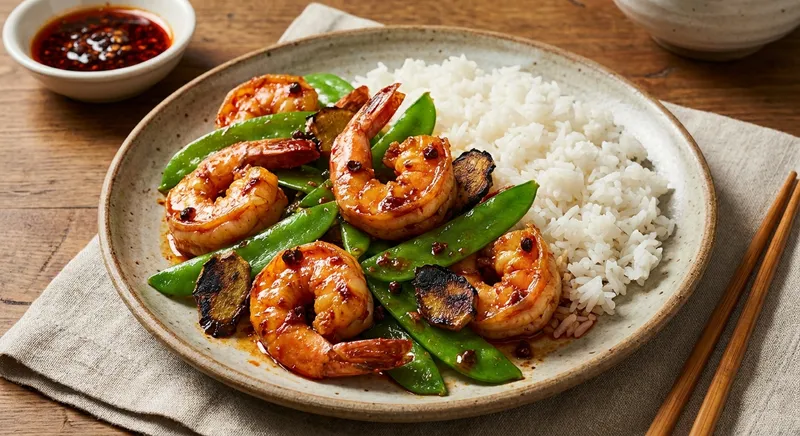
Bright, quick and texturally addictive, this Sichuan-style stir-fry pairs sweet, snappy snow peas and succulent shrimp with crispy-charred ginger, a savory chili-bean hit and fragrant jasmine rice. The contrast of blistered ginger, poppable shrimp and a glossy, spicy-salty sauce makes it feel restaurant-special while staying fast and approachable at home.
Prepare ingredients first — mise en place. Rinse and pat shrimp dry thoroughly with paper towels (dry shrimp sear better and won’t steam), trim snow peas and set them in one bowl, place sliced ginger (including the extra slices for charring) on a plate, mince garlic and measure the sauces and oil. Have the cooked jasmine rice warmed and fluffed (cold rice will be firmer and separate better on the plate).
Make a quick seasoning mix: combine the light soy (tamari) and chili bean paste (or 1 tsp chili oil) in a small bowl and stir until smooth. This concentrated sauce will be added at the end to glaze the shrimp and vegetables and keep the seasoning balanced — mixing ahead ensures even distribution and faster finishing.
Heat a large heavy skillet or wok over high heat until just smoking. Add 1 teaspoon neutral oil and lay the extra ginger slices in a single layer; char without moving for 30–45 seconds per side until blackened at the edges and fragrant, then transfer to paper towel. Charring ginger transforms its sharp raw heat into a deeper, smoky flavor that perfumes the whole dish — reserve the charred slices for tearing and scattering at the end for bursts of aroma.
Add the remaining 1 tablespoon neutral oil to the hot wok and swirl to coat. When shimmering, add the thinly sliced (non-charred) ginger and stir for 15–20 seconds to bloom flavor — the hot oil extracts ginger’s essential oils. Then add the minced garlic and cook 10–15 seconds until just fragrant; don’t let garlic brown or it will taste bitter.
Raise the heat to very high. Add the shrimp in a single layer (shake off any excess liquid) and let them sear for 45–60 seconds without moving so each side gets a quick golden edge — this Maillard reaction gives deeper flavor and a snappy texture. Stir and cook another 30–45 seconds until shrimp are opaque and curled into a loose C (avoid tight O which indicates overcooking).
Push the shrimp to one side of the pan. Add the snow peas to the cleared area and stir-fry 45–60 seconds — you want them bright green and tender-crisp, not soft. High heat and short time preserve their snap and color; overcooking makes them limp and loses sweetness.
Return everything to the center, pour the soy + doubanjiang mixture over the shrimp and snow peas, then drizzle the sesame oil. Toss quickly to coat and let the sauce bubble briefly (10–15 seconds) to marry flavors and slightly reduce — this step creates a glossy, evenly seasoned finish. Taste and add a pinch of salt or a dash more soy if needed, remembering doubanjiang and soy are salty already.
Turn off the heat and fold in half the sliced scallions (reserve the rest for garnish). Tear the charred ginger into small slivers and mix in gently so you get flecks of smoky ginger in each bite — the contrast with fresh ginger and garlic is what lifts the dish.
To serve: divide the warm jasmine rice between two shallow bowls or plates, spoon the shrimp and snow peas over the rice, scatter the remaining scallions and the toasted sesame seeds on top, and finish with the torn charred ginger for aroma. Serve immediately while hot so the shrimp stay tender and the rice is fragrant.
Leftover and timing note: Shrimp cook extremely quickly; remove them from the hot pan briefly if you need to stagger cooking to prevent overcooking. If you must make this for more people, cook in batches to maintain high heat in the pan — crowding lowers the temperature and causes steaming instead of searing.
501
Calories
47g
Protein
45g
Carbs
15g
Fat
4g
Fiber
How did this recipe turn out? Let others know!
to rate this recipe
By Recipe AI
Bright, quick and texturally addictive, this Sichuan-style stir-fry pairs sweet, snappy snow peas and succulent shrimp with crispy-charred ginger, a savory chili-bean hit and fragrant jasmine rice. The contrast of blistered ginger, poppable shrimp and a glossy, spicy-salty sauce makes it feel restaurant-special while staying fast and approachable at home.
Prepare ingredients first — mise en place. Rinse and pat shrimp dry thoroughly with paper towels (dry shrimp sear better and won’t steam), trim snow peas and set them in one bowl, place sliced ginger (including the extra slices for charring) on a plate, mince garlic and measure the sauces and oil. Have the cooked jasmine rice warmed and fluffed (cold rice will be firmer and separate better on the plate).
Make a quick seasoning mix: combine the light soy (tamari) and chili bean paste (or 1 tsp chili oil) in a small bowl and stir until smooth. This concentrated sauce will be added at the end to glaze the shrimp and vegetables and keep the seasoning balanced — mixing ahead ensures even distribution and faster finishing.
Heat a large heavy skillet or wok over high heat until just smoking. Add 1 teaspoon neutral oil and lay the extra ginger slices in a single layer; char without moving for 30–45 seconds per side until blackened at the edges and fragrant, then transfer to paper towel. Charring ginger transforms its sharp raw heat into a deeper, smoky flavor that perfumes the whole dish — reserve the charred slices for tearing and scattering at the end for bursts of aroma.
Add the remaining 1 tablespoon neutral oil to the hot wok and swirl to coat. When shimmering, add the thinly sliced (non-charred) ginger and stir for 15–20 seconds to bloom flavor — the hot oil extracts ginger’s essential oils. Then add the minced garlic and cook 10–15 seconds until just fragrant; don’t let garlic brown or it will taste bitter.
Raise the heat to very high. Add the shrimp in a single layer (shake off any excess liquid) and let them sear for 45–60 seconds without moving so each side gets a quick golden edge — this Maillard reaction gives deeper flavor and a snappy texture. Stir and cook another 30–45 seconds until shrimp are opaque and curled into a loose C (avoid tight O which indicates overcooking).
Push the shrimp to one side of the pan. Add the snow peas to the cleared area and stir-fry 45–60 seconds — you want them bright green and tender-crisp, not soft. High heat and short time preserve their snap and color; overcooking makes them limp and loses sweetness.
Return everything to the center, pour the soy + doubanjiang mixture over the shrimp and snow peas, then drizzle the sesame oil. Toss quickly to coat and let the sauce bubble briefly (10–15 seconds) to marry flavors and slightly reduce — this step creates a glossy, evenly seasoned finish. Taste and add a pinch of salt or a dash more soy if needed, remembering doubanjiang and soy are salty already.
Turn off the heat and fold in half the sliced scallions (reserve the rest for garnish). Tear the charred ginger into small slivers and mix in gently so you get flecks of smoky ginger in each bite — the contrast with fresh ginger and garlic is what lifts the dish.
To serve: divide the warm jasmine rice between two shallow bowls or plates, spoon the shrimp and snow peas over the rice, scatter the remaining scallions and the toasted sesame seeds on top, and finish with the torn charred ginger for aroma. Serve immediately while hot so the shrimp stay tender and the rice is fragrant.
Leftover and timing note: Shrimp cook extremely quickly; remove them from the hot pan briefly if you need to stagger cooking to prevent overcooking. If you must make this for more people, cook in batches to maintain high heat in the pan — crowding lowers the temperature and causes steaming instead of searing.
501
Calories
47g
Protein
45g
Carbs
15g
Fat
4g
Fiber
Your Rating:
