By emensah m
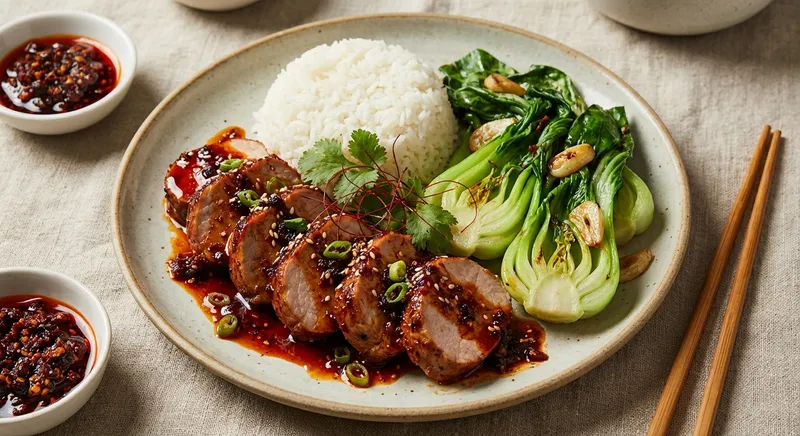
Tender pork tenderloin seared to a caramelized crust and finished with a sticky, numbing Szechuan glaze—bright with rice vinegar and balanced with honey—served over fragrant jasmine rice with quick-tossed baby bok choy finished with sesame oil and toasted nuts for crunch. Expect contrast: the tongue-tingling floral heat of Szechuan peppercorns, a glossy-salty-sweet glaze, and crisp, leafy bok choy to refresh each bite.
Rinse and cook the jasmine rice: place 280 g jasmine rice in a fine-mesh sieve and rinse under cold water until the water runs clear (this removes excess surface starch so the cooked grains stay separate). Combine the rinsed rice with 420 ml water in a medium saucepan, bring to a gentle boil uncovered, then immediately reduce heat to a low simmer, cover and cook undisturbed for 12–14 minutes until the water is absorbed. Turn off the heat and let rest, covered, for 10 minutes to allow the steam to finish cooking the rice—this resting step gives evenly cooked, fluffy rice.
Prep the pork: pat the 720 g pork tenderloin very dry with paper towels (moisture prevents a good sear), trim any silver skin, then season all over with salt and a little black pepper. Let it sit at room temperature for 10–15 minutes while you make the glaze and preheat the pan—room-temperature meat sears more evenly and reduces oven time.
Make the Szechuan glaze: in a small bowl whisk together 4 tbsp soy sauce, 4 tsp rice vinegar, 4 tbsp honey (or maple syrup), the 1 tsp toasted ground Szechuan peppercorns, 4 minced garlic cloves, and 2 tsp grated fresh ginger. This balance of salty (soy), sweet (honey), acidic (vinegar) and numbing citrusy notes (Szechuan pepper) will form a glossy glaze when reduced.
Reduce the glaze: heat a small saucepan over medium heat and add the glaze mixture. Let it bubble gently for 2–3 minutes, stirring occasionally until slightly thickened—this concentrates flavor and prevents a watery sauce that won't adhere to the pork. Remove from heat and reserve about 2–3 tablespoons for finishing the bok choy or for serving; you will use the rest to baste the pork.
Sear the pork to develop a crust: heat a heavy skillet (cast-iron preferred) over medium-high heat until just smoking, add 2 tbsp neutral oil and swirl to coat. Place the pork tenderloin in the pan and sear without moving for 2–3 minutes until a deep golden-brown crust forms—this Maillard browning adds savory flavor. Turn and brown the other sides (including ends) for another 2–3 minutes. Browning is about flavor; it does not fully cook the interior.
Finish in the oven with glaze: preheat the oven to 180°C (350°F). Brush the seared pork generously with half the warm glaze, place the skillet (or transfer to a baking dish) into the oven and roast for 8–12 minutes until the internal temperature reaches 60–63°C (140–145°F) for medium-rare to medium—pork tenderloin is lean and benefits from not overcooking. Baste once more halfway through roasting with remaining glaze. Using an instant-read thermometer is the most reliable way to hit the desired doneness.
Rest and slice the pork: remove the pork to a cutting board and tent loosely with foil. Let it rest 8–10 minutes—resting allows juices to redistribute so the meat is juicy when sliced. Slice the tenderloin into 1–1.5 cm medallions across the grain (slicing against the grain shortens muscle fibers and yields more tender bites).
While the pork rests, cook the bok choy: heat the remaining 2 tbsp neutral oil in a large wok or skillet over high heat until shimmering. Add the halved baby bok choy cut side down in a single layer (do not overcrowd; work in two batches if necessary). Stir-fry 1–2 minutes cut side down to get a touch of color, then toss and stir 1–2 more minutes until stems are just tender and leaves bright green—quick cooking preserves crunch and color. Spoon about 1–2 tbsp of the reserved glaze (or add a pinch of salt and a squeeze of rice vinegar if you prefer less sweetness) into the pan and toss to coat; finish with 2 tsp toasted sesame oil for aroma and richness.
Plate and garnish: mound jasmine rice on plates, fan sliced pork medallions on top or to the side, and arrange the stir-fried bok choy beside it. Spoon any resting juices or a little extra warm glaze over the pork (heat the reserved glaze briefly if it has thickened). Sprinkle crushed toasted peanuts or toasted sesame seeds and sliced scallions or thin red chili over the dish for crunch, aroma and visual contrast.
Final seasoning check: taste one bite of bok choy and a slice of pork; adjust salt, pepper or a final drizzle of soy/rice vinegar if needed—small acid hits brighten the dish and balance the glaze's sweetness.
770
Calories
50g
Protein
79g
Carbs
30g
Fat
3g
Fiber
How did this recipe turn out? Let others know!
to rate this recipe
By emensah m
Tender pork tenderloin seared to a caramelized crust and finished with a sticky, numbing Szechuan glaze—bright with rice vinegar and balanced with honey—served over fragrant jasmine rice with quick-tossed baby bok choy finished with sesame oil and toasted nuts for crunch. Expect contrast: the tongue-tingling floral heat of Szechuan peppercorns, a glossy-salty-sweet glaze, and crisp, leafy bok choy to refresh each bite.
Rinse and cook the jasmine rice: place 280 g jasmine rice in a fine-mesh sieve and rinse under cold water until the water runs clear (this removes excess surface starch so the cooked grains stay separate). Combine the rinsed rice with 420 ml water in a medium saucepan, bring to a gentle boil uncovered, then immediately reduce heat to a low simmer, cover and cook undisturbed for 12–14 minutes until the water is absorbed. Turn off the heat and let rest, covered, for 10 minutes to allow the steam to finish cooking the rice—this resting step gives evenly cooked, fluffy rice.
Prep the pork: pat the 720 g pork tenderloin very dry with paper towels (moisture prevents a good sear), trim any silver skin, then season all over with salt and a little black pepper. Let it sit at room temperature for 10–15 minutes while you make the glaze and preheat the pan—room-temperature meat sears more evenly and reduces oven time.
Make the Szechuan glaze: in a small bowl whisk together 4 tbsp soy sauce, 4 tsp rice vinegar, 4 tbsp honey (or maple syrup), the 1 tsp toasted ground Szechuan peppercorns, 4 minced garlic cloves, and 2 tsp grated fresh ginger. This balance of salty (soy), sweet (honey), acidic (vinegar) and numbing citrusy notes (Szechuan pepper) will form a glossy glaze when reduced.
Reduce the glaze: heat a small saucepan over medium heat and add the glaze mixture. Let it bubble gently for 2–3 minutes, stirring occasionally until slightly thickened—this concentrates flavor and prevents a watery sauce that won't adhere to the pork. Remove from heat and reserve about 2–3 tablespoons for finishing the bok choy or for serving; you will use the rest to baste the pork.
Sear the pork to develop a crust: heat a heavy skillet (cast-iron preferred) over medium-high heat until just smoking, add 2 tbsp neutral oil and swirl to coat. Place the pork tenderloin in the pan and sear without moving for 2–3 minutes until a deep golden-brown crust forms—this Maillard browning adds savory flavor. Turn and brown the other sides (including ends) for another 2–3 minutes. Browning is about flavor; it does not fully cook the interior.
Finish in the oven with glaze: preheat the oven to 180°C (350°F). Brush the seared pork generously with half the warm glaze, place the skillet (or transfer to a baking dish) into the oven and roast for 8–12 minutes until the internal temperature reaches 60–63°C (140–145°F) for medium-rare to medium—pork tenderloin is lean and benefits from not overcooking. Baste once more halfway through roasting with remaining glaze. Using an instant-read thermometer is the most reliable way to hit the desired doneness.
Rest and slice the pork: remove the pork to a cutting board and tent loosely with foil. Let it rest 8–10 minutes—resting allows juices to redistribute so the meat is juicy when sliced. Slice the tenderloin into 1–1.5 cm medallions across the grain (slicing against the grain shortens muscle fibers and yields more tender bites).
While the pork rests, cook the bok choy: heat the remaining 2 tbsp neutral oil in a large wok or skillet over high heat until shimmering. Add the halved baby bok choy cut side down in a single layer (do not overcrowd; work in two batches if necessary). Stir-fry 1–2 minutes cut side down to get a touch of color, then toss and stir 1–2 more minutes until stems are just tender and leaves bright green—quick cooking preserves crunch and color. Spoon about 1–2 tbsp of the reserved glaze (or add a pinch of salt and a squeeze of rice vinegar if you prefer less sweetness) into the pan and toss to coat; finish with 2 tsp toasted sesame oil for aroma and richness.
Plate and garnish: mound jasmine rice on plates, fan sliced pork medallions on top or to the side, and arrange the stir-fried bok choy beside it. Spoon any resting juices or a little extra warm glaze over the pork (heat the reserved glaze briefly if it has thickened). Sprinkle crushed toasted peanuts or toasted sesame seeds and sliced scallions or thin red chili over the dish for crunch, aroma and visual contrast.
Final seasoning check: taste one bite of bok choy and a slice of pork; adjust salt, pepper or a final drizzle of soy/rice vinegar if needed—small acid hits brighten the dish and balance the glaze's sweetness.
770
Calories
50g
Protein
79g
Carbs
30g
Fat
3g
Fiber
Your Rating:
