By j
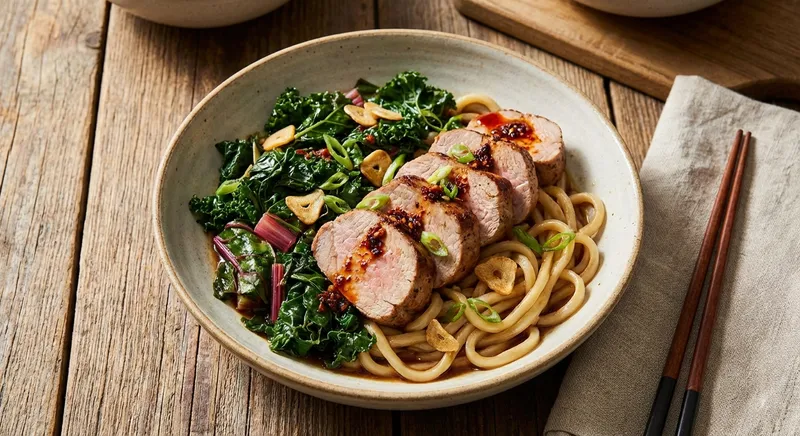
Tender, thinly sliced pork tenderloin is flash-seared and tossed with fresh udon and crisp-chard or baby bok choy in a glossy, garlicky soy-mirin sauce. Bright ginger and a whisper of sesame oil lift the savory backbone while a pinch of crushed red pepper gives subtle heat—this is a fast, restaurant-quality weeknight stir-fry that balances texture (silky noodles, crunchy greens, succulent pork) and umami.
Prep the proteins and noodles: Pat the thin pork slices dry with paper towel and toss with 1 tsp cornstarch and a pinch of black pepper. The cornstarch creates a thin protective coating that helps the meat brown quickly without drying out and yields a silky finish to the sauce.
Mix the sauce: In a small bowl combine 1 tbsp soy sauce, 1 tsp mirin (or 1 tsp rice vinegar if you want sharper acidity), 1/4 tsp sugar, 1/2 tsp grated ginger, 1/2 tsp minced garlic, 2 tbsp water or low-sodium chicken broth, and a pinch of crushed red pepper. Whisk so the cornstarch you added to the pork won't clump when it meets the sauce; the water/broth dilutes the salt and lets you adjust consistency as you finish.
Heat the wok or largest skillet you have over high heat until very hot—this ensures a quick sear and prevents the pork from stewing. Add 1 tbsp neutral oil and swirl to coat. A hot pan is essential for Maillard browning, which builds deep savory flavor in seconds.
Flash-sear the pork in a single layer, working quickly so slices don’t overlap. Cook 45–60 seconds per side (depending on thickness) until just browned but not fully cooked through. Remove the pork to a plate; it will finish cooking later in the sauce. Quick searing locks juices and gives you a better texture than slow cooking.
Lower the heat to medium-high and add the chopped bok choy stems first (if using bok choy; if using chard, add stems then leaves). Stir 30–45 seconds until stems start to soften—this staggers cooking so leaves don't overcook. Add the leaves and toss another 30 seconds until bright and wilted.
Push the greens to the side of the pan and add 1 tsp sesame oil to the cleared space. Pour the prepared sauce into the pan and bring it to a simmer; the residual heat will activate the ginger and garlic and the small amount of cornstarch will thicken the sauce to a glossy sheen. Taste and adjust: add a splash more soy for salt or 1/2 tsp rice vinegar if it needs brightness.
Return the pork with any accumulated juices to the pan and toss to coat in the simmering sauce. Cook 1–2 minutes until the pork is cooked through—because it was seared earlier, it should finish fast without toughening. The sauce should cling to the pork and greens.
Add the drained fresh udon and toss gently but thoroughly to combine. Fresh udon takes only a minute to heat; toss to coat each strand in the sauce so everything glazes evenly. If the pan seems dry, add up to 1 tbsp water or broth to loosen and finish; the cornstarch will help the sauce cling.
Finish and serve: Remove from heat and drizzle any remaining 1 tsp sesame oil over the noodles (this brightens aroma). Sprinkle a final pinch of crushed red pepper and a grind of black pepper. Serve immediately so noodles retain their slightly chewy texture.
Optional plating note: For a restaurant touch, fan the pork slices over the udon, place greens to one side, and spoon the glossy sauce over the top. A lime wedge or sliced scallion adds color and freshness at the table.
587
Calories
39g
Protein
44g
Carbs
25g
Fat
3g
Fiber
How did this recipe turn out? Let others know!
to rate this recipe
By j
Tender, thinly sliced pork tenderloin is flash-seared and tossed with fresh udon and crisp-chard or baby bok choy in a glossy, garlicky soy-mirin sauce. Bright ginger and a whisper of sesame oil lift the savory backbone while a pinch of crushed red pepper gives subtle heat—this is a fast, restaurant-quality weeknight stir-fry that balances texture (silky noodles, crunchy greens, succulent pork) and umami.
Prep the proteins and noodles: Pat the thin pork slices dry with paper towel and toss with 1 tsp cornstarch and a pinch of black pepper. The cornstarch creates a thin protective coating that helps the meat brown quickly without drying out and yields a silky finish to the sauce.
Mix the sauce: In a small bowl combine 1 tbsp soy sauce, 1 tsp mirin (or 1 tsp rice vinegar if you want sharper acidity), 1/4 tsp sugar, 1/2 tsp grated ginger, 1/2 tsp minced garlic, 2 tbsp water or low-sodium chicken broth, and a pinch of crushed red pepper. Whisk so the cornstarch you added to the pork won't clump when it meets the sauce; the water/broth dilutes the salt and lets you adjust consistency as you finish.
Heat the wok or largest skillet you have over high heat until very hot—this ensures a quick sear and prevents the pork from stewing. Add 1 tbsp neutral oil and swirl to coat. A hot pan is essential for Maillard browning, which builds deep savory flavor in seconds.
Flash-sear the pork in a single layer, working quickly so slices don’t overlap. Cook 45–60 seconds per side (depending on thickness) until just browned but not fully cooked through. Remove the pork to a plate; it will finish cooking later in the sauce. Quick searing locks juices and gives you a better texture than slow cooking.
Lower the heat to medium-high and add the chopped bok choy stems first (if using bok choy; if using chard, add stems then leaves). Stir 30–45 seconds until stems start to soften—this staggers cooking so leaves don't overcook. Add the leaves and toss another 30 seconds until bright and wilted.
Push the greens to the side of the pan and add 1 tsp sesame oil to the cleared space. Pour the prepared sauce into the pan and bring it to a simmer; the residual heat will activate the ginger and garlic and the small amount of cornstarch will thicken the sauce to a glossy sheen. Taste and adjust: add a splash more soy for salt or 1/2 tsp rice vinegar if it needs brightness.
Return the pork with any accumulated juices to the pan and toss to coat in the simmering sauce. Cook 1–2 minutes until the pork is cooked through—because it was seared earlier, it should finish fast without toughening. The sauce should cling to the pork and greens.
Add the drained fresh udon and toss gently but thoroughly to combine. Fresh udon takes only a minute to heat; toss to coat each strand in the sauce so everything glazes evenly. If the pan seems dry, add up to 1 tbsp water or broth to loosen and finish; the cornstarch will help the sauce cling.
Finish and serve: Remove from heat and drizzle any remaining 1 tsp sesame oil over the noodles (this brightens aroma). Sprinkle a final pinch of crushed red pepper and a grind of black pepper. Serve immediately so noodles retain their slightly chewy texture.
Optional plating note: For a restaurant touch, fan the pork slices over the udon, place greens to one side, and spoon the glossy sauce over the top. A lime wedge or sliced scallion adds color and freshness at the table.
587
Calories
39g
Protein
44g
Carbs
25g
Fat
3g
Fiber
Your Rating:
