By emensah m
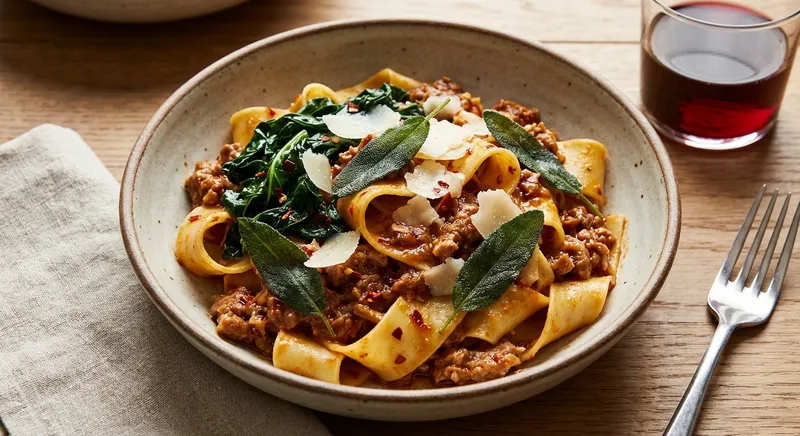
A robust, restaurant-quality weeknight pasta: tender, caramelized ground pork simmered in a bright crushed tomato ragù with smoked paprika and chile, folded through wide pappardelle and studded with garlicky wilted kale. Crispy fried sage and a shower of grated Parmesan finish the dish with an herbaceous crunch and nutty saltiness — bold, comforting, and ready in under 45 minutes.
Bring a large pot of well-salted water to a rolling boil for the pasta. Use about 1 tablespoon salt per 4–5 liters of water. Salting the water seasons the pasta internally — the pasta is the backbone of the dish, so get seasoning right from the start.
Heat a wide, heavy skillet (12-inch) over medium-high heat. Add 2 tablespoons of the olive oil. When it shimmers, add the ground pork in a single layer and let it brown without stirring for 2 minutes — this initial contact creates Maillard browning for deep meaty flavor. Break up the meat with a spatula, and continue to cook until most of the moisture has evaporated and the pork has golden edges (about 6–8 minutes total).
Season the pork with 1 teaspoon salt, several turns of black pepper, the smoked paprika and half the red pepper flakes. Stir to coat — toasting the paprika directly against the hot meat and fat 'blooms' the spice and intensifies its smoky-sweet notes.
Push the pork to one side of the pan, add 1 tablespoon oil to the empty side and add the minced garlic. Sauté 30–45 seconds until fragrant (don't let it burn) then quickly fold into the pork. Cooking garlic briefly in fresh oil reduces raw harshness while preserving its aroma.
Pour the crushed tomatoes into the pan, scraping up any browned bits from the bottom — those are concentrated flavor. Bring to a gentle simmer and reduce the heat to medium-low. Let the ragù simmer uncovered for 8–10 minutes until it thickens slightly. Simmering concentrates flavor and balances the acidity of the tomatoes.
While the sauce simmers, heat a small frying pan over medium heat with 1 tablespoon olive oil. When it’s hot, fry the sage leaves in batches for 20–30 seconds each until crisp and just darker at the edges (they go from floppy to crisp quickly). Transfer to paper towel and sprinkle with a pinch of salt. Frying releases the sage’s essential oils and gives a crunchy, aromatic garnish that contrasts the soft pasta.
Add the sliced kale (or Swiss chard) to the ragù, stir to combine and cover the pan for 2 minutes to allow the greens to sweat and soften. Cooking the greens in the sauce keeps their color and lets them absorb the pork-tomato flavor without overcooking.
When the pasta water is boiling, add the pappardelle and cook, stirring occasionally, until 1–2 minutes shy of the package directions (you’ll finish it in the sauce). Reserve 1½ cups (about 360 ml) of the pasta cooking water before draining — the starchy water is the secret to a glossy, silky sauce that clings to the pasta.
Add the drained pasta directly into the ragù pan with ½ cup of the reserved pasta water. Turn the heat to medium-high and toss the pasta with the sauce for 1–2 minutes until the noodles finish cooking and the sauce clings. Add more pasta water as needed to loosen and emulsify the sauce — the starch plus fat from the pork and olive oil create an emulsion that yields a restaurant-style coating.
Take the pan off the heat, stir in half the grated Parmesan and taste — adjust salt and red pepper flakes as needed. Resting the finished pasta for 30 seconds helps the sauce adhere and the flavors settle.
Divide the pappardelle among warm plates, scatter the crispy sage leaves on top, finish with the remaining Parmesan, a grind of black pepper and a light drizzle (optional) of remaining olive oil. Serve immediately to enjoy the contrast between velvety ragù and crunchy sage.
940
Calories
43g
Protein
91g
Carbs
45g
Fat
9g
Fiber
How did this recipe turn out? Let others know!
to rate this recipe
By emensah m
A robust, restaurant-quality weeknight pasta: tender, caramelized ground pork simmered in a bright crushed tomato ragù with smoked paprika and chile, folded through wide pappardelle and studded with garlicky wilted kale. Crispy fried sage and a shower of grated Parmesan finish the dish with an herbaceous crunch and nutty saltiness — bold, comforting, and ready in under 45 minutes.
Bring a large pot of well-salted water to a rolling boil for the pasta. Use about 1 tablespoon salt per 4–5 liters of water. Salting the water seasons the pasta internally — the pasta is the backbone of the dish, so get seasoning right from the start.
Heat a wide, heavy skillet (12-inch) over medium-high heat. Add 2 tablespoons of the olive oil. When it shimmers, add the ground pork in a single layer and let it brown without stirring for 2 minutes — this initial contact creates Maillard browning for deep meaty flavor. Break up the meat with a spatula, and continue to cook until most of the moisture has evaporated and the pork has golden edges (about 6–8 minutes total).
Season the pork with 1 teaspoon salt, several turns of black pepper, the smoked paprika and half the red pepper flakes. Stir to coat — toasting the paprika directly against the hot meat and fat 'blooms' the spice and intensifies its smoky-sweet notes.
Push the pork to one side of the pan, add 1 tablespoon oil to the empty side and add the minced garlic. Sauté 30–45 seconds until fragrant (don't let it burn) then quickly fold into the pork. Cooking garlic briefly in fresh oil reduces raw harshness while preserving its aroma.
Pour the crushed tomatoes into the pan, scraping up any browned bits from the bottom — those are concentrated flavor. Bring to a gentle simmer and reduce the heat to medium-low. Let the ragù simmer uncovered for 8–10 minutes until it thickens slightly. Simmering concentrates flavor and balances the acidity of the tomatoes.
While the sauce simmers, heat a small frying pan over medium heat with 1 tablespoon olive oil. When it’s hot, fry the sage leaves in batches for 20–30 seconds each until crisp and just darker at the edges (they go from floppy to crisp quickly). Transfer to paper towel and sprinkle with a pinch of salt. Frying releases the sage’s essential oils and gives a crunchy, aromatic garnish that contrasts the soft pasta.
Add the sliced kale (or Swiss chard) to the ragù, stir to combine and cover the pan for 2 minutes to allow the greens to sweat and soften. Cooking the greens in the sauce keeps their color and lets them absorb the pork-tomato flavor without overcooking.
When the pasta water is boiling, add the pappardelle and cook, stirring occasionally, until 1–2 minutes shy of the package directions (you’ll finish it in the sauce). Reserve 1½ cups (about 360 ml) of the pasta cooking water before draining — the starchy water is the secret to a glossy, silky sauce that clings to the pasta.
Add the drained pasta directly into the ragù pan with ½ cup of the reserved pasta water. Turn the heat to medium-high and toss the pasta with the sauce for 1–2 minutes until the noodles finish cooking and the sauce clings. Add more pasta water as needed to loosen and emulsify the sauce — the starch plus fat from the pork and olive oil create an emulsion that yields a restaurant-style coating.
Take the pan off the heat, stir in half the grated Parmesan and taste — adjust salt and red pepper flakes as needed. Resting the finished pasta for 30 seconds helps the sauce adhere and the flavors settle.
Divide the pappardelle among warm plates, scatter the crispy sage leaves on top, finish with the remaining Parmesan, a grind of black pepper and a light drizzle (optional) of remaining olive oil. Serve immediately to enjoy the contrast between velvety ragù and crunchy sage.
940
Calories
43g
Protein
91g
Carbs
45g
Fat
9g
Fiber
Your Rating:
