By Kayla
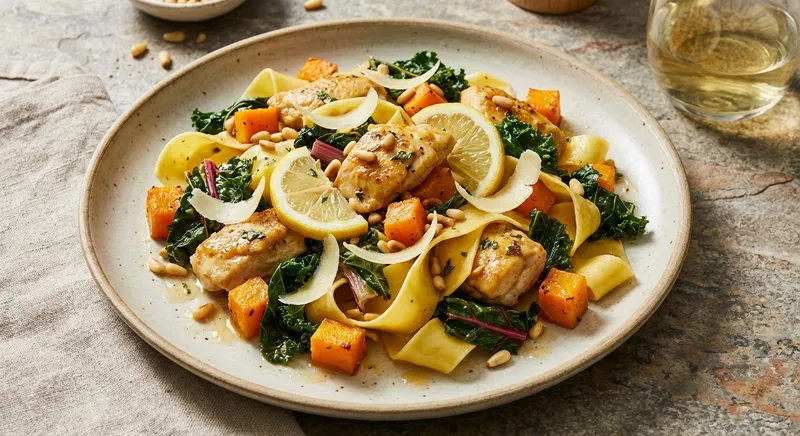
Wide ribbons of pappardelle tossed with sweet, caramelized roasted butternut squash and bright lemon-garlic chicken, finished with capers, Parmigiano-Reggiano and peppery baby kale. The contrast of silky pasta, crisp-edged thin-sliced thighs and pops of briny caper makes this a cozy yet elegant Italian-inspired weeknight centerpiece.
Preheat oven to 220°C (425°F). Toss the cubed butternut squash with 1 tablespoon (15 ml) of olive oil, a generous pinch of salt and cracked black pepper on a rimmed baking sheet in a single layer. Roast for 25–30 minutes, turning once halfway, until edges are caramelized. Why: High heat promotes Maillard browning on the squash, concentrating its sweetness and giving a textural contrast to the silky pasta.
While the squash roasts, slice the chicken thighs into thin strips (about 5 mm thick). Pat them dry with paper towels and season lightly with salt and pepper. Why: Drying the surface ensures a quick sear and prevents steaming; thin strips cook fast and develop caramelized edges for flavor and texture.
Bring a large pot of heavily salted water to a boil (about 1.5% salt by weight — roughly 1 tablespoon per 4 liters). Add the pappardelle and cook until just shy of al dente (follow package times, usually 7–9 minutes). Reserve 1 cup (240 ml) of the pasta cooking water, then drain the pasta. Why: Salting the water seasons the pasta from within; reserving pasta water gives you starchy liquid to loosen the sauce and help it cling to noodles.
Heat a heavy large skillet or sauté pan over medium-high heat. Add 2 tablespoons (30 ml) olive oil. When shimmering but not smoking, add half the chicken strips in a single layer and sear undisturbed for 1.5–2 minutes to get a golden crust; flip and cook 30–60 seconds more until just cooked through. Remove to a plate and repeat with remaining chicken, adding a bit more oil if needed. Why: Searing in batches prevents overcrowding, which would steam the meat instead of browning it; the browned bits build flavor for the pan sauce.
Reduce heat to medium, add the minced garlic to the pan and sauté 20–30 seconds until fragrant. Add the white wine or chicken stock (120 ml) to deglaze the pan, scraping up browned bits. Let the liquid reduce by about half (1–2 minutes). Why: Deglazing lifts the fond (browned bits) into the sauce for deep savory flavor; reducing intensifies the taste and concentrates the liquid so it will coat the pasta.
Add the drained pappardelle, roasted butternut squash and the cooked chicken back into the skillet along with the torn baby kale or Swiss chard, capers, lemon zest and the juice of 2 lemons. Toss gently with tongs. Add 1/2 cup (120 ml) reserved pasta water as needed to create a silky sauce that coats the pasta. Why: Adding greens at this stage lets them wilt without overcooking; the starchy pasta water helps emulsify the sauce with the oil and cheese so it clings to the noodles.
Turn off the heat and stir in the grated Parmigiano-Reggiano (60 g) and the butter (14 g) if using, stirring until melted and glossy. Taste and adjust seasoning with salt, black pepper and red pepper flakes if using. Why: Off-heat finishing with cheese and butter yields a rich, smooth emulsion rather than a greasy separation; this is the classic way to make a silky pasta sauce without cream.
Plate the pappardelle, scatter chopped parsley and an extra sprinkle of Parmigiano, finish with a drizzle of the remaining 1 tablespoon (15 ml) olive oil for brightness and gloss, and offer lemon wedges. Why: The final oil drizzle and fresh parsley add aroma and a fresh finish that brightens the rich components.
Serve immediately so the pasta is warm and the textures remain contrasted — silky ribbons, sweet roast squash, tender chicken and slightly crunchy greens. Why: Pasta sauces made from emulsified cheese and starch can thicken as they cool; serving right away preserves the intended silky mouthfeel.
1040
Calories
56g
Protein
99g
Carbs
51g
Fat
8g
Fiber
How did this recipe turn out? Let others know!
to rate this recipe
By Kayla
Wide ribbons of pappardelle tossed with sweet, caramelized roasted butternut squash and bright lemon-garlic chicken, finished with capers, Parmigiano-Reggiano and peppery baby kale. The contrast of silky pasta, crisp-edged thin-sliced thighs and pops of briny caper makes this a cozy yet elegant Italian-inspired weeknight centerpiece.
Preheat oven to 220°C (425°F). Toss the cubed butternut squash with 1 tablespoon (15 ml) of olive oil, a generous pinch of salt and cracked black pepper on a rimmed baking sheet in a single layer. Roast for 25–30 minutes, turning once halfway, until edges are caramelized. Why: High heat promotes Maillard browning on the squash, concentrating its sweetness and giving a textural contrast to the silky pasta.
While the squash roasts, slice the chicken thighs into thin strips (about 5 mm thick). Pat them dry with paper towels and season lightly with salt and pepper. Why: Drying the surface ensures a quick sear and prevents steaming; thin strips cook fast and develop caramelized edges for flavor and texture.
Bring a large pot of heavily salted water to a boil (about 1.5% salt by weight — roughly 1 tablespoon per 4 liters). Add the pappardelle and cook until just shy of al dente (follow package times, usually 7–9 minutes). Reserve 1 cup (240 ml) of the pasta cooking water, then drain the pasta. Why: Salting the water seasons the pasta from within; reserving pasta water gives you starchy liquid to loosen the sauce and help it cling to noodles.
Heat a heavy large skillet or sauté pan over medium-high heat. Add 2 tablespoons (30 ml) olive oil. When shimmering but not smoking, add half the chicken strips in a single layer and sear undisturbed for 1.5–2 minutes to get a golden crust; flip and cook 30–60 seconds more until just cooked through. Remove to a plate and repeat with remaining chicken, adding a bit more oil if needed. Why: Searing in batches prevents overcrowding, which would steam the meat instead of browning it; the browned bits build flavor for the pan sauce.
Reduce heat to medium, add the minced garlic to the pan and sauté 20–30 seconds until fragrant. Add the white wine or chicken stock (120 ml) to deglaze the pan, scraping up browned bits. Let the liquid reduce by about half (1–2 minutes). Why: Deglazing lifts the fond (browned bits) into the sauce for deep savory flavor; reducing intensifies the taste and concentrates the liquid so it will coat the pasta.
Add the drained pappardelle, roasted butternut squash and the cooked chicken back into the skillet along with the torn baby kale or Swiss chard, capers, lemon zest and the juice of 2 lemons. Toss gently with tongs. Add 1/2 cup (120 ml) reserved pasta water as needed to create a silky sauce that coats the pasta. Why: Adding greens at this stage lets them wilt without overcooking; the starchy pasta water helps emulsify the sauce with the oil and cheese so it clings to the noodles.
Turn off the heat and stir in the grated Parmigiano-Reggiano (60 g) and the butter (14 g) if using, stirring until melted and glossy. Taste and adjust seasoning with salt, black pepper and red pepper flakes if using. Why: Off-heat finishing with cheese and butter yields a rich, smooth emulsion rather than a greasy separation; this is the classic way to make a silky pasta sauce without cream.
Plate the pappardelle, scatter chopped parsley and an extra sprinkle of Parmigiano, finish with a drizzle of the remaining 1 tablespoon (15 ml) olive oil for brightness and gloss, and offer lemon wedges. Why: The final oil drizzle and fresh parsley add aroma and a fresh finish that brightens the rich components.
Serve immediately so the pasta is warm and the textures remain contrasted — silky ribbons, sweet roast squash, tender chicken and slightly crunchy greens. Why: Pasta sauces made from emulsified cheese and starch can thicken as they cool; serving right away preserves the intended silky mouthfeel.
1040
Calories
56g
Protein
99g
Carbs
51g
Fat
8g
Fiber
Your Rating:
