By Andrew Acosta
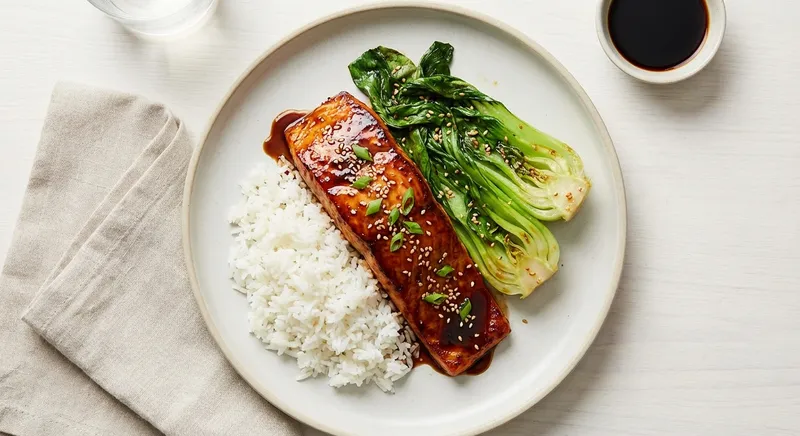
A glossy, sticky ginger-soy glaze coats a crisp-seared salmon fillet, served alongside tender sesame-scallion bok choy and fragrant jasmine rice. Bright lemon and toasted sesame add freshness and nuttiness, while the quick pan sauce brings restaurant polish to a 25-minute weeknight dinner.
Pat the salmon very dry with paper towels and season both sides lightly with salt and a few turns of black pepper. Drying the surface ensures a good sear — moisture steams the fish and prevents a crisp exterior.
Make the ginger-soy glaze: in a small bowl whisk together 1 tbsp soy sauce, 1 tsp mirin, 1 tsp grated ginger, 1 minced garlic clove, 1 tsp honey and 1 tsp toasted sesame oil. Taste and adjust: it should be balanced — salty, gently sweet and aromatic. This concentrated mixture will both marinade and become the pan glaze that finishes the salmon.
Reserve about 1 tsp of the glaze for finishing. Brush the remaining glaze over the top of the salmon and let it sit at room temperature for 5–7 minutes while you heat the pan. Briefly marinating lets the surface flavors adhere without curing the flesh (which would make it firm).
Heat a large nonstick or stainless steel skillet over medium-high heat until hot, then add 1 tbsp neutral oil and swirl to coat. A hot pan and oil give the salmon a caramelized crust quickly without overcooking the interior.
Place the salmon presentation-side down (skin-side up if skin-on) in the pan and press gently for 10 seconds to ensure even contact. Sear undisturbed for 3–4 minutes until a golden-brown crust forms and the fish releases easily. The contact with the hot pan creates Maillard browning — the flavor backbone of the dish.
Flip the salmon and reduce the heat to medium. Spoon 1–2 teaspoons of the reserved glaze into the pan around the salmon (not directly on top), tilt the pan and spoon the warm glaze over the top as the fish finishes for 1.5–3 minutes, depending on thickness, until the salmon registers about 50–54°C (122–130°F) for medium-rare to medium. Basting warms and slightly caramelizes the glaze and keeps the surface glossy — avoid overcooking, which dries fish out.
While the salmon cooks, prepare the bok choy: wipe or rinse and halve baby bok choy lengthwise. Heat a second skillet (or use the same pan after transferring the salmon to rest) over medium heat and add a light drizzle (about 1 tsp) of neutral oil. Add the bok choy cut-side down and sear for 1–2 minutes until the cut faces have brown caramelized spots — this concentrates sweetness and develops color.
Add a pinch of salt, a splash (about 1–2 tsp) of water to create steam, then cover the skillet and cook for 1–2 more minutes until the stems are just tender but leaves remain bright green. Finishing with a quick steam preserves crunch and color while ensuring the thicker stems are cooked through.
Uncover, add the reserved warmed glaze (if any remains) or a quick splash of soy + sesame oil (about 1/2 tsp soy sauce + a few drops toasted sesame oil) to the bok choy, toss briefly just to coat, and sprinkle with 1 tsp toasted sesame seeds. The warm glaze will cling to the vegetable and the sesame seeds add a toasty crunch.
Fluff the jasmine rice with a fork and season lightly with a pinch of salt or a few drops of sesame oil if you like. Spoon the rice onto a warm plate, place the glazed salmon atop or beside the rice, arrange the sesame bok choy alongside, and finish with a squeeze of lemon over the salmon to add bright acidity that lifts the whole dish.
Optional finishing: if you want extra gloss, briefly return the pan with the basting glaze to medium-low, add the reserved glaze and a small knob (about 1/2 tsp) of butter, swirl until glossy and spoon over the fish just before serving. This enriches the sauce and gives a restaurant-finish sheen.
769
Calories
39g
Protein
54g
Carbs
41g
Fat
2g
Fiber
How did this recipe turn out? Let others know!
to rate this recipe
By Andrew Acosta
A glossy, sticky ginger-soy glaze coats a crisp-seared salmon fillet, served alongside tender sesame-scallion bok choy and fragrant jasmine rice. Bright lemon and toasted sesame add freshness and nuttiness, while the quick pan sauce brings restaurant polish to a 25-minute weeknight dinner.
Pat the salmon very dry with paper towels and season both sides lightly with salt and a few turns of black pepper. Drying the surface ensures a good sear — moisture steams the fish and prevents a crisp exterior.
Make the ginger-soy glaze: in a small bowl whisk together 1 tbsp soy sauce, 1 tsp mirin, 1 tsp grated ginger, 1 minced garlic clove, 1 tsp honey and 1 tsp toasted sesame oil. Taste and adjust: it should be balanced — salty, gently sweet and aromatic. This concentrated mixture will both marinade and become the pan glaze that finishes the salmon.
Reserve about 1 tsp of the glaze for finishing. Brush the remaining glaze over the top of the salmon and let it sit at room temperature for 5–7 minutes while you heat the pan. Briefly marinating lets the surface flavors adhere without curing the flesh (which would make it firm).
Heat a large nonstick or stainless steel skillet over medium-high heat until hot, then add 1 tbsp neutral oil and swirl to coat. A hot pan and oil give the salmon a caramelized crust quickly without overcooking the interior.
Place the salmon presentation-side down (skin-side up if skin-on) in the pan and press gently for 10 seconds to ensure even contact. Sear undisturbed for 3–4 minutes until a golden-brown crust forms and the fish releases easily. The contact with the hot pan creates Maillard browning — the flavor backbone of the dish.
Flip the salmon and reduce the heat to medium. Spoon 1–2 teaspoons of the reserved glaze into the pan around the salmon (not directly on top), tilt the pan and spoon the warm glaze over the top as the fish finishes for 1.5–3 minutes, depending on thickness, until the salmon registers about 50–54°C (122–130°F) for medium-rare to medium. Basting warms and slightly caramelizes the glaze and keeps the surface glossy — avoid overcooking, which dries fish out.
While the salmon cooks, prepare the bok choy: wipe or rinse and halve baby bok choy lengthwise. Heat a second skillet (or use the same pan after transferring the salmon to rest) over medium heat and add a light drizzle (about 1 tsp) of neutral oil. Add the bok choy cut-side down and sear for 1–2 minutes until the cut faces have brown caramelized spots — this concentrates sweetness and develops color.
Add a pinch of salt, a splash (about 1–2 tsp) of water to create steam, then cover the skillet and cook for 1–2 more minutes until the stems are just tender but leaves remain bright green. Finishing with a quick steam preserves crunch and color while ensuring the thicker stems are cooked through.
Uncover, add the reserved warmed glaze (if any remains) or a quick splash of soy + sesame oil (about 1/2 tsp soy sauce + a few drops toasted sesame oil) to the bok choy, toss briefly just to coat, and sprinkle with 1 tsp toasted sesame seeds. The warm glaze will cling to the vegetable and the sesame seeds add a toasty crunch.
Fluff the jasmine rice with a fork and season lightly with a pinch of salt or a few drops of sesame oil if you like. Spoon the rice onto a warm plate, place the glazed salmon atop or beside the rice, arrange the sesame bok choy alongside, and finish with a squeeze of lemon over the salmon to add bright acidity that lifts the whole dish.
Optional finishing: if you want extra gloss, briefly return the pan with the basting glaze to medium-low, add the reserved glaze and a small knob (about 1/2 tsp) of butter, swirl until glossy and spoon over the fish just before serving. This enriches the sauce and gives a restaurant-finish sheen.
769
Calories
39g
Protein
54g
Carbs
41g
Fat
2g
Fiber
Your Rating:
