By emensah m
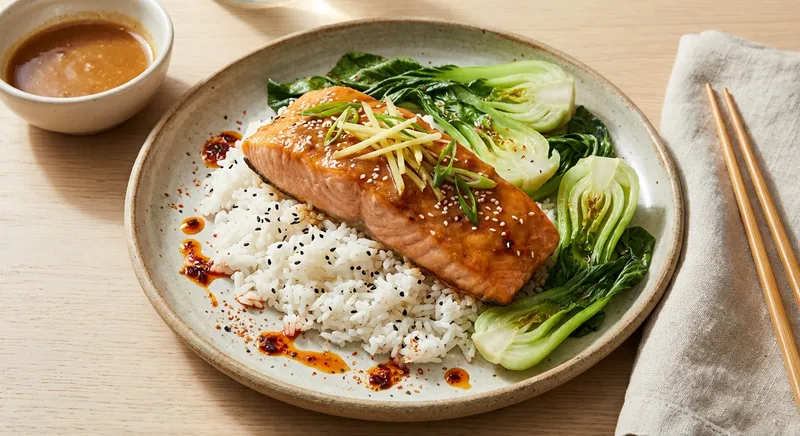
Silky, tender salmon steamed in a bright miso-ginger glaze, served over fragrant sesame-scented jasmine rice with crisp-tender baby bok choy. The dish balances rich umami from white miso and soy with fresh ginger, bright lemon zest and toasted sesame for an elegant, restaurant-quality meal that’s quick enough for weeknights.
Rinse and prepare the jasmine rice. Place the rice in a fine-mesh sieve and rinse under cold running water, rubbing the grains with your fingers until the water runs clear — this removes excess surface starch so the cooked rice is separate and fluffy rather than gummy. Drain for 2–3 minutes.
Cook the rice. Combine the drained rice and 1 1/4 cups (300 ml) water in a medium saucepan. Add a pinch of salt. Bring to a gentle boil over medium heat uncovered; when the water surface shows small bubbles, reduce to the lowest possible flame, cover tightly and simmer 12 minutes without lifting the lid — this steady, gentle heat cooks the grains evenly. Remove from heat and let the rice rest, still covered, 10 minutes to allow residual steam to finish the cook and keep the rice fluffy. Fluff with a fork and set aside.
Make the miso-ginger glaze. In a small bowl whisk together 2 tsp white miso, 2 tsp grated ginger, 2 tsp low-sodium soy sauce, 1 tsp rice vinegar and 1 tsp sesame oil. If the miso is stiff, add 1–2 tsp warm water to loosen — you want a brushable glaze. Why: combining acid (vinegar), aroma (ginger), and sesame oil balances miso’s intense umami and makes a glossy coating that will perfume the salmon.
Prep the salmon. Pat the fillets dry with paper towels (dry skin crisps and miso sticks better). Season lightly with salt and pepper. Spoon and reserve about 1/3 of the miso glaze into a small bowl for the bok choy/rice drizzle (important: reserve before it touches raw fish). Brush the remaining glaze evenly over the flesh side of each fillet. Why: patting dry and seasoning ensures the glaze adheres and the steam can create a gentle surface set without diluting flavors.
Set up for steaming. Fill a wide saucepan or wok with 2–3 cm (about 1 inch) of water and bring to a gentle simmer. If you have a bamboo or metal steamer basket, line it with parchment scored with a few slits (prevents pooling) or a few large lettuce leaves. Place salmon skin-side down in the steamer basket. If you don’t have a steamer, use a large skillet with a tight-fitting lid: add 1/4 cup water, arrange a heatproof rack or foil balls to keep the salmon above the water, cover and steam.
Steam the salmon gently. Steam the salmon, uncovered, 6–9 minutes depending on thickness (6 minutes for 1/2-inch fillets, up to 9 minutes for 1-inch fillets). The goal is opaque, just-set flesh that flakes easily — gentle steaming preserves moisture and shows the clean flavor of the miso-ginger. A thin-tip instant-read thermometer should read about 50–52°C (122–125°F) for medium-rare to medium; if you prefer fully opaque, 55–60°C (131–140°F). Remove from the steamer and let rest 1–2 minutes (carryover heat finishes cooking).
Cook the baby bok choy. While the salmon cooks, bring another small pot of water to a boil for blanching or use the same steamer after the salmon is done. Trim the bok choy and halve lengthwise if large. Blanch or steam the bok choy 1–2 minutes until bright green and tender-crisp, then immediately plunge into an ice bath for 30 seconds to stop cooking and keep color (if you prefer a warm dish, skip the ice bath and drain). Toss the bok choy with the reserved miso-ginger drizzle and a small pinch of salt. Why: a quick blanch keeps the stems crisp while the greens remain tender; finishing with the glaze adds a harmonious flavor link to the salmon.
Finish the rice and flavor elements. While the salmon rests, add 1 tsp toasted sesame seeds, half the sliced scallion (white parts), and the 1/2 tsp lemon zest to the fluffed rice along with a light fold of 1/2 tsp sesame oil if you want an extra nutty lift (you already used sesame oil in the glaze). The scallion white gives savory punch; lemon zest adds brightness to balance the miso.
Plate and finish. Divide rice between two warmed bowls or plates, place a salmon fillet on each, and arrange the bok choy alongside. Drizzle each salmon with 1 tsp neutral oil (for sheen and a clean finish), scatter the remaining scallion greens and the remaining toasted sesame seeds on top, and garnish with a cilantro sprig if using. If you reserved extra miso glaze that didn’t contact raw fish, warm it briefly and spoon a little over the fish and bok choy; do not serve raw glaze that touched raw salmon.
Final check and serve. Taste and adjust — a tiny pinch of flaky sea salt or an extra quick squeeze of lemon brightens the dish. Serve immediately so the salmon stays warm and the rice retains structure.
726
Calories
38g
Protein
79g
Carbs
27g
Fat
3g
Fiber
How did this recipe turn out? Let others know!
to rate this recipe
By emensah m
Silky, tender salmon steamed in a bright miso-ginger glaze, served over fragrant sesame-scented jasmine rice with crisp-tender baby bok choy. The dish balances rich umami from white miso and soy with fresh ginger, bright lemon zest and toasted sesame for an elegant, restaurant-quality meal that’s quick enough for weeknights.
Rinse and prepare the jasmine rice. Place the rice in a fine-mesh sieve and rinse under cold running water, rubbing the grains with your fingers until the water runs clear — this removes excess surface starch so the cooked rice is separate and fluffy rather than gummy. Drain for 2–3 minutes.
Cook the rice. Combine the drained rice and 1 1/4 cups (300 ml) water in a medium saucepan. Add a pinch of salt. Bring to a gentle boil over medium heat uncovered; when the water surface shows small bubbles, reduce to the lowest possible flame, cover tightly and simmer 12 minutes without lifting the lid — this steady, gentle heat cooks the grains evenly. Remove from heat and let the rice rest, still covered, 10 minutes to allow residual steam to finish the cook and keep the rice fluffy. Fluff with a fork and set aside.
Make the miso-ginger glaze. In a small bowl whisk together 2 tsp white miso, 2 tsp grated ginger, 2 tsp low-sodium soy sauce, 1 tsp rice vinegar and 1 tsp sesame oil. If the miso is stiff, add 1–2 tsp warm water to loosen — you want a brushable glaze. Why: combining acid (vinegar), aroma (ginger), and sesame oil balances miso’s intense umami and makes a glossy coating that will perfume the salmon.
Prep the salmon. Pat the fillets dry with paper towels (dry skin crisps and miso sticks better). Season lightly with salt and pepper. Spoon and reserve about 1/3 of the miso glaze into a small bowl for the bok choy/rice drizzle (important: reserve before it touches raw fish). Brush the remaining glaze evenly over the flesh side of each fillet. Why: patting dry and seasoning ensures the glaze adheres and the steam can create a gentle surface set without diluting flavors.
Set up for steaming. Fill a wide saucepan or wok with 2–3 cm (about 1 inch) of water and bring to a gentle simmer. If you have a bamboo or metal steamer basket, line it with parchment scored with a few slits (prevents pooling) or a few large lettuce leaves. Place salmon skin-side down in the steamer basket. If you don’t have a steamer, use a large skillet with a tight-fitting lid: add 1/4 cup water, arrange a heatproof rack or foil balls to keep the salmon above the water, cover and steam.
Steam the salmon gently. Steam the salmon, uncovered, 6–9 minutes depending on thickness (6 minutes for 1/2-inch fillets, up to 9 minutes for 1-inch fillets). The goal is opaque, just-set flesh that flakes easily — gentle steaming preserves moisture and shows the clean flavor of the miso-ginger. A thin-tip instant-read thermometer should read about 50–52°C (122–125°F) for medium-rare to medium; if you prefer fully opaque, 55–60°C (131–140°F). Remove from the steamer and let rest 1–2 minutes (carryover heat finishes cooking).
Cook the baby bok choy. While the salmon cooks, bring another small pot of water to a boil for blanching or use the same steamer after the salmon is done. Trim the bok choy and halve lengthwise if large. Blanch or steam the bok choy 1–2 minutes until bright green and tender-crisp, then immediately plunge into an ice bath for 30 seconds to stop cooking and keep color (if you prefer a warm dish, skip the ice bath and drain). Toss the bok choy with the reserved miso-ginger drizzle and a small pinch of salt. Why: a quick blanch keeps the stems crisp while the greens remain tender; finishing with the glaze adds a harmonious flavor link to the salmon.
Finish the rice and flavor elements. While the salmon rests, add 1 tsp toasted sesame seeds, half the sliced scallion (white parts), and the 1/2 tsp lemon zest to the fluffed rice along with a light fold of 1/2 tsp sesame oil if you want an extra nutty lift (you already used sesame oil in the glaze). The scallion white gives savory punch; lemon zest adds brightness to balance the miso.
Plate and finish. Divide rice between two warmed bowls or plates, place a salmon fillet on each, and arrange the bok choy alongside. Drizzle each salmon with 1 tsp neutral oil (for sheen and a clean finish), scatter the remaining scallion greens and the remaining toasted sesame seeds on top, and garnish with a cilantro sprig if using. If you reserved extra miso glaze that didn’t contact raw fish, warm it briefly and spoon a little over the fish and bok choy; do not serve raw glaze that touched raw salmon.
Final check and serve. Taste and adjust — a tiny pinch of flaky sea salt or an extra quick squeeze of lemon brightens the dish. Serve immediately so the salmon stays warm and the rice retains structure.
726
Calories
38g
Protein
79g
Carbs
27g
Fat
3g
Fiber
Your Rating:
