By emensah m
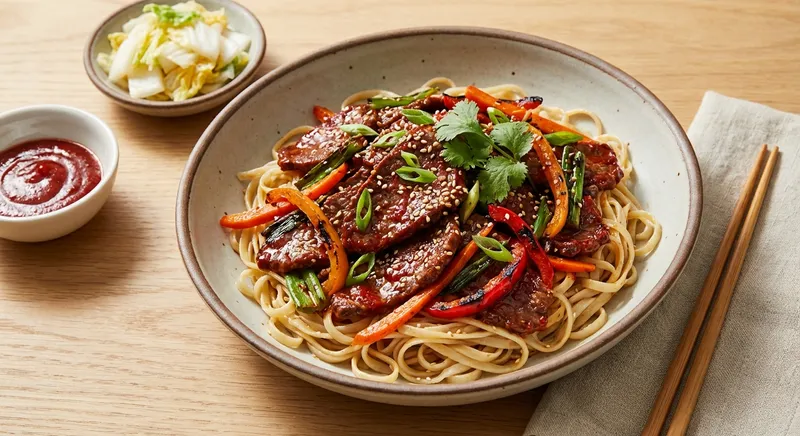
A punchy Korean-inspired weeknight bowl: tender, thinly sliced beef tossed in a glossy gochujang-soy glaze, served over soft sesame-scented rice noodles and brightened with crunchy, quick-pickled Napa cabbage. The dish balances spicy, sweet, savory, and citrus notes, with contrasting textures—silky noodles, caramelized beef edges, and crisp, tangy cabbage—making it feel restaurant-quality but fast enough for a busy evening.
Quick-pickle the Napa cabbage: put the 2 cups thinly sliced Napa cabbage in a medium bowl, sprinkle with 2 teaspoons rice vinegar and a pinch of salt, toss and let sit while you prep (5–10 minutes). This softens the cabbage slightly, brightens its flavor, and provides an immediate acidic counterpoint to the rich beef without needing a long pickle.
Prep protein and aromatics: pat the 300 g thinly sliced beef dry with paper towels (removing surface moisture helps the meat brown quickly instead of steaming). Season lightly with a pinch of salt and black pepper. Mix in a small bowl: 2 teaspoons gochujang, 2 tablespoons soy sauce, 2 teaspoons honey, 1 teaspoon grated ginger, and 1 small clove minced garlic (reserve half the garlic for the stir-fry). This marinade will give the beef an even coating and begin to tenderize while you finish other prep.
Soak/cook the rice noodles: bring a large pot of water to a boil. Remove from heat, add the 160 g rice noodles (if using wide rice noodles follow package timing—often 3–5 minutes—or for vermicelli 3–4 minutes). Stir gently to separate. Rice noodles absorb hot water quickly; soaking in hot water rather than a long boil prevents them from turning gluey. Once tender but still slightly firm (al dente), drain and toss with 1 teaspoon sesame oil to keep them from sticking and to add a subtle sesame aroma.
Heat the pan and sear beef: heat a large heavy skillet or wok over high heat until shimmering. Add 2 tablespoons neutral oil and swirl to coat (high heat creates Maillard browning for deep savory flavor). Add the beef in a single layer—do it in two batches if needed to avoid crowding—and sear undisturbed for 30–60 seconds on the first side until edges caramelize. Flip and cook another 30–45 seconds until just cooked through (thin slices cook very fast). Remove beef to a plate. Quick searing locks in juices and develops the savory crust that contrasts the tender center.
Build the sauce in the pan: reduce heat to medium-high, wipe the pan briefly if there are burned bits (but keep the fond). Add a touch more oil if the pan is dry, then sauté the remaining minced garlic and the julienned carrot for 30–45 seconds to release their aromatics (bloom the garlic—don’t burn it). Stir in the reserved gochujang-soy-honey mixture and 2 teaspoons sesame oil; let the paste sizzle for 15–20 seconds to bloom the chili flavor and loosen with a splash (about 1 tablespoon) of hot water or the noodle cooking water—this helps form a glossy sauce that will cling to the beef and noodles.
Return beef and finish: return the seared beef and any accumulated juices to the pan, add the sliced scallions (reserve some for garnish), and toss quickly with the sauce for 30–45 seconds so everything is evenly glazed. The quick toss allows the thin beef to absorb the sauce without overcooking; scallions will wilt slightly but keep brightness.
Combine with noodles: add the sesame-oiled rice noodles to the pan, using tongs to lift and fold them into the beef and sauce so the noodles pick up the glaze. If the mixture looks dry, add another tablespoon of noodle cooking water to loosen. Finish the whole pan with the juice of 1/2 lime to lift and balance the savory-sweet-spicy flavors.
Plate and garnish: divide noodles and beef between two bowls or plates. Spoon the quick-pickled Napa cabbage over or alongside the noodles for crunch and acidity. Scatter reserved sliced scallions, 2 teaspoons toasted sesame seeds, and a final drizzle of sesame oil or a lime wedge. Serve immediately while the beef is hot and the cabbage remains crisp.
To serve family-style: keep the pickled cabbage in its bowl and let diners spoon it over to keep its crunch. Offer extra gochujang or lime at the table for adjusting heat and brightness to taste.
870
Calories
48g
Protein
81g
Carbs
39g
Fat
4g
Fiber
How did this recipe turn out? Let others know!
to rate this recipe
By emensah m
A punchy Korean-inspired weeknight bowl: tender, thinly sliced beef tossed in a glossy gochujang-soy glaze, served over soft sesame-scented rice noodles and brightened with crunchy, quick-pickled Napa cabbage. The dish balances spicy, sweet, savory, and citrus notes, with contrasting textures—silky noodles, caramelized beef edges, and crisp, tangy cabbage—making it feel restaurant-quality but fast enough for a busy evening.
Quick-pickle the Napa cabbage: put the 2 cups thinly sliced Napa cabbage in a medium bowl, sprinkle with 2 teaspoons rice vinegar and a pinch of salt, toss and let sit while you prep (5–10 minutes). This softens the cabbage slightly, brightens its flavor, and provides an immediate acidic counterpoint to the rich beef without needing a long pickle.
Prep protein and aromatics: pat the 300 g thinly sliced beef dry with paper towels (removing surface moisture helps the meat brown quickly instead of steaming). Season lightly with a pinch of salt and black pepper. Mix in a small bowl: 2 teaspoons gochujang, 2 tablespoons soy sauce, 2 teaspoons honey, 1 teaspoon grated ginger, and 1 small clove minced garlic (reserve half the garlic for the stir-fry). This marinade will give the beef an even coating and begin to tenderize while you finish other prep.
Soak/cook the rice noodles: bring a large pot of water to a boil. Remove from heat, add the 160 g rice noodles (if using wide rice noodles follow package timing—often 3–5 minutes—or for vermicelli 3–4 minutes). Stir gently to separate. Rice noodles absorb hot water quickly; soaking in hot water rather than a long boil prevents them from turning gluey. Once tender but still slightly firm (al dente), drain and toss with 1 teaspoon sesame oil to keep them from sticking and to add a subtle sesame aroma.
Heat the pan and sear beef: heat a large heavy skillet or wok over high heat until shimmering. Add 2 tablespoons neutral oil and swirl to coat (high heat creates Maillard browning for deep savory flavor). Add the beef in a single layer—do it in two batches if needed to avoid crowding—and sear undisturbed for 30–60 seconds on the first side until edges caramelize. Flip and cook another 30–45 seconds until just cooked through (thin slices cook very fast). Remove beef to a plate. Quick searing locks in juices and develops the savory crust that contrasts the tender center.
Build the sauce in the pan: reduce heat to medium-high, wipe the pan briefly if there are burned bits (but keep the fond). Add a touch more oil if the pan is dry, then sauté the remaining minced garlic and the julienned carrot for 30–45 seconds to release their aromatics (bloom the garlic—don’t burn it). Stir in the reserved gochujang-soy-honey mixture and 2 teaspoons sesame oil; let the paste sizzle for 15–20 seconds to bloom the chili flavor and loosen with a splash (about 1 tablespoon) of hot water or the noodle cooking water—this helps form a glossy sauce that will cling to the beef and noodles.
Return beef and finish: return the seared beef and any accumulated juices to the pan, add the sliced scallions (reserve some for garnish), and toss quickly with the sauce for 30–45 seconds so everything is evenly glazed. The quick toss allows the thin beef to absorb the sauce without overcooking; scallions will wilt slightly but keep brightness.
Combine with noodles: add the sesame-oiled rice noodles to the pan, using tongs to lift and fold them into the beef and sauce so the noodles pick up the glaze. If the mixture looks dry, add another tablespoon of noodle cooking water to loosen. Finish the whole pan with the juice of 1/2 lime to lift and balance the savory-sweet-spicy flavors.
Plate and garnish: divide noodles and beef between two bowls or plates. Spoon the quick-pickled Napa cabbage over or alongside the noodles for crunch and acidity. Scatter reserved sliced scallions, 2 teaspoons toasted sesame seeds, and a final drizzle of sesame oil or a lime wedge. Serve immediately while the beef is hot and the cabbage remains crisp.
To serve family-style: keep the pickled cabbage in its bowl and let diners spoon it over to keep its crunch. Offer extra gochujang or lime at the table for adjusting heat and brightness to taste.
870
Calories
48g
Protein
81g
Carbs
39g
Fat
4g
Fiber
Your Rating:
