By Recipe AI
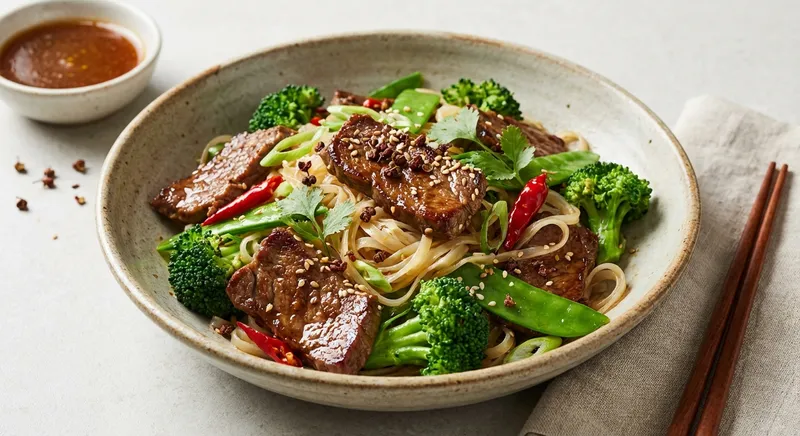
Fiery, numbing Szechuan peppercorns meet creamy, bright coconut‑ginger — a contrast of heat, aroma and silkiness that makes every bite addictive. Tender, thinly sliced sirloin is quickly seared to develop a caramelized edge, then tossed with crisp broccoli and snow peas and silk‑coated rice noodles in a lightly spiced coconut‑ginger sauce. Finished with sesame oil, scallions and cilantro for freshness, this restaurant‑quality stir‑fry is fast enough for weeknights and elegant enough for guests.
Prep everything first (mise en place). Thinly slice any thicker pieces of sirloin against the grain if needed, pat the beef dry with paper towels (dry surface = better sear). Trim broccoli into even florets and trim snow peas; grate the ginger and mince the garlic. Measuring and prepping ahead keeps the fast stir‑fry cooking smooth and prevents overcooking vegetables or beef.
Marinate and velvet the beef: place the sliced beef in a bowl and season lightly with 1 tsp kosher salt and 1/4 tsp black pepper. Sprinkle 2 tsp cornstarch over the beef and toss with 1 tsp of the sesame oil and 1 tbsp neutral oil to coat. Let rest 10–15 minutes. The cornstarch and oil coating (velveting technique) helps the beef brown quickly, creates a silky bite, and helps the sauce cling to the meat.
Make the light coconut‑ginger sauce: in a small bowl whisk together 120 ml (1/2 cup) light coconut milk + 2 tbsp tamari + 2 tbsp grated ginger + 1 tsp sugar (optional) and, if you like a slightly thicker sauce, whisk in 2 tsp cornstarch dissolved into 1 tbsp cold water. Taste and adjust — you want a balance of umami from the tamari, the warmth of ginger, and a gentle creaminess from the coconut. The cornstarch makes the sauce cling to noodles and beef without becoming heavy.
Toast and crack the Szechuan peppercorns: place the 2 tsp peppercorns in a dry skillet over medium heat and toast 1–2 minutes, shaking the pan, until aromatic (they will puff slightly and smell citrusy). Transfer to a mortar and pestle (or spice grinder) and crush coarsely — we want crunchy fragments, not a powder. Toasting blooms the peppercorns' oils and amplifies the signature 'numbing' aroma.
Heat the wok or a large skillet over high heat until very hot. Add 1 tbsp neutral oil and swirl to coat. High heat is essential for immediate searing and to keep vegetables crisp-tender; it creates the maillard flavors you expect in a great stir‑fry.
Flash‑sear the beef in batches: add half the beef in a single layer and let it sit undisturbed 30–45 seconds to form a caramelized edge, then toss and cook another 30–45 seconds until just browned but not fully cooked through. Remove to a plate and repeat with remaining beef. Working in batches prevents steaming and ensures a good sear; the beef will finish cooking when returned to the wok.
Stir‑fry the aromatics: wipe the wok if necessary, add the remaining 1 tbsp neutral oil, then add the minced garlic and half the crushed Szechuan peppercorns and stir 15–20 seconds until fragrant (don’t let garlic burn). Add the chili‑garlic paste and fry 20–30 seconds to bloom its chili oils — this step releases deeper flavor from the paste.
Add vegetables: add the broccoli florets and stir‑fry 1–2 minutes, then add the snow peas and stir another 45–60 seconds. If your broccoli is large, add a splash (1–2 tbsp) of water and cover briefly for 30 seconds to create steam — this speeds cooking without over‑browning. The goal is crisp‑tender vegetables with bright color.
Return the beef and noodles: increase heat to high, return the seared beef to the wok along with the cooked rice noodles. Toss to combine — the heat will finish the beef and reheat noodles quickly. Tossing on high heat helps the sauce cling and gives slight charring to the noodles where they contact the wok (great texture).
Add the coconut‑ginger sauce and oils: pour the prepared coconut‑ginger sauce evenly over the stir‑fry and toss to coat. Drizzle the remaining sesame oil (3 tsp) as you toss — the sesame oil is aromatic and should be used off‑heat to preserve its fragrance. Simmer 30–60 seconds until the sauce thickens slightly and evenly coats the beef, vegetables, and noodles. If sauce seems thin, push everything to the side and spoon a small amount of the cornstarch slurry into the center and stir to activate it; cornstarch thickens quickly when hot.
Finish and season: taste and adjust salt or tamari (remember tamari is salty), add a squeeze of lime or a splash of rice vinegar if you want brightness, and sprinkle the remaining crushed Szechuan peppercorns for a fresh burst of numbing aroma. Add 1 tsp sugar if the flavors need balancing. The bright acid at the end lifts the richness of coconut and beef.
Plate and garnish: divide the coconut rice noodles among 4 bowls or plates, top with the beef and vegetables, and finish with sliced green onions, chopped cilantro, and an extra drizzle of sesame oil or chili paste at the table. Serve immediately — stir‑fries are best hot and fresh.
629
Calories
41g
Protein
44g
Carbs
32g
Fat
5g
Fiber
How did this recipe turn out? Let others know!
to rate this recipe
By Recipe AI
Fiery, numbing Szechuan peppercorns meet creamy, bright coconut‑ginger — a contrast of heat, aroma and silkiness that makes every bite addictive. Tender, thinly sliced sirloin is quickly seared to develop a caramelized edge, then tossed with crisp broccoli and snow peas and silk‑coated rice noodles in a lightly spiced coconut‑ginger sauce. Finished with sesame oil, scallions and cilantro for freshness, this restaurant‑quality stir‑fry is fast enough for weeknights and elegant enough for guests.
Prep everything first (mise en place). Thinly slice any thicker pieces of sirloin against the grain if needed, pat the beef dry with paper towels (dry surface = better sear). Trim broccoli into even florets and trim snow peas; grate the ginger and mince the garlic. Measuring and prepping ahead keeps the fast stir‑fry cooking smooth and prevents overcooking vegetables or beef.
Marinate and velvet the beef: place the sliced beef in a bowl and season lightly with 1 tsp kosher salt and 1/4 tsp black pepper. Sprinkle 2 tsp cornstarch over the beef and toss with 1 tsp of the sesame oil and 1 tbsp neutral oil to coat. Let rest 10–15 minutes. The cornstarch and oil coating (velveting technique) helps the beef brown quickly, creates a silky bite, and helps the sauce cling to the meat.
Make the light coconut‑ginger sauce: in a small bowl whisk together 120 ml (1/2 cup) light coconut milk + 2 tbsp tamari + 2 tbsp grated ginger + 1 tsp sugar (optional) and, if you like a slightly thicker sauce, whisk in 2 tsp cornstarch dissolved into 1 tbsp cold water. Taste and adjust — you want a balance of umami from the tamari, the warmth of ginger, and a gentle creaminess from the coconut. The cornstarch makes the sauce cling to noodles and beef without becoming heavy.
Toast and crack the Szechuan peppercorns: place the 2 tsp peppercorns in a dry skillet over medium heat and toast 1–2 minutes, shaking the pan, until aromatic (they will puff slightly and smell citrusy). Transfer to a mortar and pestle (or spice grinder) and crush coarsely — we want crunchy fragments, not a powder. Toasting blooms the peppercorns' oils and amplifies the signature 'numbing' aroma.
Heat the wok or a large skillet over high heat until very hot. Add 1 tbsp neutral oil and swirl to coat. High heat is essential for immediate searing and to keep vegetables crisp-tender; it creates the maillard flavors you expect in a great stir‑fry.
Flash‑sear the beef in batches: add half the beef in a single layer and let it sit undisturbed 30–45 seconds to form a caramelized edge, then toss and cook another 30–45 seconds until just browned but not fully cooked through. Remove to a plate and repeat with remaining beef. Working in batches prevents steaming and ensures a good sear; the beef will finish cooking when returned to the wok.
Stir‑fry the aromatics: wipe the wok if necessary, add the remaining 1 tbsp neutral oil, then add the minced garlic and half the crushed Szechuan peppercorns and stir 15–20 seconds until fragrant (don’t let garlic burn). Add the chili‑garlic paste and fry 20–30 seconds to bloom its chili oils — this step releases deeper flavor from the paste.
Add vegetables: add the broccoli florets and stir‑fry 1–2 minutes, then add the snow peas and stir another 45–60 seconds. If your broccoli is large, add a splash (1–2 tbsp) of water and cover briefly for 30 seconds to create steam — this speeds cooking without over‑browning. The goal is crisp‑tender vegetables with bright color.
Return the beef and noodles: increase heat to high, return the seared beef to the wok along with the cooked rice noodles. Toss to combine — the heat will finish the beef and reheat noodles quickly. Tossing on high heat helps the sauce cling and gives slight charring to the noodles where they contact the wok (great texture).
Add the coconut‑ginger sauce and oils: pour the prepared coconut‑ginger sauce evenly over the stir‑fry and toss to coat. Drizzle the remaining sesame oil (3 tsp) as you toss — the sesame oil is aromatic and should be used off‑heat to preserve its fragrance. Simmer 30–60 seconds until the sauce thickens slightly and evenly coats the beef, vegetables, and noodles. If sauce seems thin, push everything to the side and spoon a small amount of the cornstarch slurry into the center and stir to activate it; cornstarch thickens quickly when hot.
Finish and season: taste and adjust salt or tamari (remember tamari is salty), add a squeeze of lime or a splash of rice vinegar if you want brightness, and sprinkle the remaining crushed Szechuan peppercorns for a fresh burst of numbing aroma. Add 1 tsp sugar if the flavors need balancing. The bright acid at the end lifts the richness of coconut and beef.
Plate and garnish: divide the coconut rice noodles among 4 bowls or plates, top with the beef and vegetables, and finish with sliced green onions, chopped cilantro, and an extra drizzle of sesame oil or chili paste at the table. Serve immediately — stir‑fries are best hot and fresh.
629
Calories
41g
Protein
44g
Carbs
32g
Fat
5g
Fiber
Your Rating:
