By Damon Allen
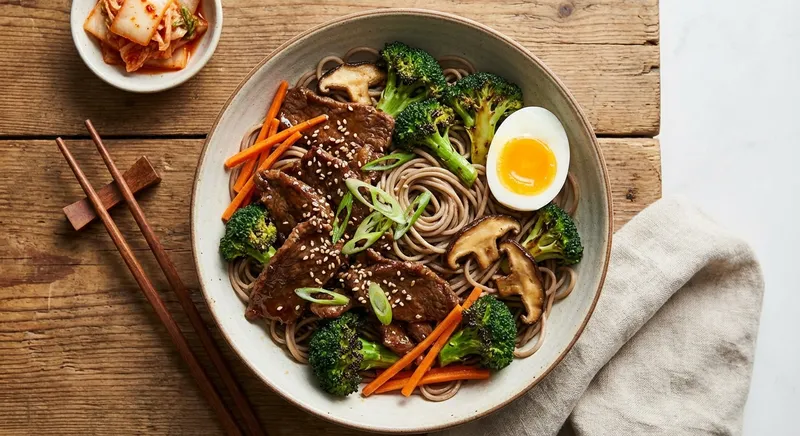
Tender, thinly sliced bulgogi-style beef tossed with al dente soba and bright, crunchy broccoli in a savory-sweet chili-soy glaze. Layers of sesame, garlic and ginger give classic Korean flavor while quick stir-frying preserves texture and lets the sauce cling to the noodles for a restaurant-quality weeknight dinner.
Prep everything first: slice beef thinly across the grain (this shortens muscle fibers and makes the meat tender), trim and cut broccoli into small florets, slice shiitakes, mince garlic and ginger, and measure sauces. Mise en place speeds a fast stir-fry and prevents overcooking.
Make the sauce: in a small bowl combine soy sauce, brown sugar (or honey), gochujang, sesame oil and the minced garlic and ginger. Taste for balance — it should be salty-sweet with a touch of heat. The sugar helps the sauce caramelize and gloss the beef; gochujang adds depth and heat.
Marinate the beef briefly: toss the thin slices of beef with half of the sauce (reserve the other half for finishing) and a pinch of black pepper. Marinate 5–10 minutes while you bring water to a boil — thin slices need only a short time to absorb flavor and will cook quickly, so don’t over-marinate.
Cook the soba: bring a large pot of salted water to a boil and cook soba according to package directions (usually 4–5 minutes) until just al dente. Reserve 1/3 cup (80 ml) of the cooking water before draining — the starchy water helps the sauce cling to the noodles. Rinse briefly under warm water if using 100% buckwheat soba to prevent stickiness; otherwise drain and toss lightly with a tiny drizzle of vegetable oil to keep separated.
Blanch the broccoli for quick even cooking: drop broccoli florets into the same boiling water for 30–45 seconds until bright green and just tender, then plunge into an ice bath or cold water to stop cooking. This preserves color and crunch. Drain well and set aside.
Heat a large heavy skillet or wok over high heat until very hot. Add the tablespoon of vegetable oil and swirl. High heat sears the beef quickly, producing browned edges that add flavor through the Maillard reaction.
Sear the beef in batches: add half the beef in a single layer and leave undisturbed 30–45 seconds to get color, then toss and continue cooking 30–60 seconds until it’s mostly cooked. Remove to a plate and repeat with remaining beef. Cooking in batches prevents steaming and ensures each piece gets a caramelized exterior.
Sauté the mushrooms and aromatics: with any fond (browned bits) still in the pan, add a quick splash more oil if needed, add the sliced shiitakes and cook 1–2 minutes until they release liquid and start to brown. Add the reserved sauce and bring to a simmer—this blooms the ginger and garlic while creating a glossy glaze.
Return beef to the pan with blanched broccoli and cooked soba. Toss everything together over high heat, adding a few tablespoons of reserved noodle water as needed to loosen the sauce and help it cling to the noodles. The starchy water also creates a silky coating on the noodles without thinning flavor.
Finish and season: taste and adjust — add a pinch of salt or a splash more soy if it needs savory lift, a squeeze of honey if you want brighter sweetness, or more gochujang if you like heat. Turn off the heat and drizzle the teaspoon of toasted sesame oil for aroma (sesame oil loses its fragrance with high heat so add at the end).
Plate and garnish: divide between two bowls, scatter sliced scallions and toasted sesame seeds on top. Serve immediately — stir-fry is best hot and freshly sauced so textures and flavors are at their peak.
694
Calories
42g
Protein
67g
Carbs
28g
Fat
5g
Fiber
How did this recipe turn out? Let others know!
to rate this recipe
By Damon Allen
Tender, thinly sliced bulgogi-style beef tossed with al dente soba and bright, crunchy broccoli in a savory-sweet chili-soy glaze. Layers of sesame, garlic and ginger give classic Korean flavor while quick stir-frying preserves texture and lets the sauce cling to the noodles for a restaurant-quality weeknight dinner.
Prep everything first: slice beef thinly across the grain (this shortens muscle fibers and makes the meat tender), trim and cut broccoli into small florets, slice shiitakes, mince garlic and ginger, and measure sauces. Mise en place speeds a fast stir-fry and prevents overcooking.
Make the sauce: in a small bowl combine soy sauce, brown sugar (or honey), gochujang, sesame oil and the minced garlic and ginger. Taste for balance — it should be salty-sweet with a touch of heat. The sugar helps the sauce caramelize and gloss the beef; gochujang adds depth and heat.
Marinate the beef briefly: toss the thin slices of beef with half of the sauce (reserve the other half for finishing) and a pinch of black pepper. Marinate 5–10 minutes while you bring water to a boil — thin slices need only a short time to absorb flavor and will cook quickly, so don’t over-marinate.
Cook the soba: bring a large pot of salted water to a boil and cook soba according to package directions (usually 4–5 minutes) until just al dente. Reserve 1/3 cup (80 ml) of the cooking water before draining — the starchy water helps the sauce cling to the noodles. Rinse briefly under warm water if using 100% buckwheat soba to prevent stickiness; otherwise drain and toss lightly with a tiny drizzle of vegetable oil to keep separated.
Blanch the broccoli for quick even cooking: drop broccoli florets into the same boiling water for 30–45 seconds until bright green and just tender, then plunge into an ice bath or cold water to stop cooking. This preserves color and crunch. Drain well and set aside.
Heat a large heavy skillet or wok over high heat until very hot. Add the tablespoon of vegetable oil and swirl. High heat sears the beef quickly, producing browned edges that add flavor through the Maillard reaction.
Sear the beef in batches: add half the beef in a single layer and leave undisturbed 30–45 seconds to get color, then toss and continue cooking 30–60 seconds until it’s mostly cooked. Remove to a plate and repeat with remaining beef. Cooking in batches prevents steaming and ensures each piece gets a caramelized exterior.
Sauté the mushrooms and aromatics: with any fond (browned bits) still in the pan, add a quick splash more oil if needed, add the sliced shiitakes and cook 1–2 minutes until they release liquid and start to brown. Add the reserved sauce and bring to a simmer—this blooms the ginger and garlic while creating a glossy glaze.
Return beef to the pan with blanched broccoli and cooked soba. Toss everything together over high heat, adding a few tablespoons of reserved noodle water as needed to loosen the sauce and help it cling to the noodles. The starchy water also creates a silky coating on the noodles without thinning flavor.
Finish and season: taste and adjust — add a pinch of salt or a splash more soy if it needs savory lift, a squeeze of honey if you want brighter sweetness, or more gochujang if you like heat. Turn off the heat and drizzle the teaspoon of toasted sesame oil for aroma (sesame oil loses its fragrance with high heat so add at the end).
Plate and garnish: divide between two bowls, scatter sliced scallions and toasted sesame seeds on top. Serve immediately — stir-fry is best hot and freshly sauced so textures and flavors are at their peak.
694
Calories
42g
Protein
67g
Carbs
28g
Fat
5g
Fiber
Your Rating:
