By j
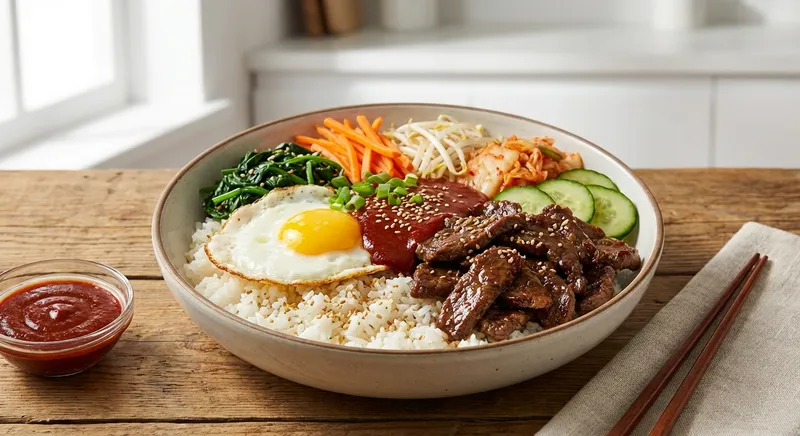
A vibrant, weeknight-friendly bibimbowl that pairs tender, thin-sliced bulgogi-style beef with warm sesame-scented rice and crisp, fresh vegetables. Sweet-spicy gochujang and aromatic sesame oil coat the beef, while crisp cucumber, juicy carrot and lightly wilted spinach add cool contrast — a perfect balance of savory, spicy, nutty and fresh textures.
Prep the rice and vegetables so everything is ready to plate quickly. Warm the 1 cup (200 g) cooked short-grain rice (microwave 30–45 seconds covered or reheat in a pan with a teaspoon of water) so it’s hot and slightly sticky — warm rice holds sesame oil better and gives pleasant mouthfeel.
Make the quick bulgogi-style sauce: in a small bowl whisk together 1 tbsp gochujang, 1 tsp soy sauce, 1 tsp sesame oil and 1/2 tsp minced garlic. Taste and adjust: gochujang is both savory and sweet, so this simple mix gives heat, umami and a touch of sweetness without extra sugar. The sesame oil adds aroma; soy saltiness.
Marinate the beef briefly: place the 140 g thin-sliced beef in a bowl and pour 2/3 of the sauce over it (reserve the rest for finishing). Turn the slices to coat evenly and let rest 5–8 minutes at room temperature. Why: thin slices don’t need a long marinade — a short rest lets the flavors penetrate without making the beef soggy and helps the meat come to a more even temperature for a quick sear.
Season the rice: stir the reserved sauce into the warm rice along with a small pinch of salt and the 1/2 tsp sesame seeds. Mix gently to combine — this distributes the gochujang flavor throughout the rice so every spoonful has umami and a gentle chili kick. Keep the rice covered to stay warm.
Prepare the spinach: if your baby spinach is already lightly wilted, pat dry and season with a tiny pinch of salt and a drop of sesame oil (optional). Why: a little oil and salt lifts the spinach’s mild flavor and ties it to the sesame-scented rice and beef.
Heat a large skillet or cast-iron pan over high heat until smoking point just starts to form (about 1–2 minutes). Add 1 tsp neutral oil and swirl. High heat is important because thin-sliced beef cooks rapidly — a hot pan gives immediate browning (Maillard reaction) which creates savory crust and complex flavor.
Sear the beef: spread the beef slices in a single layer (work in two quick batches if needed to avoid overcrowding). Let them sear untouched for 25–45 seconds, then toss and stir for another 30–60 seconds until just cooked through and caramelized. Why: holding the beef still creates a quick, flavorful sear; tossing finishes cooking without overcooking delicate slices. Total cook time for thin slices is under 2 minutes.
Add the remaining reserved sauce to the pan in the final 15–20 seconds and toss to glaze the beef. The heat will loosen browned bits from the pan and the sauce will cling to the beef, concentrating flavor. Remove from heat immediately to avoid bitter burnt sugars.
Assemble the bowl: spoon the warm sesame rice into a medium bowl, arrange wilted spinach to one side, add julienned carrot and cucumber matchsticks in separate piles for visual contrast. Top with the glazed bulgogi beef slices, scatter sliced scallion and the remaining 1/2 tsp sesame seeds, and crack a pinch of black pepper over the top. Why: arranging components separately (classic bibimbap approach) gives contrasting textures and colors; diners can mix to their taste.
Finish and serve: provide extra gochujang on the side if someone wants more heat. Encourage mixing the bowl right before eating so warm rice and hot beef slightly wilt the vegetables, creating a harmonious texture. Serve immediately.
737
Calories
44g
Protein
75g
Carbs
29g
Fat
3g
Fiber
How did this recipe turn out? Let others know!
to rate this recipe
By j
A vibrant, weeknight-friendly bibimbowl that pairs tender, thin-sliced bulgogi-style beef with warm sesame-scented rice and crisp, fresh vegetables. Sweet-spicy gochujang and aromatic sesame oil coat the beef, while crisp cucumber, juicy carrot and lightly wilted spinach add cool contrast — a perfect balance of savory, spicy, nutty and fresh textures.
Prep the rice and vegetables so everything is ready to plate quickly. Warm the 1 cup (200 g) cooked short-grain rice (microwave 30–45 seconds covered or reheat in a pan with a teaspoon of water) so it’s hot and slightly sticky — warm rice holds sesame oil better and gives pleasant mouthfeel.
Make the quick bulgogi-style sauce: in a small bowl whisk together 1 tbsp gochujang, 1 tsp soy sauce, 1 tsp sesame oil and 1/2 tsp minced garlic. Taste and adjust: gochujang is both savory and sweet, so this simple mix gives heat, umami and a touch of sweetness without extra sugar. The sesame oil adds aroma; soy saltiness.
Marinate the beef briefly: place the 140 g thin-sliced beef in a bowl and pour 2/3 of the sauce over it (reserve the rest for finishing). Turn the slices to coat evenly and let rest 5–8 minutes at room temperature. Why: thin slices don’t need a long marinade — a short rest lets the flavors penetrate without making the beef soggy and helps the meat come to a more even temperature for a quick sear.
Season the rice: stir the reserved sauce into the warm rice along with a small pinch of salt and the 1/2 tsp sesame seeds. Mix gently to combine — this distributes the gochujang flavor throughout the rice so every spoonful has umami and a gentle chili kick. Keep the rice covered to stay warm.
Prepare the spinach: if your baby spinach is already lightly wilted, pat dry and season with a tiny pinch of salt and a drop of sesame oil (optional). Why: a little oil and salt lifts the spinach’s mild flavor and ties it to the sesame-scented rice and beef.
Heat a large skillet or cast-iron pan over high heat until smoking point just starts to form (about 1–2 minutes). Add 1 tsp neutral oil and swirl. High heat is important because thin-sliced beef cooks rapidly — a hot pan gives immediate browning (Maillard reaction) which creates savory crust and complex flavor.
Sear the beef: spread the beef slices in a single layer (work in two quick batches if needed to avoid overcrowding). Let them sear untouched for 25–45 seconds, then toss and stir for another 30–60 seconds until just cooked through and caramelized. Why: holding the beef still creates a quick, flavorful sear; tossing finishes cooking without overcooking delicate slices. Total cook time for thin slices is under 2 minutes.
Add the remaining reserved sauce to the pan in the final 15–20 seconds and toss to glaze the beef. The heat will loosen browned bits from the pan and the sauce will cling to the beef, concentrating flavor. Remove from heat immediately to avoid bitter burnt sugars.
Assemble the bowl: spoon the warm sesame rice into a medium bowl, arrange wilted spinach to one side, add julienned carrot and cucumber matchsticks in separate piles for visual contrast. Top with the glazed bulgogi beef slices, scatter sliced scallion and the remaining 1/2 tsp sesame seeds, and crack a pinch of black pepper over the top. Why: arranging components separately (classic bibimbap approach) gives contrasting textures and colors; diners can mix to their taste.
Finish and serve: provide extra gochujang on the side if someone wants more heat. Encourage mixing the bowl right before eating so warm rice and hot beef slightly wilt the vegetables, creating a harmonious texture. Serve immediately.
737
Calories
44g
Protein
75g
Carbs
29g
Fat
3g
Fiber
Your Rating:
