By Recipe AI
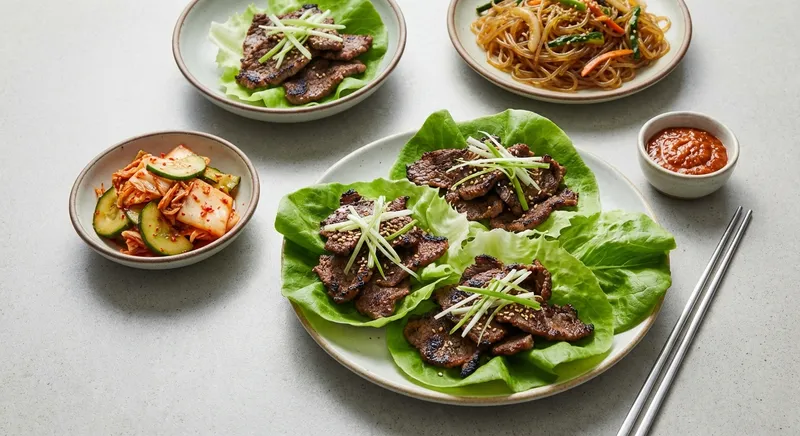
Tender, thinly sliced bulgogi-marinated beef seared to a caramelized edge, paired with springy sweet potato (dangmyeon) noodles and a bright, quick kimchi-style cucumber. Serve everything in cool, butter-soft Bibb lettuce leaves with scallions, toasted sesame and a touch of gochujang for heat — a balance of sweet, savory, crunchy and silky textures that feels restaurant-polished but is quick enough for weeknights.
Make (or confirm) your bulgogi marinade: If you already have a prepared bulgogi marinade use 120 ml (8 tbsp) total. If you want to make it fresh, combine tamari 75 ml (5 tbsp), sesame oil 15 ml (1 tbsp), grated Asian pear 20 g (about 2 tbsp), brown sugar 12 g (1 tbsp), 2 cloves minced garlic and 2 g grated ginger in a bowl. This blend gives soy-saltiness (tamari), toasty aromatics (sesame oil), and the pear and sugar add the gentle enzymatic sweetness to tenderize and lightly caramelize the beef — which is the hallmark of bulgogi.
Marinate the beef: Place the 600 g thinly sliced beef in a shallow dish or zip-top bag and pour the 120 ml marinade over it, tossing to coat. Spread the slices in a single layer as much as possible. Let rest 20–30 minutes at room temperature or up to 2 hours in the fridge. Why: thin slices absorb flavor quickly; a short marinate lets the pear and sugar begin to tenderize and flavor the meat without making it mushy. Bring to room temperature for 20 minutes before cooking to ensure even searing.
Make the quick kimchi-style cucumber: While the beef marinates, thinly slice about 200 g cucumber (about 1 1/3 cups). Toss with 1 tbsp rice vinegar, 1/2 tsp sugar (or honey), 1/4 tsp fine salt, 1/4 tsp Korean chili flakes (gochugaru) or a pinch of red pepper flakes, and 1 tsp toasted sesame oil. Let sit in the fridge — this quick pickle brightens with a slightly tangy, spicy bite and provides crunch to balance the soft noodles and rich beef.
Prep the noodles and garnishes: If your sweet potato noodles are cooked, drain and toss them with a light drizzle (1 tsp) of sesame oil and a pinch of salt so they don’t clump. Slice scallions and measure toasted sesame seeds. Why: tossing the cooked noodles with a little oil keeps them glossy and prevents a gluey texture when plated in warm contact with the beef.
Heat the pan for searing: Use a large heavy skillet or cast-iron on high heat. Add 1 tbsp neutral oil and heat until shimmering but not smoking. Why: a very hot pan quickly sears the paper-thin beef, triggering the Maillard reaction (caramelized crust) which concentrates flavor — if the pan is too cool the meat will stew instead of sear.
Sear the beef in batches: Shake off excess marinade (too much liquid prevents proper browning). Working in 2–3 quick batches, add a single layer of beef and spread it so slices don’t overlap. Sear 45–60 seconds without moving, then toss and sear another 30–45 seconds until edges are caramelized but meat remains tender. Transfer to a warm plate and repeat. Why: thin beef cooks extremely quickly; short, hot sears keep it tender while building color. Overcrowding cools the pan and yields steamed, gray meat.
Warm and finish the noodles (optional): If you prefer warm noodles, wipe the pan and add 1 tsp sesame oil, then add the cooked noodles and toss 1–2 minutes to heat through and pick up any fond left in the pan. Finish with 1 tbsp toasted sesame seeds and a pinch of salt. Why: briefly tossing lets the noodles absorb flavor and marry textures with the beef without overcooking them into mush.
Assemble the wraps: Lay out Bibb lettuce leaves. For each wrap, place a small nest (about 2–3 tbsp) of noodles, a few slices of seared bulgogi, a spoonful of quick kimchi-cucumber, a few sliced scallions, a sprinkle of toasted sesame seeds and an optional dab (1/2 tsp) of gochujang for heat. Fold and eat immediately. Why: serving components separately lets each diner build the balance of sweet, salty, spicy and crunchy to their taste — the contrast in temperatures and textures is what makes this dish sing.
Finish and serve family-style: Plate extra scallions, sesame seeds, gochujang and small bowls of kimchi-cucumber so guests can top their own wraps. Leftover marinade juices can be simmered 1–2 minutes to use as an extra dipping sauce (bring to a boil to cook off raw meat juices). Why: a small communal service elevates the meal and keeps the wraps fresh and crisp.
640
Calories
36g
Protein
52g
Carbs
30g
Fat
3g
Fiber
How did this recipe turn out? Let others know!
to rate this recipe
By Recipe AI
Tender, thinly sliced bulgogi-marinated beef seared to a caramelized edge, paired with springy sweet potato (dangmyeon) noodles and a bright, quick kimchi-style cucumber. Serve everything in cool, butter-soft Bibb lettuce leaves with scallions, toasted sesame and a touch of gochujang for heat — a balance of sweet, savory, crunchy and silky textures that feels restaurant-polished but is quick enough for weeknights.
Make (or confirm) your bulgogi marinade: If you already have a prepared bulgogi marinade use 120 ml (8 tbsp) total. If you want to make it fresh, combine tamari 75 ml (5 tbsp), sesame oil 15 ml (1 tbsp), grated Asian pear 20 g (about 2 tbsp), brown sugar 12 g (1 tbsp), 2 cloves minced garlic and 2 g grated ginger in a bowl. This blend gives soy-saltiness (tamari), toasty aromatics (sesame oil), and the pear and sugar add the gentle enzymatic sweetness to tenderize and lightly caramelize the beef — which is the hallmark of bulgogi.
Marinate the beef: Place the 600 g thinly sliced beef in a shallow dish or zip-top bag and pour the 120 ml marinade over it, tossing to coat. Spread the slices in a single layer as much as possible. Let rest 20–30 minutes at room temperature or up to 2 hours in the fridge. Why: thin slices absorb flavor quickly; a short marinate lets the pear and sugar begin to tenderize and flavor the meat without making it mushy. Bring to room temperature for 20 minutes before cooking to ensure even searing.
Make the quick kimchi-style cucumber: While the beef marinates, thinly slice about 200 g cucumber (about 1 1/3 cups). Toss with 1 tbsp rice vinegar, 1/2 tsp sugar (or honey), 1/4 tsp fine salt, 1/4 tsp Korean chili flakes (gochugaru) or a pinch of red pepper flakes, and 1 tsp toasted sesame oil. Let sit in the fridge — this quick pickle brightens with a slightly tangy, spicy bite and provides crunch to balance the soft noodles and rich beef.
Prep the noodles and garnishes: If your sweet potato noodles are cooked, drain and toss them with a light drizzle (1 tsp) of sesame oil and a pinch of salt so they don’t clump. Slice scallions and measure toasted sesame seeds. Why: tossing the cooked noodles with a little oil keeps them glossy and prevents a gluey texture when plated in warm contact with the beef.
Heat the pan for searing: Use a large heavy skillet or cast-iron on high heat. Add 1 tbsp neutral oil and heat until shimmering but not smoking. Why: a very hot pan quickly sears the paper-thin beef, triggering the Maillard reaction (caramelized crust) which concentrates flavor — if the pan is too cool the meat will stew instead of sear.
Sear the beef in batches: Shake off excess marinade (too much liquid prevents proper browning). Working in 2–3 quick batches, add a single layer of beef and spread it so slices don’t overlap. Sear 45–60 seconds without moving, then toss and sear another 30–45 seconds until edges are caramelized but meat remains tender. Transfer to a warm plate and repeat. Why: thin beef cooks extremely quickly; short, hot sears keep it tender while building color. Overcrowding cools the pan and yields steamed, gray meat.
Warm and finish the noodles (optional): If you prefer warm noodles, wipe the pan and add 1 tsp sesame oil, then add the cooked noodles and toss 1–2 minutes to heat through and pick up any fond left in the pan. Finish with 1 tbsp toasted sesame seeds and a pinch of salt. Why: briefly tossing lets the noodles absorb flavor and marry textures with the beef without overcooking them into mush.
Assemble the wraps: Lay out Bibb lettuce leaves. For each wrap, place a small nest (about 2–3 tbsp) of noodles, a few slices of seared bulgogi, a spoonful of quick kimchi-cucumber, a few sliced scallions, a sprinkle of toasted sesame seeds and an optional dab (1/2 tsp) of gochujang for heat. Fold and eat immediately. Why: serving components separately lets each diner build the balance of sweet, salty, spicy and crunchy to their taste — the contrast in temperatures and textures is what makes this dish sing.
Finish and serve family-style: Plate extra scallions, sesame seeds, gochujang and small bowls of kimchi-cucumber so guests can top their own wraps. Leftover marinade juices can be simmered 1–2 minutes to use as an extra dipping sauce (bring to a boil to cook off raw meat juices). Why: a small communal service elevates the meal and keeps the wraps fresh and crisp.
640
Calories
36g
Protein
52g
Carbs
30g
Fat
3g
Fiber
Your Rating:
