By emensah m
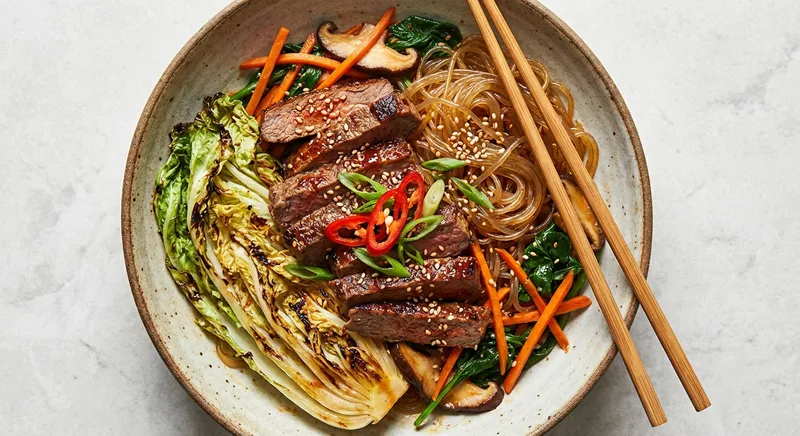
Tender, thinly sliced beef tosses with chewy sweet-potato glass noodles (dangmyeon) in a glossy, savory-sweet gochujang sauce, finished with nutty sesame and bright scallions. Charred napa cabbage adds a smoky-sweet contrast and crunchy texture that elevates this home-cookable, restaurant-quality Korean stir‑fry.
Trim and slice the beef across the grain into 4–5 cm (1.5–2 in) wide strips if not already thinly sliced; slicing across the grain shortens muscle fibers and yields more tender bites. Place beef in a bowl and pat dry—moisture prevents good browning.
Make a light marinade for the beef: add 2 tbsp light soy sauce, 1 tsp toasted sesame oil, 2 minced garlic cloves, a few grinds of black pepper, and a pinch of fine salt to the beef. Marinate 10–15 minutes while you prepare other components. Marinating briefly seasons the meat and helps it brown quickly without becoming sodden.
Rehydrate the dangmyeon: place the dry noodles in a heatproof bowl and pour very hot (just-off-boil) water to cover. Let soak for 8–10 minutes until pliable but still slightly firm (they'll finish cooking in the pan). Drain and rinse under cold water to stop cooking. Cutting the long, slippery strands into 12–15 cm lengths with scissors makes them easier to toss in the pan.
Prepare the gochujang sauce: in a bowl whisk together the remaining 2 tbsp light soy sauce, 3 tbsp gochujang, 4 tsp mirin, 3 tsp toasted sesame oil, the remaining 2 minced garlic cloves, and 60 ml warm water (or low-sodium broth) to loosen the paste into a glossy sauce. Taste and adjust — gochujang is both spicy and sweet; mirin brings sweetness and acidity to balance it.
Heat a large cast-iron or heavy skillet over medium-high heat until shimmering. Add 1 tbsp neutral oil and arrange individual napa cabbage leaves in a single layer (work in batches if needed). Let the leaves char undisturbed for 1–2 minutes per side until you see good dark brown blistering. Flip and char the other side. Charring caramelizes sugars in the cabbage and adds smoky depth that contrasts the spicy-sweet sauce.
Remove charred cabbage and set aside on a tray; season lightly with a pinch of salt while warm. Reserve pan — the fond (browned bits) left behind will add flavor to the rest of the dish.
Heat the same pan over high heat and add 1 tbsp neutral oil. When the oil is hot but not smoking, add the marinated beef in a single layer, leaving space between strips (work in two quick batches if necessary). Sear for 30–60 seconds per side until caramelized but still just medium-rare — high heat creates Maillard browning which builds savory flavor. Transfer beef to a plate and loosely tent with foil to rest; this keeps juices locked in.
Lower heat to medium-high, add remaining 2 tbsp neutral oil, then add the julienned carrot and the white-thick parts of 3 scallions. Stir-fry 60–90 seconds until carrot just softens; you want a bit of bite to contrast the noodles. Adding vegetables after searing the beef ensures they keep color and texture.
Add the drained glass noodles to the pan and toss briefly to combine with the vegetables. Pour the gochujang sauce over the noodles and use tongs to fold and toss everything together so the sauce coats the strands evenly. The warm pan helps the sauce cling; the water in the sauce loosens gochujang so it distributes without clumping.
Return the rested beef to the pan and toss gently for 1–2 minutes just to finish cooking the beef and let flavors marry. Taste and adjust seasoning with salt and freshly ground black pepper. Finishing in the pan briefly prevents the beef from overcooking while allowing the sauce to adhere to both beef and noodles.
Turn off the heat and drizzle the remaining 1 tsp toasted sesame oil over the dish for aroma. Toss in the sliced scallions (greens), sprinkle the toasted sesame seeds and give one final toss. The finishing oil and seeds add fragrance and a glossy finish.
Serve family-style with the charred napa cabbage tucked around or atop the noodles — use the cabbage as a smoky, crisp wrapper or mix directly into the noodles. The contrast of textures (chewy noodles, tender beef, crisp-charred cabbage) is what makes this dish special.
825
Calories
35g
Protein
84g
Carbs
39g
Fat
4g
Fiber
How did this recipe turn out? Let others know!
to rate this recipe
By emensah m
Tender, thinly sliced beef tosses with chewy sweet-potato glass noodles (dangmyeon) in a glossy, savory-sweet gochujang sauce, finished with nutty sesame and bright scallions. Charred napa cabbage adds a smoky-sweet contrast and crunchy texture that elevates this home-cookable, restaurant-quality Korean stir‑fry.
Trim and slice the beef across the grain into 4–5 cm (1.5–2 in) wide strips if not already thinly sliced; slicing across the grain shortens muscle fibers and yields more tender bites. Place beef in a bowl and pat dry—moisture prevents good browning.
Make a light marinade for the beef: add 2 tbsp light soy sauce, 1 tsp toasted sesame oil, 2 minced garlic cloves, a few grinds of black pepper, and a pinch of fine salt to the beef. Marinate 10–15 minutes while you prepare other components. Marinating briefly seasons the meat and helps it brown quickly without becoming sodden.
Rehydrate the dangmyeon: place the dry noodles in a heatproof bowl and pour very hot (just-off-boil) water to cover. Let soak for 8–10 minutes until pliable but still slightly firm (they'll finish cooking in the pan). Drain and rinse under cold water to stop cooking. Cutting the long, slippery strands into 12–15 cm lengths with scissors makes them easier to toss in the pan.
Prepare the gochujang sauce: in a bowl whisk together the remaining 2 tbsp light soy sauce, 3 tbsp gochujang, 4 tsp mirin, 3 tsp toasted sesame oil, the remaining 2 minced garlic cloves, and 60 ml warm water (or low-sodium broth) to loosen the paste into a glossy sauce. Taste and adjust — gochujang is both spicy and sweet; mirin brings sweetness and acidity to balance it.
Heat a large cast-iron or heavy skillet over medium-high heat until shimmering. Add 1 tbsp neutral oil and arrange individual napa cabbage leaves in a single layer (work in batches if needed). Let the leaves char undisturbed for 1–2 minutes per side until you see good dark brown blistering. Flip and char the other side. Charring caramelizes sugars in the cabbage and adds smoky depth that contrasts the spicy-sweet sauce.
Remove charred cabbage and set aside on a tray; season lightly with a pinch of salt while warm. Reserve pan — the fond (browned bits) left behind will add flavor to the rest of the dish.
Heat the same pan over high heat and add 1 tbsp neutral oil. When the oil is hot but not smoking, add the marinated beef in a single layer, leaving space between strips (work in two quick batches if necessary). Sear for 30–60 seconds per side until caramelized but still just medium-rare — high heat creates Maillard browning which builds savory flavor. Transfer beef to a plate and loosely tent with foil to rest; this keeps juices locked in.
Lower heat to medium-high, add remaining 2 tbsp neutral oil, then add the julienned carrot and the white-thick parts of 3 scallions. Stir-fry 60–90 seconds until carrot just softens; you want a bit of bite to contrast the noodles. Adding vegetables after searing the beef ensures they keep color and texture.
Add the drained glass noodles to the pan and toss briefly to combine with the vegetables. Pour the gochujang sauce over the noodles and use tongs to fold and toss everything together so the sauce coats the strands evenly. The warm pan helps the sauce cling; the water in the sauce loosens gochujang so it distributes without clumping.
Return the rested beef to the pan and toss gently for 1–2 minutes just to finish cooking the beef and let flavors marry. Taste and adjust seasoning with salt and freshly ground black pepper. Finishing in the pan briefly prevents the beef from overcooking while allowing the sauce to adhere to both beef and noodles.
Turn off the heat and drizzle the remaining 1 tsp toasted sesame oil over the dish for aroma. Toss in the sliced scallions (greens), sprinkle the toasted sesame seeds and give one final toss. The finishing oil and seeds add fragrance and a glossy finish.
Serve family-style with the charred napa cabbage tucked around or atop the noodles — use the cabbage as a smoky, crisp wrapper or mix directly into the noodles. The contrast of textures (chewy noodles, tender beef, crisp-charred cabbage) is what makes this dish special.
825
Calories
35g
Protein
84g
Carbs
39g
Fat
4g
Fiber
Your Rating:
