By emensah m
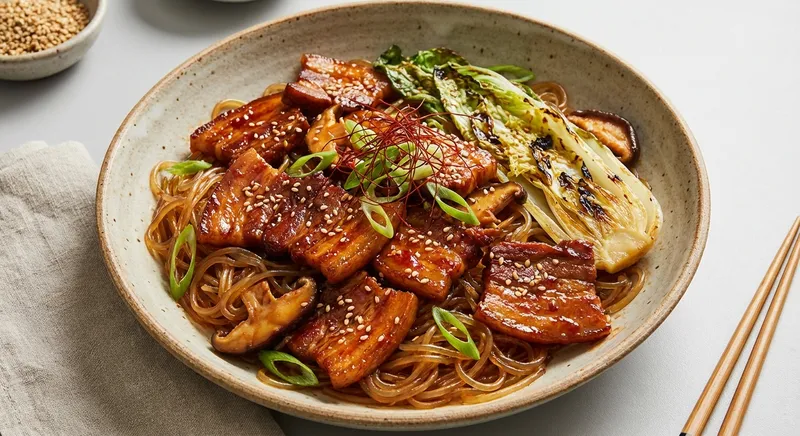
A bold Korean‑inspired stir‑fry that balances sticky, savory gochujang‑honey pork with slippery sweet potato glass noodles and smoky, charred Napa cabbage. Thinly sliced pork caramelizes quickly for a glossy, flavorful bite; shiitakes add deep umami and the noodles soak up the lacquered sauce for a comforting, restaurant‑quality finish.
Soften the noodles: Place the 240 g dry sweet potato glass noodles in a large heatproof bowl and cover with just‑boiling water. Let them soak, undisturbed, for 20–25 minutes until pliable but still slightly firm (they’ll finish cooking in the pan). Soaking hydrates them gently so they won’t break apart when stir‑frying; over‑softening makes them gummy.
Make the sauce / quick marinade: In a medium bowl whisk together 4 tbsp gochujang, 4 tsp honey, 4 tbsp light soy sauce, 4 tsp toasted sesame oil, 4 tsp rice vinegar, 4 tsp grated fresh ginger and 4 minced garlic cloves. Reserve 2–3 tbsp of this mixture for finishing the noodles (to be added later). The marinade seasons and tenderizes the pork; reserving some prevents burning while allowing you to glaze the noodles at the end.
Marinate the pork: Toss the 600 g thinly sliced pork in the remaining marinade until evenly coated. Let sit at room temperature for 10 minutes (or refrigerate up to 30 minutes). Marinating briefly lets the gochujang and soy penetrate the meat surface for faster flavor development during a quick stir‑fry.
Prep produce and drain noodles: While the pork marinates, slice 240 g shiitake, julienne 2 carrots, thinly slice 4 cups Napa cabbage and slice scallions. Drain the noodles and give them a quick rinse under cool water, then trim any long strands if desired. Toss drained noodles with a teaspoon of neutral oil so they don’t stick.
High‑heat technique — char the Napa cabbage first: Heat a large, heavy skillet or wok over high heat until smoking‑hot. Add 1 tbsp neutral oil, then add half the Napa cabbage; spread it in a single layer and let it sit undisturbed for 45–60 seconds to get a quick char, then toss and char the other side. Transfer to a bowl and repeat with remaining Napa. Charring gives the cabbage a lightly smoky, caramelized flavor that contrasts the sweet, spicy pork.
Sauté the shiitakes and carrots: Reduce heat to medium‑high, add another 1 tbsp neutral oil to the hot pan, then add shiitake slices. Let them sear without moving for 60–90 seconds to concentrate umami, then toss and cook until golden. Add the julienned carrots and cook 1–2 minutes until they begin to soften. Mushrooms develop deeper flavor when browned; carrots bring sweetness and texture.
Cook the pork: Push the vegetables to the sides of the pan (or remove briefly), add the final 2 tbsp neutral oil, then add the marinated pork in an even layer. Spread it so slices have direct contact with the pan; don’t overcrowd — work in batches if necessary. Sear the pork on high heat, flipping after about 60–90 seconds; cook until just cooked through but still juicy (pork tenderloin cooks quickly when sliced thin). High heat caramelizes the sugars in gochujang and honey, forming a glossy crust.
Combine and finish the sauce: Return vegetables to the pan if removed. Add the drained glass noodles and the reserved 2–3 tbsp sauce plus 2 tbsp water (to loosen). Toss everything together over medium heat for 1–2 minutes so the noodles absorb flavor and the sauce becomes glossy. If the pan looks dry, add a splash more water — you want a clingy sauce, not a puddle. Finish with 4 tsp toasted sesame oil (if you prefer extra sesame flavor) and adjust salt/soy to taste. Adding sauce off the highest heat prevents the sugars from burning while still allowing them to caramelize.
Add the charred Napa & aromatics: Fold the charred Napa cabbage back in so its texture and char complement the sauced noodles and pork. Scatter 4 tbsp sliced scallions and 2 tsp toasted sesame seeds; toss briefly. The cabbage was charred earlier to preserve texture and highlight its smoky notes—folding it in last keeps it vibrant.
Plate and finish: Divide between 4 shallow bowls. Finish each serving with a lime wedge and a few turns of freshly ground black pepper. Squeeze lime over the top for a bright hit that cuts through the richness.
716
Calories
39g
Protein
78g
Carbs
28g
Fat
4g
Fiber
How did this recipe turn out? Let others know!
to rate this recipe
By emensah m
A bold Korean‑inspired stir‑fry that balances sticky, savory gochujang‑honey pork with slippery sweet potato glass noodles and smoky, charred Napa cabbage. Thinly sliced pork caramelizes quickly for a glossy, flavorful bite; shiitakes add deep umami and the noodles soak up the lacquered sauce for a comforting, restaurant‑quality finish.
Soften the noodles: Place the 240 g dry sweet potato glass noodles in a large heatproof bowl and cover with just‑boiling water. Let them soak, undisturbed, for 20–25 minutes until pliable but still slightly firm (they’ll finish cooking in the pan). Soaking hydrates them gently so they won’t break apart when stir‑frying; over‑softening makes them gummy.
Make the sauce / quick marinade: In a medium bowl whisk together 4 tbsp gochujang, 4 tsp honey, 4 tbsp light soy sauce, 4 tsp toasted sesame oil, 4 tsp rice vinegar, 4 tsp grated fresh ginger and 4 minced garlic cloves. Reserve 2–3 tbsp of this mixture for finishing the noodles (to be added later). The marinade seasons and tenderizes the pork; reserving some prevents burning while allowing you to glaze the noodles at the end.
Marinate the pork: Toss the 600 g thinly sliced pork in the remaining marinade until evenly coated. Let sit at room temperature for 10 minutes (or refrigerate up to 30 minutes). Marinating briefly lets the gochujang and soy penetrate the meat surface for faster flavor development during a quick stir‑fry.
Prep produce and drain noodles: While the pork marinates, slice 240 g shiitake, julienne 2 carrots, thinly slice 4 cups Napa cabbage and slice scallions. Drain the noodles and give them a quick rinse under cool water, then trim any long strands if desired. Toss drained noodles with a teaspoon of neutral oil so they don’t stick.
High‑heat technique — char the Napa cabbage first: Heat a large, heavy skillet or wok over high heat until smoking‑hot. Add 1 tbsp neutral oil, then add half the Napa cabbage; spread it in a single layer and let it sit undisturbed for 45–60 seconds to get a quick char, then toss and char the other side. Transfer to a bowl and repeat with remaining Napa. Charring gives the cabbage a lightly smoky, caramelized flavor that contrasts the sweet, spicy pork.
Sauté the shiitakes and carrots: Reduce heat to medium‑high, add another 1 tbsp neutral oil to the hot pan, then add shiitake slices. Let them sear without moving for 60–90 seconds to concentrate umami, then toss and cook until golden. Add the julienned carrots and cook 1–2 minutes until they begin to soften. Mushrooms develop deeper flavor when browned; carrots bring sweetness and texture.
Cook the pork: Push the vegetables to the sides of the pan (or remove briefly), add the final 2 tbsp neutral oil, then add the marinated pork in an even layer. Spread it so slices have direct contact with the pan; don’t overcrowd — work in batches if necessary. Sear the pork on high heat, flipping after about 60–90 seconds; cook until just cooked through but still juicy (pork tenderloin cooks quickly when sliced thin). High heat caramelizes the sugars in gochujang and honey, forming a glossy crust.
Combine and finish the sauce: Return vegetables to the pan if removed. Add the drained glass noodles and the reserved 2–3 tbsp sauce plus 2 tbsp water (to loosen). Toss everything together over medium heat for 1–2 minutes so the noodles absorb flavor and the sauce becomes glossy. If the pan looks dry, add a splash more water — you want a clingy sauce, not a puddle. Finish with 4 tsp toasted sesame oil (if you prefer extra sesame flavor) and adjust salt/soy to taste. Adding sauce off the highest heat prevents the sugars from burning while still allowing them to caramelize.
Add the charred Napa & aromatics: Fold the charred Napa cabbage back in so its texture and char complement the sauced noodles and pork. Scatter 4 tbsp sliced scallions and 2 tsp toasted sesame seeds; toss briefly. The cabbage was charred earlier to preserve texture and highlight its smoky notes—folding it in last keeps it vibrant.
Plate and finish: Divide between 4 shallow bowls. Finish each serving with a lime wedge and a few turns of freshly ground black pepper. Squeeze lime over the top for a bright hit that cuts through the richness.
716
Calories
39g
Protein
78g
Carbs
28g
Fat
4g
Fiber
Your Rating:
