By Amanda Miller
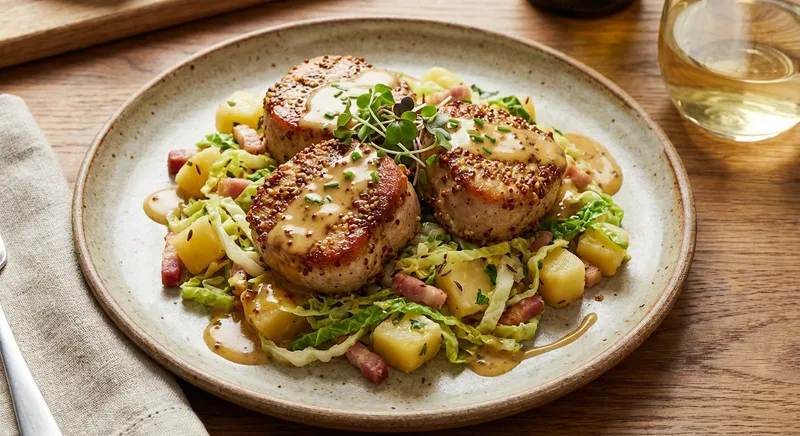
Tender pork medallions are brushed with tangy Dijon and seared until golden, then rested to keep the juices locked in. They're served over a warm potato and shredded green-cabbage slaw brightened with crisp Granny Smith apple, rosemary, and a sharp mustard vinaigrette — a comforting, restaurant-quality plate with contrasting textures and bright, savory flavors.
Bring the pork to room temperature (15–20 minutes). Pat the medallions dry with paper towels and season both sides lightly with sea salt and black pepper. Drying the surface removes moisture so the pork can brown quickly and form a flavorful crust when seared.
Make the mustard-herb coating: in a shallow bowl or plate whisk together 4 tablespoons Dijon mustard, 2 tablespoons of the olive oil, and half (2 teaspoons) of the chopped rosemary or thyme. The mustard acts as both flavor and adhesive — it helps herbs and oil stick to the meat and produces a caramelized, savory crust when seared.
Coat the pork: brush each medallion on both sides with the mustard-herb mixture. Set on a plate and let sit while you start the vegetables (this short marination infuses flavor without changing texture).
Prepare the potatoes: place the thinly sliced potatoes in a large bowl, add a generous pinch of salt and 1 tablespoon olive oil, and toss to coat. Thin slices cook quickly and develop brown, crispy edges while keeping a tender interior — the contrast is key for the warm slaw.
Heat a large nonstick or stainless-steel skillet over medium-high heat until hot. Add the sliced potatoes in a single layer (you may need to do this in two batches). Cook, undisturbed, for 3–4 minutes until the undersides brown, then toss or flip and cook another 3–4 minutes until tender. Browning creates Maillard flavors (toasty, savory notes) that make the potatoes taste restaurant-quality.
Once the potatoes are browned and tender, transfer them to a bowl and keep warm. If the pan is dry, add up to 1 tablespoon of olive oil before the next stage — a lightly oiled pan helps wilt the cabbage without sticking.
Sauté the cabbage: lower the heat to medium, add the remaining 1 tablespoon olive oil to the hot pan, then add the shredded cabbage and a pinch of salt. Cook for 3–5 minutes, stirring frequently, until the cabbage is bright, slightly softened, but still has a bit of bite. Cooking cabbage briefly preserves texture and prevents it from becoming mushy; it should be warm and slightly wilted for the slaw.
Make the warm vinaigrette: in a small bowl whisk the remaining 2 tablespoons Dijon mustard with 4 teaspoons apple cider vinegar, the remaining chopped herbs, and a pinch of salt and pepper. Slowly whisk in 1 tablespoon of olive oil to emulsify. The acidity from the vinegar and razor-sharp Dijon cut through the richness of pork and oil, while the warm potatoes help meld flavors when combined.
Combine the warm slaw: add the warmed potatoes back into the pan with the cabbage along with the julienned Granny Smith apple. Pour the warm mustard vinaigrette over the mixture and toss gently to coat. The residual heat will soften the apple slightly and allow the dressing to coat the potatoes and cabbage evenly — that warmth rounds the flavors and makes the slaw transitional between a salad and a side dish.
Sear the pork medallions: while the slaw finishes, heat a clean skillet over medium-high heat until shimmering. Add a thin film (about ½ tsp) of oil or use a nonstick pan to minimize added fat. Place the mustard-coated medallions, leaving space between each. Sear for 2–3 minutes without moving until a deep golden crust forms, then flip and sear the other side 2–3 minutes. For 1–1¼-inch (25–30 mm) medallions this yields an internal temperature of about 63°C (145°F) for slightly pink, juicy pork. High heat creates the crust quickly; short cooking preserves tenderness.
Rest the pork: transfer the seared medallions to a plate, tent loosely with foil, and let rest 5 minutes. Resting lets juices redistribute so the pork stays moist when sliced.
Finish and plate: taste the warm slaw and adjust seasoning with salt, pepper, or an extra splash of vinegar if it needs brightness. Divide the potato and cabbage slaw among 4 plates, top each with 2–3 pork medallions (depending on size), drizzle any resting juices over the top, and sprinkle a little extra chopped rosemary or thyme to finish. Serve immediately.
492
Calories
36g
Protein
37g
Carbs
22g
Fat
6g
Fiber
How did this recipe turn out? Let others know!
to rate this recipe
By Amanda Miller
Tender pork medallions are brushed with tangy Dijon and seared until golden, then rested to keep the juices locked in. They're served over a warm potato and shredded green-cabbage slaw brightened with crisp Granny Smith apple, rosemary, and a sharp mustard vinaigrette — a comforting, restaurant-quality plate with contrasting textures and bright, savory flavors.
Bring the pork to room temperature (15–20 minutes). Pat the medallions dry with paper towels and season both sides lightly with sea salt and black pepper. Drying the surface removes moisture so the pork can brown quickly and form a flavorful crust when seared.
Make the mustard-herb coating: in a shallow bowl or plate whisk together 4 tablespoons Dijon mustard, 2 tablespoons of the olive oil, and half (2 teaspoons) of the chopped rosemary or thyme. The mustard acts as both flavor and adhesive — it helps herbs and oil stick to the meat and produces a caramelized, savory crust when seared.
Coat the pork: brush each medallion on both sides with the mustard-herb mixture. Set on a plate and let sit while you start the vegetables (this short marination infuses flavor without changing texture).
Prepare the potatoes: place the thinly sliced potatoes in a large bowl, add a generous pinch of salt and 1 tablespoon olive oil, and toss to coat. Thin slices cook quickly and develop brown, crispy edges while keeping a tender interior — the contrast is key for the warm slaw.
Heat a large nonstick or stainless-steel skillet over medium-high heat until hot. Add the sliced potatoes in a single layer (you may need to do this in two batches). Cook, undisturbed, for 3–4 minutes until the undersides brown, then toss or flip and cook another 3–4 minutes until tender. Browning creates Maillard flavors (toasty, savory notes) that make the potatoes taste restaurant-quality.
Once the potatoes are browned and tender, transfer them to a bowl and keep warm. If the pan is dry, add up to 1 tablespoon of olive oil before the next stage — a lightly oiled pan helps wilt the cabbage without sticking.
Sauté the cabbage: lower the heat to medium, add the remaining 1 tablespoon olive oil to the hot pan, then add the shredded cabbage and a pinch of salt. Cook for 3–5 minutes, stirring frequently, until the cabbage is bright, slightly softened, but still has a bit of bite. Cooking cabbage briefly preserves texture and prevents it from becoming mushy; it should be warm and slightly wilted for the slaw.
Make the warm vinaigrette: in a small bowl whisk the remaining 2 tablespoons Dijon mustard with 4 teaspoons apple cider vinegar, the remaining chopped herbs, and a pinch of salt and pepper. Slowly whisk in 1 tablespoon of olive oil to emulsify. The acidity from the vinegar and razor-sharp Dijon cut through the richness of pork and oil, while the warm potatoes help meld flavors when combined.
Combine the warm slaw: add the warmed potatoes back into the pan with the cabbage along with the julienned Granny Smith apple. Pour the warm mustard vinaigrette over the mixture and toss gently to coat. The residual heat will soften the apple slightly and allow the dressing to coat the potatoes and cabbage evenly — that warmth rounds the flavors and makes the slaw transitional between a salad and a side dish.
Sear the pork medallions: while the slaw finishes, heat a clean skillet over medium-high heat until shimmering. Add a thin film (about ½ tsp) of oil or use a nonstick pan to minimize added fat. Place the mustard-coated medallions, leaving space between each. Sear for 2–3 minutes without moving until a deep golden crust forms, then flip and sear the other side 2–3 minutes. For 1–1¼-inch (25–30 mm) medallions this yields an internal temperature of about 63°C (145°F) for slightly pink, juicy pork. High heat creates the crust quickly; short cooking preserves tenderness.
Rest the pork: transfer the seared medallions to a plate, tent loosely with foil, and let rest 5 minutes. Resting lets juices redistribute so the pork stays moist when sliced.
Finish and plate: taste the warm slaw and adjust seasoning with salt, pepper, or an extra splash of vinegar if it needs brightness. Divide the potato and cabbage slaw among 4 plates, top each with 2–3 pork medallions (depending on size), drizzle any resting juices over the top, and sprinkle a little extra chopped rosemary or thyme to finish. Serve immediately.
492
Calories
36g
Protein
37g
Carbs
22g
Fat
6g
Fiber
Your Rating:
