By Ron Minihan
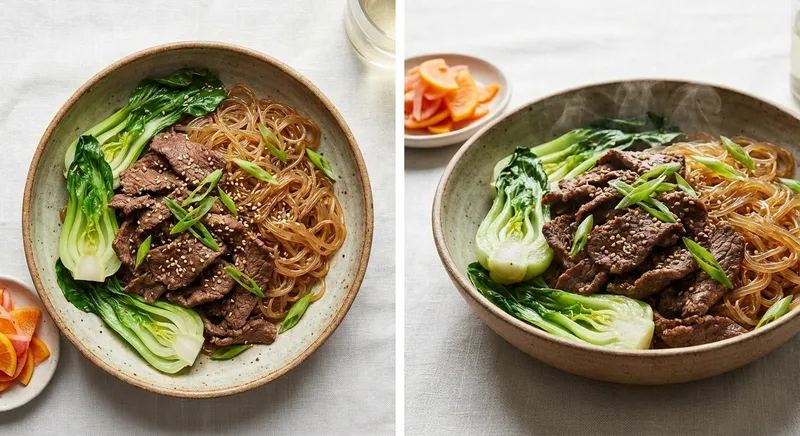
A vibrant, restaurant-quality weeknight stir-fry: tender, thinly sliced beef tossed with slippery sweet-potato glass noodles and bright baby bok choy, finished with savory-sweet gochujang-soy glaze, toasty sesame, and a burst of citrus from quick-pickled radish. Textures alternate between silky noodles, crisp-tender greens and a citrusy crunch—an elegant, fast Korean-inspired dish that balances heat, umami and acidity.
Prep everything first — mise en place matters for stir-fry speed: pat the sliced beef very dry with paper towels and, if pieces are larger than 3–4 cm, slice into bite-sized strips across the grain (this shortens muscle fibers and makes the beef more tender). Keep the marinated or prepped beef chilled until ready to cook.
If your glass noodles need soaking or boiling, do that now following the package directions, then rinse with cold water and drain well. Toss the drained noodles with a tiny drizzle (about 1 tsp) of neutral oil so they don’t clamp together — this keeps them slippery so they pick up the sauce evenly while stir-frying.
Make the sauce: in a small bowl combine gochujang, soy sauce, grated ginger, minced garlic, and (if using) mirin. The gochujang is the flavor backbone — mixing it with soy sauce tamps its sweetness and saltiness into a glossy glaze that will coat noodles and beef. Taste and adjust: if the gochujang is very spicy, add a tiny pinch of sugar or a squeeze of orange to round it out.
Heat a large, heavy skillet or wok over high heat until very hot — you want rapid heat so protein sears quickly and vegetables remain bright. Add the neutral oil and swirl to coat. A properly hot pan gives the beef a fast sear which locks in juices and creates caramelized flavor (the Maillard reaction).
Sear the beef in a single layer (do not overcrowd). Spread it out and let it sit for 20–30 seconds until the edges brown, then toss and cook another 20–30 seconds until mostly cooked but still slightly underdone — the beef will finish cooking when you return it to the pan with the noodles. Remove the beef to a plate and loosely tent with foil to rest; resting keeps the juices in and prevents overcooking.
Quickly char the bok choy: if your pan is still very hot, add the bok choy cut-side down and let it sear undisturbed 45–60 seconds to get a touch of caramelization (this adds sweet, roasted notes). Flip and stir the leafy parts for another 30–45 seconds until crisp-tender. Transfer the bok choy to the plate with beef. Cooking the greens briefly preserves their bright color and crispness — you want contrast with the soft noodles.
Lower the heat to medium-high, add a splash more oil if the pan is dry, then add the drained glass noodles. Toss and stir to warm them through — this helps any residual starch melt and allows the sauce to adhere. If the noodles have stuck together, use tongs to tease them apart gently.
Pour the prepared gochujang-soy mixture over the noodles. Toss vigorously so the sauce emulsifies and evenly coats the noodles. Scrape the bottom of the pan — any fond (browned bits) contains concentrated flavor that will meld into the sauce. If the sauce looks too thick, add 1–2 tbsp hot water to loosen and create a silky glaze.
Return the reserved beef and bok choy to the pan along with any resting juices. Toss everything together for 30–60 seconds to finish cooking the beef and let flavors harmonize. This finishing toss warms the beef through without overcooking and allows the bok choy to soak up some sauce while keeping a snappy texture.
Finish off-heat: drizzle toasted sesame oil over the stir-fry (the low smoke point makes it a finishing oil — it delivers a toasty aroma that cooking would destroy). Sprinkle with toasted sesame seeds, crack a wedge of lime or orange over each serving for bright acidity, and add the quick-pickled radish on top for a crunchy, citrusy counterpoint.
Serve immediately while hot — encourage diners to squeeze extra citrus and toss the pickled radish through a bite to experience heat, sweetness, umami and acidity together. Leftovers keep 1–2 days refrigerated but textures will soften and noodles will firm up; gently reheat in a skillet with a splash of water to loosen the sauce.
360
Calories
16g
Protein
30g
Carbs
20g
Fat
3g
Fiber
How did this recipe turn out? Let others know!
to rate this recipe
By Ron Minihan
A vibrant, restaurant-quality weeknight stir-fry: tender, thinly sliced beef tossed with slippery sweet-potato glass noodles and bright baby bok choy, finished with savory-sweet gochujang-soy glaze, toasty sesame, and a burst of citrus from quick-pickled radish. Textures alternate between silky noodles, crisp-tender greens and a citrusy crunch—an elegant, fast Korean-inspired dish that balances heat, umami and acidity.
Prep everything first — mise en place matters for stir-fry speed: pat the sliced beef very dry with paper towels and, if pieces are larger than 3–4 cm, slice into bite-sized strips across the grain (this shortens muscle fibers and makes the beef more tender). Keep the marinated or prepped beef chilled until ready to cook.
If your glass noodles need soaking or boiling, do that now following the package directions, then rinse with cold water and drain well. Toss the drained noodles with a tiny drizzle (about 1 tsp) of neutral oil so they don’t clamp together — this keeps them slippery so they pick up the sauce evenly while stir-frying.
Make the sauce: in a small bowl combine gochujang, soy sauce, grated ginger, minced garlic, and (if using) mirin. The gochujang is the flavor backbone — mixing it with soy sauce tamps its sweetness and saltiness into a glossy glaze that will coat noodles and beef. Taste and adjust: if the gochujang is very spicy, add a tiny pinch of sugar or a squeeze of orange to round it out.
Heat a large, heavy skillet or wok over high heat until very hot — you want rapid heat so protein sears quickly and vegetables remain bright. Add the neutral oil and swirl to coat. A properly hot pan gives the beef a fast sear which locks in juices and creates caramelized flavor (the Maillard reaction).
Sear the beef in a single layer (do not overcrowd). Spread it out and let it sit for 20–30 seconds until the edges brown, then toss and cook another 20–30 seconds until mostly cooked but still slightly underdone — the beef will finish cooking when you return it to the pan with the noodles. Remove the beef to a plate and loosely tent with foil to rest; resting keeps the juices in and prevents overcooking.
Quickly char the bok choy: if your pan is still very hot, add the bok choy cut-side down and let it sear undisturbed 45–60 seconds to get a touch of caramelization (this adds sweet, roasted notes). Flip and stir the leafy parts for another 30–45 seconds until crisp-tender. Transfer the bok choy to the plate with beef. Cooking the greens briefly preserves their bright color and crispness — you want contrast with the soft noodles.
Lower the heat to medium-high, add a splash more oil if the pan is dry, then add the drained glass noodles. Toss and stir to warm them through — this helps any residual starch melt and allows the sauce to adhere. If the noodles have stuck together, use tongs to tease them apart gently.
Pour the prepared gochujang-soy mixture over the noodles. Toss vigorously so the sauce emulsifies and evenly coats the noodles. Scrape the bottom of the pan — any fond (browned bits) contains concentrated flavor that will meld into the sauce. If the sauce looks too thick, add 1–2 tbsp hot water to loosen and create a silky glaze.
Return the reserved beef and bok choy to the pan along with any resting juices. Toss everything together for 30–60 seconds to finish cooking the beef and let flavors harmonize. This finishing toss warms the beef through without overcooking and allows the bok choy to soak up some sauce while keeping a snappy texture.
Finish off-heat: drizzle toasted sesame oil over the stir-fry (the low smoke point makes it a finishing oil — it delivers a toasty aroma that cooking would destroy). Sprinkle with toasted sesame seeds, crack a wedge of lime or orange over each serving for bright acidity, and add the quick-pickled radish on top for a crunchy, citrusy counterpoint.
Serve immediately while hot — encourage diners to squeeze extra citrus and toss the pickled radish through a bite to experience heat, sweetness, umami and acidity together. Leftovers keep 1–2 days refrigerated but textures will soften and noodles will firm up; gently reheat in a skillet with a splash of water to loosen the sauce.
360
Calories
16g
Protein
30g
Carbs
20g
Fat
3g
Fiber
Your Rating:
